
Catalogue Search | MBRL


Are you sure you want to remove the book from the shelf?

{{itemTitle}}
1,010
result(s) for
"Ethics Humor"
Sort by:
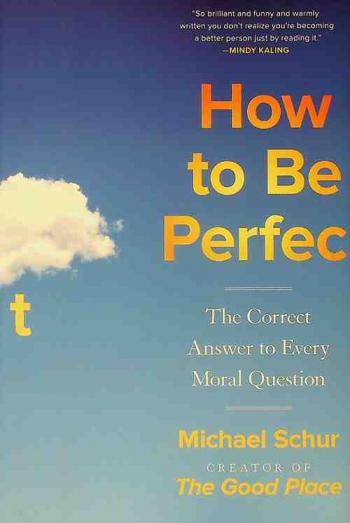
How to be perfect : the correct answer to every moral question
\"From the creator of The Good Place and the co-creator of Parks and Recreation, a hilarious, thought-provoking guide to living an ethical life, drawing on 2,500 years of deep thinking from around the world\"-- Provided by publisher.

The Ethics of Humor: Can Your Sense of Humor be Wrong?
I distill three somewhat interrelated approaches to the ethical criticism of humor: (1) attitude-based theories, (2) merited-response theories, and (3) emotional responsibility theories. I direct the brunt of my effort at showing the limitations of the attitudinal endorsement theory by presenting new criticisms of Ronald de Sousa's position. Then, I turn to assess the strengths of the other two approaches, showing that that their major formulations implicitly require the problematic attitudinal endorsement theory. I argue for an effects-mediated responsibility theory, holding that the strongest ethical criticism that can be made of our sense of humor is that it might indicate some omission on our part. This omission could only be culpable in so far as a particular joke could do harm to oneself or others. In response to Ted Cohen's doubts that such a mechanism of harm is forthcoming, I argue that the primary vehicle of the harmful effects of humor is laughter.
Journal Article

La argumentación y el humor desde la ética del discurso. Caminando con Karl-Otto Apel más allá de Apel
En este trabajo** me concentro en el hecho de la argumentación en Karl-Otto Apel, para intentar comprender, según este autor, en qué consiste, por qué es tan importante para la fundamentación de la ética y qué significa argumentar racionalmente. A partir de ahí camino con Apel más allá de Apel mostrando la importancia de incorporar la dimensión del humor para que la argumentación realmente avance hacia la verdad y la justicia.
Journal Article

A Study in the Humor of the Old Northeast: Joseph C. Neal's Charcoal Sketches and the Comic Urban Frontier
Joseph C. Neal pioneered the urban frontier of the Old Northeast in depicting what he called “hard cases” from the Philadelphia slums in his long-overlooked Charcoal Sketches, first published in book form in 1838. His characters' inability to change with the times, their false and vulnerable toughness, and their urban vernacular language look forward to the humor of Mark Twain, political commentators, and radio and TV sitcoms. In Neal's work, the cash economy, the lightly ironic euphuistic character study, and metaphors of the city are used to describe the new social and ethical paradoxes of the urban-industrial world already emerging in the urban Northeast in his time.
Journal Article

The Sayings of Jesus in Family Guy: A Pastoral Reading of “I Dream of Jesus”
This essay offers a pastoral reading of an episode of the cartoon
Family Guy
. The episode is titled “I Dream of Jesus.” In doing so, I explore six sayings of Jesus in this episode, and I identify nine theological themes that are raised by these sayings. On the basis of this pastoral reading of “I Dream of Jesus,” I argue that
Family Guy
can be used as a source for theological reflection, and I suggest, in closing, that the show might be a practical way for combating biblical and theological illiteracy among youth and young adults. This article also contains a table that can be useful for creating Sunday School or youth group lessons based on this episode. It is worth pointing out that this essay was written for the “Group for New Directions in Pastoral Theology.” The “group” was formed to celebrate the career of Donald Capps on the occasion of his retirement from Princeton Theological Seminary. The theme for the conference this year was the sayings of Jesus. While the choice of focusing on a contemporary cartoon for such an occasion may seem odd or quirky, the author does so to demonstrate the unique freedom that pastoral theologians enjoy with regard to what Robert Dykstra calls “the acceptable latitude of inquiry” in pastoral theology. Another way of putting this is to say that both the Apostle Peter and the animated Peter can serve as resources for theological reflection.
Journal Article

Laughing at the Wrong Time
This chapter contains sections titled:
Eight Traditional Moral Objections
The Shortcomings in the Contemporary Ethics of Humor
A More Comprehensive Approach: The Ethics of Disengagement
First Harmful Effect: Irresponsibility
Second Harmful Effect: Blocking Compassion
Third Harmful Effect: Promoting Prejudice
Book Chapter
Having a Good Laugh
This chapter contains sections titled:
Intellectual Virtues Fostered by Humor
Moral Virtues Fostered by Humor
Humor during the Holocaust
Book Chapter

Employee Humor Can Shield Them from Abusive Supervision
Drawing upon conservation of resources theory, we develop and test a theoretical model that specifies how and when employee humor toward leaders affects leader abusive supervision. We propose that employee humor is negatively associated with leader abusive supervision via leader relational energy. Furthermore, the negative indirect relationship between employee humor and leader abusive supervision via leader relational energy is stronger for female leaders than for male leaders. An experiment and a multi-wave, multi-source field study provide substantial support for our hypotheses. Our findings contribute to the abusive supervision literature by identifying employee humor as a safe and effective bottom-up approach to prevent leader abusive supervision.
Journal Article
Balto: comedic representation of medical professionals in TV drama
Medical professionals have been portrayed as hard-working and serious individuals in most Egyptian dramas. Recent Egyptian TV series have portrayed medical service providers, highlighting different aspects of their personalities. The present paper adopts an approach that combines the studies of humor and language to investigate the comedic representation of medical professionals in contemporary Egyptian television TV drama, with special reference to a recent TV series called Balto (2023). Within the framework of humor theories of incongruity and superiority, this paper aims to analyze elements of the comedic portrayal of health professionals in the selected TV series, Balto, to investigate how humor is employed to both humanize the long-idealized depiction of doctors as well as critique societal perceptions of representatives of the medical sector in Egypt. The paper particularly focuses on analyzing how the protagonist and other medical professionals practice their work, exercise managerial power, and operate/function with their peers and patients within a small remote health unit.
Journal Article