
Catalogue Search | MBRL


Are you sure you want to remove the book from the shelf?

{{itemTitle}}
60
result(s) for
"Ethics Study and teaching (Early childhood)"
Sort by:

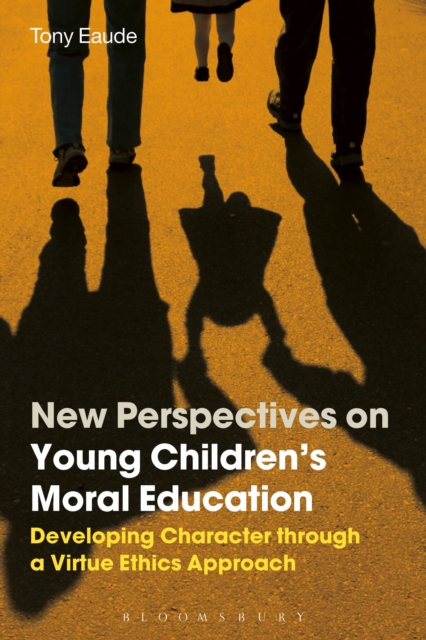
New perspectives on young children's moral education : developing character through a virtue ethics approach
New Perspectives on Young Children's Moral Education explores how to approach young children's moral education in a world of uncertainty and change. What is moral education? How do young children learn to act and interact appropriately? How do we enable children to recognise that how they act and interact matters? How can character, virtues and value help young children internalise qualities associated with living 'a good life'? Challenging many current assumptions about ethics and education, Tony Eaude suggests that a moral dimension runs through every aspect of life and that ethics involves learning to act and interact appropriately, based on an 'ethic of care' and enduring qualities and attributes, to equip children to resist strong external pressures. Drawing accessibly on research in neuroscience and psychology, he discusses how young children learn, highlighting the role of emotion, culture, example, habituation and feedback. Small actions can help to develop agency, empathy and thoughtfulness and a sense of moral identity, with an increasing emphasis on self-regulation, a vocabulary of ethics and intrinsic motivation. Eaude explores how character, virtues and values can help young children and adults to recognize and internalize qualities associated with living 'a good life'. He identifies how adults and learning environments can support these processes and shows why an inclusive approach is needed, rather than focusing on these topics only in particular settings, programmes or lessons. Recognising pitfalls and dilemmas, Eaude argues that an approach based on virtue ethics and an apprenticeship model is suitable in school and other settings, both religious and otherwise, internationally.
eBook


Connecting children to nature through the integration of Indigenous Ecological Knowledge into Early Childhood Environmental Education
In this paper, we draw on the ontology and epistemology of the local Kasena ethnic group in Northern Ghana to explore Early Childhood Environmental Education. The study, taking place in Boania Primary School, drew on the concept of two-eyed seeing, where both western and Indigenous epistemologies and ontologies were taught. In this way, Indigenous Ecological Knowledge was integrated into the Early Childhood Environmental Education programme for the Kindergarten two classroom environmental studies topics. Two Indigenous Elders led the integration of local knowledge into environmental studies topics by visiting the school to teach the children through taking them outdoors for learning activities. After this, in-depth interviews were held with the teacher, Indigenous Elders, and nine children regarding their experiences. The purpose of the study was to explore how Indigenous Ecological Knowledges can help instil in children positive environmental attitudes and values, while also connecting them to nature and offering them a more relational understanding of human to nature relationships. Based on the Indigenous cultural framework of respect, reciprocity, and responsibility towards nature, the findings show that the integration of Indigenous Ecological Knowledge into environmental education has the potential to improve our relationships with the environment.
Journal Article

Transforming Teaching and Learning in Early Childhood Care and Education During COVID-19 in a Poor Community of the Cape Flats, South Africa
In this case study I explored the dilemmas of three early childhood care and education (ECCE) teachers in a poor community in the Cape Flats of Cape Town, South Africa during COVID-19, and how they used these dilemmas to transform their teaching. Purposive sampling was used to select the participants and data was collected through a semi-structured interview and thematically analyzed. Ethical clearance was secured from the Cape Peninsula University of Technology. Mezirow’s transformative learning theory was used as an analytical framework for the study. In particular, Mezirow’s concept of disorienting dilemmas was used to engage with the dilemmas the ECCE teachers were confronted with during the pandemic. Further, his concept of perspective transformations was used to analyze how the ECCE teachers engaged with these dilemmas to transform their teaching. Findings show that while ECCE teachers’ faced disorienting dilemmas of digital inequity and of children’s interactive play, they also adopted alternative roles and actions as they engaged in dialogue and shared negotiations, ensuring that the functioning of the ECCE centre would continue in solidarity with the children and parents. These findings have important implications for how local government provide financial and digital support for poor communities during times of crisis.
Journal Article

Research on the Reform of Approaches to Early Childhood Character Education
Early childhood character education is a critical element in shaping an individual's moral foundation and fostering a sense of social responsibility.It plays a fundamental role in overall personal development.Although China's early childhood character education has made progress with the support of policies and practical exploration, it still faces challenges such as the homogenization of educational models, a formalization of home-kindergarten cooperation, a single-dimensional evaluation system, and a need for further improvement in teachers' professional competence in character education.This paper draws on core theories of character education (e.g., social learning theory and cognitive moral development theory) and incorporates representative case studies to conduct an in-depth analysis of the current landscape and associated challenges.It proposes innovative approaches, which include establishing a \"threefold\" system of implementation, enhancing the mechanisms for home-kindergarten co-education, optimizing and ensuring a multidimensional and dynamic evaluation system, equitably allocating teaching resources, and expanding the social support networks.The aim is to offer theoretical reference and practical solutions to promote the scientific and systematic development of early childhood character education.
Journal Article

Digital citizenship education at the early childhood level: how is it implemented? A systematic review
Users of technology are becoming younger over the years. Although the current generation of young children is often referred to as “digital natives,” this designation primarily reflects their intuitive engagement with digital tools rather than a comprehensive understanding of their responsible use. In contrast, fostering balanced, ethical, and safe digital behavior requires intentional education and support. This paper provides a systematic review of existing research on digital citizenship education in early childhood, aiming to clarify how core principles of digital citizenship are being introduced and implemented during the formative years. As digital citizenship education is not yet common at the ECE level, the main contribution of this study is the yielded insights, through in-depth analysis, on how digital citizenship education can be taught more effectively based on the gathered literature. The databases used for this systematic review were ProQuest Education, Web of Science, EBSCOhost, APA PsycInfo, ERIC, and Google Scholar. The related articles published until May 2024 were included in this review. Drawing on the PRISMA guidelines, we carefully selected 23 articles related to digital citizenship education for children 0 to 8 years old. Keywords were organized into two categories using the Boolean operator AND: (1) terms related to children (e.g., child*, preschool, kindergarten), and (2) “digital citizenship.” The findings demonstrate that the lessons towards digital citizenship can be more effective when integrated into core subjects with gamified and collaborative activities. The limitations and recommendations of the review are also discussed.
Journal Article

An invisible voice for music : Regulatory requirement dictating the provision of music and the arts in initial teacher education
The paper explores the relationship between the regulatory requirements to be registered to teach and the provisions to meet these requirements in the initial teacher education programs in Australia. This is part of a broader study of
the regulatory requirements for music and art teachers in primary and secondary schools in Australia, and only the music component will be reported in the paper. The statutory regulatory authorities (often referred to as teaching
institutes) in each educational jurisdiction mandate the professional and academic requirements for registration to teach. These authorities outline the amount of study required to be registered to teach in primary and secondary schools
across Australia. The actual requirements differ between the various States and Territories. To teach in primary schools a graduate is required to demonstrate an ability to cover the eight key learning areas (including the Arts) and
specifically in literacy and numeracy. For teaching in secondary schools a graduate must evidence of successful study in two designated teaching areas (often across two learning areas). Across Australia, over the last decade there have
been moves from undergraduate degrees in Education (with specialist/major studies) to undergraduate degrees followed by two-year Master of Teaching degrees. The registration authorities recognise both initial teacher education pathways
into the profession. The universities have been regularly criticised for their reduced provision (and delivery) of specific discipline content in the initial teacher education programs, and continue to respond that they are delivering
what is required by the registration requirements of the regulators. This ongoing response has resulted in significantly reduced time for areas such as Music, which is included in the broader Arts key learning area, with an expectation
that a student will be exposed to a range of the disciplines in the Arts and not focus on one discipline. This continues to have a significant impact on teaching and learning in Music as well as the ability, confidence and preparation of
future music educators. [Author abstract]
Journal Article

How Did the Young Children Encounter the Japanese Urban Landscape?: A Study on Emergent Pedagogy for Sustainability Transformation
This research evaluates how children’s new subjectivities emerge through exploring urban landscapes in the river basin in Tokyo. Research has stressed the importance of children as active agents, while posthuman perspectives include all elements of human–nature entangled world as potential agents. This analysis indicates how an assemblage of human and non-human agents contributes to enacting children as critical agents for sustainability issues. The theoretical framework for this study is the theory of landscape, including traditional Japanese discourses and the assemblage theory inspired by Félix Guattari’s ecosophy. One of the authors conducted nine-month ethnographic research at a Japanese nursery in 2018, accompanying a five-year-old class whose curiosity drove the expedition at the river basin all the way to the Tokyo Bay. The authors applied the method of multiple interpretations of the documentation, including photos and children’s drawings. This exploration and subsequent events during the journey transformed the children’s fragmented interpretation of the environment into an interconnected one and translated it into tangible action. This study illustrated that stimulating children’s subjectivity toward the landscape and fostering their positive but critical relationship with it through emergent first-hand exploration provided them with potential grounds to be resilient by ethically and ecologically responding to changes in vulnerable environments and potential commons in the community and to take actions for sustainable lifestyles at present and in the future.
Journal Article

Should we welcome robot teachers?
Current uses of robots in classrooms are reviewed and used to characterise four scenarios: (s1) Robot as Classroom Teacher; (s2) Robot as Companion and Peer; (s3) Robot as Care-eliciting Companion; and (s4) Telepresence Robot Teacher. The main ethical concerns associated with robot teachers are identified as: privacy; attachment, deception, and loss of human contact; and control and accountability. These are discussed in terms of the four identified scenarios. It is argued that classroom robots are likely to impact children’s’ privacy, especially when they masquerade as their friends and companions, when sensors are used to measure children’s responses, and when records are kept. Social robots designed to appear as if they understand and care for humans necessarily involve some deception (itself a complex notion), and could increase the risk of reduced human contact. Children could form attachments to robot companions (s2 and s3), or robot teachers (s1) and this could have a deleterious effect on their social development. There are also concerns about the ability, and use of robots to control or make decisions about children’s behaviour in the classroom. It is concluded that there are good reasons not to welcome fully fledged robot teachers (s1), and that robot companions (s2 and 3) should be given a cautious welcome at best. The limited circumstances in which robots could be used in the classroom to improve the human condition by offering otherwise unavailable educational experiences are discussed.
Journal Article