
Catalogue Search | MBRL


Are you sure you want to remove the book from the shelf?

{{itemTitle}}
25,615
result(s) for
"Ethnic groups Civil rights."
Sort by:


Ethnic Diversity and Federalism
How federalism can be used to provide recognition and accommodate ethnic groups is an important topic, not only in Africa, but in multi-ethnic communities around the world. Examining how institutions of multi-ethnic states have been designed to accommodate ethnic diversity while at the same time maintaining national unity, this book locates institutional responses to the challenges of ethnic diversity within the context of a federal arrangement. It examines how a federal arrangement has been used to reconcile the conflicting pressures of the demand for the recognition of distinctive identities, on the one hand, and the promotion of political and territorial integrity, on the other. Comparative case studies of South Africa and Ethiopia as the two federal systems provide a contrasting approach to issues of ethnic diversity. Suggesting new ways in which federalism might work, the author identifies key institutions lessons which will help to build an all-inclusive society.
eBook
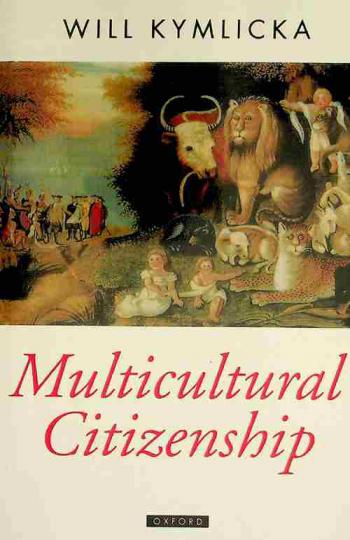

Multicultural Odysseys
We are currently witnessing the global diffusion of multiculturalism, both as a political discourse and as a set of international legal norms. States today are under increasing international scrutiny regarding their treatment of ethnocultural groups, and are expected to meet evolving international standards regarding the rights of indigenous peoples, national minorities, and immigrants. This phenomenon represents a veritable revolution in international relations, yet has received little public or scholarly attention. In this book, Kymlicka examines the factors underlying this change, and the challenges it raises. Against those critics who argue that multiculturalism is a threat to universal human rights, Kymlicka shows that the sort of multiculturalism that is being globalized is inspired and constrained by the human rights revolution, and embedded in a framework of liberal-democratic values. However, the formulation and implementation of these international norms has generated a number of dilemmas. The policies adopted by international organizations to deal with ethnic diversity are driven by conflicting impulses. Pessimism about the destabilizing consequences of ethnic politics alternates with optimism about the prospects for a peaceful and democratic form of multicultural politics. The result is often an unstable mix of paralyzing fear and naive hope, rooted in conflicting imperatives of security and justice. Moreover, given the enormous differences in the characteristics of minorities (eg., their size, territorial concentration, cultural markers, historic relationship to the state), it is difficult to formulate standards that apply to all groups. Yet attempts to formulate more targeted norms that apply only to specific categories of minorities (eg., “indigenous peoples” or “national minorities”) have proven controversial and unstable. Kymlicka examines these dilemmas as they have played out in both the theory and practice of international minority rights protection, including recent developments regarding the rights of national minorities in Europe, the rights of indigenous peoples in the Americas, as well as emerging debates on multiculturalism in Asia and Africa.
eBook


The politics of identity
In what ways can we think through the complexities of identity? Identity is a contested concept, but it is more than a thing possessed by agents. Identity is contingent and dynamic, constituting and reconstituting subjects with political effects. In this edited book, identity is explored through a range of unique interdisciplinary case studies from around the world. Questions of citizenship, belonging, migration, conflict, security, peace and subjectivity are examined through social construction, post-colonialism, and gendered lenses from an interdisciplinary perspective. This combination showcases in particular the political implications of identity, how it is constituted, and the effects it produces. This edited collection will be of particular interest to students of international relations theory, migration studies, gender and sexuality, post-colonialism and policy-making at both undergraduate and postgraduate levels.
eBook

Citizenship in diverse societies
Most modern democracies contain significant minority groups whose language, religion, or ethnicity differs from those of the majority. In this book, leading scholars of multicultural issues examine questions related to multiculturalism and citizenship, specifically addressing the issue of whether it is possible in multicultural societies to accommodate these forms of diversity without weakening the bonds of common citizenship. The first chapter is introductory. The fourteen that follow are arranged in seven parts, each with two chapters, that address Citizenship Education and Religious Diversity; Political Participation and Group Representation; Immigration, Identity and Multiculturalism; Gender and Ethnic Diversity; Language Rights; The Rights of Indigenous Peoples; and Federalism and Nationalism.
eBook

Identity and institutions : conflict reduction in divided societies
How can conflicts between various nationalist/ethnic groups be reduced? Combining theory with case studies of Spain and Ireland, Neal G. Jesse and Kristen P. Williams develop an argument favoring a solution that links resolving issues of identity and perceptions of inequality to the establishment of cross-national, democratic institutions. These institutions can affect deeply held attitudes by promoting overlapping identities and pooling sovereignty. Overlapping identities reduce tension by creating an atmosphere where different ethnic groups lose their strict definitions of Self and Other. Pooling sovereignty across a number of international (and national) representative bodies leads to increased access to governmental policymaking for all parties involved, with each nationalist/ethnic group having a stake in government. Increased access, moreover, reduces threat perceptions and ethnic security dilemmas, and increases trust—all of which play an important role in overcoming such conflicts.
eBook