
Catalogue Search | MBRL


Are you sure you want to remove the book from the shelf?

{{itemTitle}}
52
result(s) for
"Ethnic neighborhoods Washington (D.C.)"
Sort by:

Latinas crossing borders and building communities in greater Washington : applying anthropology in multicultural neighborhoods
\"This book addresses how Latina/o immigrants use several strategies to meet adaptation challenges in the Washington D.C. area. Drawing on ethnographic research and practice, the authors focus on models of collaboration and interaction in institutions in the community that have offered opportunities for anthropologists to work with residents in activities that have contributed to knowledge and action\"--Provided by publisher.
BOOK
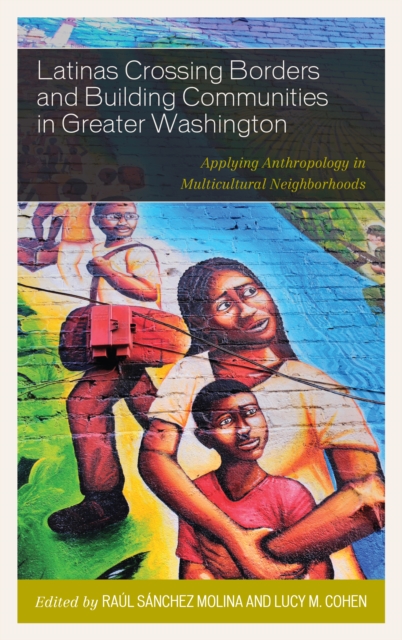
Latinas crossing borders and building communities in greater Washington
After crossing several borders, Latina/o immigrants and their children meet challenges of globalization as they acclimate to the Washington, D.C.metropolitan area.Facing different social and cultural barriers while adapting to this metropolis, most of them meet these challenges by building transnational bridges that connect societies and.
eBook

Racialized Policing: Residents' Perceptions in Three Neighborhoods
One of the most controversial issues in policing concerns allegations of racial bias. This article examines citizens' perceptions of racialized policing in three neighborhoods in Washington, D.C., that vary by racial composition and class position: a middle-class white community, a middle-class black community, and a lower-class black community. In-depth interviews examined residents' perceptions of differential police treatment of individual blacks and whites in Washington and disparate police practices in black and white neighborhoods. Findings indicate, first, that there is substantial agreement across the communities in the belief that police treat blacks and whites differerently; and secondly, there is racial variation in respondents' explanations for racial disparities. On the question of residents' assessments of police relations with their own community relative to other-race communities, a neighborhood difference is found, with the black middle-class neighborhood standing apart from the other two neighborhoods.
Journal Article

We didn’t have any other place to live
Using established theories of neighborhood selection as a theoretical framework, as well as qualitative and quantitative methods and mixed data sources, this paper documents a study exploring the residential patterns of African Americans living in Arlington, Virginia, during Segregation (1900–1970). A southern town bordering Washington, D.C., Arlington has been home to African Americans since slaves first worked the tobacco farms in the 1600s. During the period when black neighborhoods in Northern cities were inundated by southern, black migrants during the Great Migration, Arlington’s farms and settlements, many of them integrated, were similarly inundated by white federal workers from across the Potomac River. Developers, the County, and the federal government each played a role in accelerating Arlington’s transition from a collection of farms into a bustling white suburb with three highly segregated black neighborhoods. The study introduces a new procedure for aggregating manuscript census data for use with segregation indexes.
Journal Article

Locational Decisions of Charter Schools: Probing the Market Metaphor
Objective. Debate about market-oriented school-choice proposals often centers on questions of whether they will help or hurt minorities and the poor. We examine the locational decisions of different types of charter schools in the District of Columbia (D.C.) to assess their distributional consequences. Methods. We employ ordered probit regression to estimate models of the degree to which census tracts are served by charters. Results. Charters are more likely to locate in areas with high proportions of African-American and Hispanic residents than in the predominantly white neighborhoods, and more likely to locate in neighborhoods with middle incomes and high home ownership than in either poor or wealthy areas of the city. This is especially true of those operated by for-profits and those chartered by the elected rather than appointed chartering body. Additionally, we observe charters taking political and practical considerations into account when deciding where to locate. Conclusions. Proponents claim that charter schools will locate where need is greatest, while critics fear they will shy away from neighborhoods housing disadvantaged and minority students. We find that both camps are oversimplifying. Locational patterns are more complex and appear to be sensitive to variations in the type of charter school as well as the institutional characteristics of the chartering agency. Although market incentives are important, so too are pragmatic factors and institutional context.
Journal Article

Race, Immigrants, and Residence: A New Racial Geography of Washington, D.C.
This study examines the residential patterns of immigrant newcomers within a relatively new immigrant destination, Washington, D.C. Particular attention is given to how these patterns are shaped by the newcomers' race and ethnicity. Our analysis is based primarily upon data on immigrant flows from the U.S. Immigration and Naturalization Service for the 1990-1998 period. Evidence from our study suggests a racial and ethnic hierarchy to the residential location of Africans, Asians, Europeans, and Latin Americans, providing some support for the pattern expected in the place-stratification model. When their residential patterns are compared with those of non-Hispanic blacks, we find that African newcomers are more likely to settle among blacks than are other regional-origin groups. However, Africans are also found to reside in multiethnic zip codes where large numbers of newcomers are concentrated. The findings suggest that race is an important but not exclusive factor in explaining the residential choices of recent immigrants.
Journal Article


Racial Prejudice Among Korean Merchants in African American Neighborhoods
Many Korean immigrants in the United States have established small retail businesses in black communities. Relations between these merchants and neighborhood residents and customers have been problematic in a number of cities. Using in-depth interview data on a sample of Korean merchants in Washington, D.C., this article examines merchants' racial attitudes and reported interactions with African Americans. Drawing on middleman minority theory, I show how Koreans' middleman role and immigrant status condition their daily experiences with and attitudes toward African Americans and how constructions of group differences are used to advance middleman interests.
Journal Article

Fear of Crime among an Immigrant Population in the Washington, DC Metropolitan Area
Studied fear of crime among Ghanaian immigrants in the Washington, D.C. area, taking aspects of Ghanaian culture into account. Survey responses of 300 immigrants showed that the majority of the Ghanaian immigrants experienced fear of crime, but those who had been urban residents in Ghana were less fearful, probably because they were already familiar with higher crime rates. (SLD)
Journal Article

\A part of the neighbourhood?\: negotiating race in American suburbs
Compares race relations in two suburban communities in order to show that middle-class blacks meet with some success when they temporarily exchange their racial identity for a class-based identity. Collects data through ethnography and individual interview to examine the conditions under which middle-class blacks construct and assert a sub-urban identity. States that success varies with the racial composition of the suburban community and the white neighbours' level of the satisfaction with the community.
Journal Article