
Catalogue Search | MBRL


Are you sure you want to remove the book from the shelf?

{{itemTitle}}
2,270
result(s) for
"Ethnicity Study and teaching."
Sort by:


Sensitive pasts
Heritage studies necessarily must deal with strong emotions and political commitments. In this, it poses particular challenges for teachers and their students. Guided by a shared focus on these \"sensitive pasts,\" the contributors to this volume draw on new theoretical and empirical research to provide valuable insights into heritage pedagogy.
eBook

Roots quest : inside America's genealogy boom
\"In Roots Quest, sociologist Jackie Hogan digs into our current genealogy boom to ask why we are so interested in our family history. She shows how the surging popularity of genealogy is a response to large-scale social changes, and she explores the way our increasingly rootless society fuels the quest for an elemental sense of belonging--for roots.\"--Provided by publisher.
Book

Heritage Studies
This is the first volume specifically dedicated to the consolidation and clarification of Heritage Studies as a distinct field with its own means of investigation. It presents the range of methods that can be used and illustrates their application through case studies from different parts of the world, including the UK and USA. The challenge that the collection makes explicit is that Heritage Studies must develop a stronger recognition of the scope and nature of its data and a concise yet explorative understanding of its analytical methods.
The methods considered fall within three broad categories: textual/discourse analysis, methods for investigating people’s attitudes and behaviour; and methods for exploring the material qualities of heritage. The methods discussed and illustrated range from techniques such as text analysis, interviews, participant observation, to semiotic analysis of heritage sites and the use of GIS. Each paper discusses the ways in which methods used in social analysis generally are explored and adapted to the specific demands that arise when applied to the investigation of heritage in its many forms.
Heritage Studies is a seminal volume that will help to define the field. The global perspective and the shared focus upon the development of reflexive methodologies ensure that the volume explores these central issues in a manner that is simultaneously case-specific and of general relevance.
Part 1: Setting the Scene 1. Introduction: Making the means transparent: reasons and reflections, Marie Louise Stig Sørensen and John Carman 2. Heritage Studies – an outline, Marie Louise Stig Sørensen and John Carman 3. Public Archaeology in United States in the early twenty-first century, Barbara Little Part 2: Heritage Methodologies: Investigating Texts 4. The history of heritage: a method in analyzing legislative historiography, Hilary Soderland 5. Means maketh the end – the context for the development of methodologies to assessing the state of the historic environment in the UK, Ian Baxter 6. Methods used to investigate the use of the past in the formation of regional identities, Ulrike Sommer Part 3: Heritage Methodologies: Investigating People 7. Reflections on the practice of ethnography within heritage tourism, Catherine Palmer 8. Heritage Ethnography as a specialised craft: Grasping maritime heritage in Bermuda, Charlotte Andrews 9. Between the lines and in the margins: interviewing people about attitudes to heritage and identity, Marie Louise Stig Sørensen 10. Walking a fine line: obtaining sensitive information using a valid methodology, Morag Kersel 11. Methods for investigating locals’ perceptions of a cultural heritage product for tourism: lessons from Botswana, Susan Keitumetse 12. The public archaeology of African America: reflections on pragmatic methods and their results, Carol McDavid Part 4: Heritage Methodologies: Investigating Things 13. The use of GIS in Landscape Heritage and Attitudes to Place- Digital Deep Maps, Matthew Fitzjohn 14. Making them draw: the use of drawings in research into public attitudes towards the past, Grete Lillehammer 15. The heritagescape: looking at heritage sites, Mary-Catherine Garden 16. The intangible presence: investigating battlefields, John Carman and Patricia Carman Part 5: Commentaries Commentary: the view from social anthropology; Paola Filippucci. Commentary: the view from environmental psychology; David Uzzell
'... if you are looking for a stimulating collection of case studies that have something to say about an almost exclusively archaeological understanding of heritage, this would be an excellent place to start.' – Conservation and Management of Archaeological Sites
eBook

Color-line to borderlands : the matrix of American ethnic studies
This collection of lively and insightful essays traces the historical development of Ethnic Studies, its place in American universities and the curriculum, and new directions in contemporary scholarship.
eBook
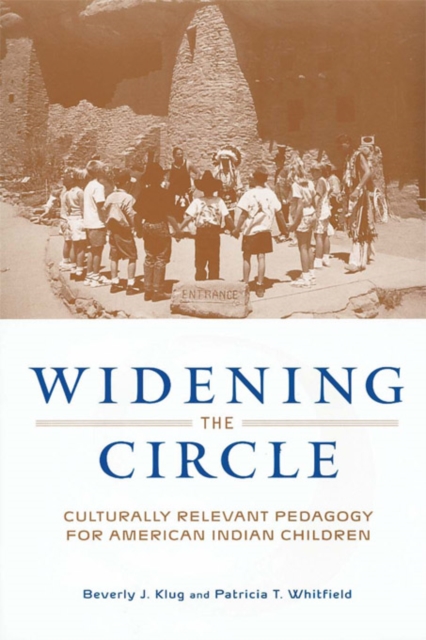
Widening the circle
Recognizing the need for a pedagogy that better serves American Indian students, Beverly J. Klug and Patricia T. Whitfield construct a pedagogical model that blends native and non-native worldviews and methods. Among the building blocks of this new, culturally relevant education are language-based approaches to literacy development, the use of oral histories to supplement traditional texts, and a re-evaluation of the knowledge base these students need for success in tribal enterprises.
eBook

A companion to racial and ethnic studies
Bringing together a range of scholars from a variety of disciplines and theoretical perspectives, A Companion to Racial and Ethnic Studies offers an overview of contemporary debates as well as an exploration of new directions in the dynamic field of race and ethnicity.
eBook
Teaching about culture, ethnicity, & diversity : exercises and planned activities
This book of structured activities for use in teaching about culture, ethnicity and diversity comprises easy-to-use classroom and training exercises that are both engaging to participants and effective as learning tools. The contributors offer tools to those teachers and trainers who strive to increase understanding of and communication between ethnic and racial groups. The book is arranged so that users may easily draw upon the activities to involve students and bring abstract concepts into the realm of the students′ own experiences.
eBook
Color-Line to Borderlands
\"Ethnic Studies . . . has drawn higher education, usually kicking and screaming, into the borderlands of scholarship, pedagogy, faculty collegiality, and institutional development,\" Johnnella E. Butler writes in her Introduction to this collection of lively and insightful essays. Some of the most prominent scholars in Ethnic Studies today explore varying approaches, multiple methodologies, and contrasting perspectives within the field. Essays trace the historical development of Ethnic Studies, its place in American universities and the curriculum, and new directions in contemporary scholarship. The legitimation of the field, the need for institutional support, and the changing relations between academic scholarship and community activism are also discussed.
The institutional structure of Ethnic Studies continues to be affected by national, regional, and local attitudes and events, and Ronald Takaki s essay explores the contested terrains of these culture wars. Manning Marable delves into theoretical aspects of writing about race and ethnicity, while John C. Walter surveys the influence of African American history on U.S. history textbooks. Elizabeth Cook-Lynn and Craig Howe explain why American Indian Studies does not fit into the Ethnic Studies model, and Lauro H. Flores traces the historical development of Chicano/a Studies, forged from the student and community activism of the late 1960s.
Ethnic Studies is simultaneously discipline-based and interdisciplinary, self-containing and overlapping. This volume captures that dichotomy as contributors raise questions that traditional disciplines ignore. Essays include Lane Ryo Hirabayashi and Marilyn Caballero Alquizola on the gulf between postmodernism and political and institutional realities; Rhett S. Jones on the evolution of Africana Studies; and Judith Newton on the trajectories of Ethnic Studies and Women s Studies and their relations with marginalized communities. Shirley Hune and Evelyn Hu-DeHart each make a case for the separation of Asian American Studies from Asian Studies, while Edna Acosta-Bel n argues for a hemispheric approach to Latin American and U.S. Latino/a Studies. T. V. Reed rounds out the volume by offering through cultural studies bridges to the twenty-first century.
eBook
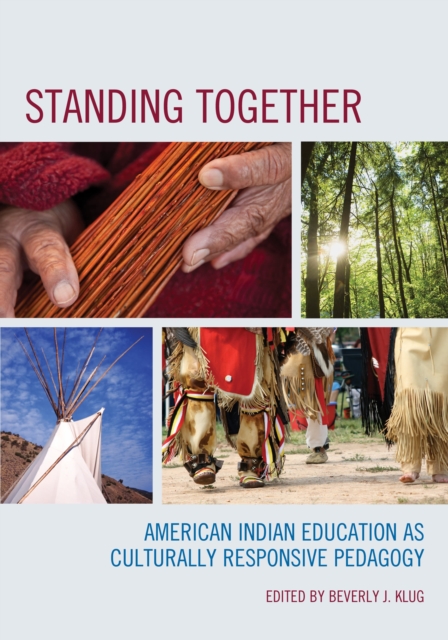
Standing together
The majority of American Indian students attend public schools in the United States. However, education mandated for American Indian students since the 1800s has been primarily education for assimilation, with the goal of eliminating American Indian cultures and languages. Indeed, extreme measures were taken to ensure Native students would “act white” as a result of their involvement with Western education. Today’s educational mandates continue a hegemonic “one-size-fits-all” approach to education. This is in spite of evidence that these approaches have rarely worked for Native students and have been extremely detrimental to Native communities. This book provides information about the importance of teaching American Indian students by bridging home and schools, using students’ cultural capital as a springboard for academic success. Culturally Responsive Pedagogy is explored from its earliest beginnings following the 1928 Meriam Report. Successful education of Native students depends on all involved and respect for the voices of American Indians in calling for education that holds high expectations for native students and allows them to be grounded in their cultures and languages.
eBook