
Catalogue Search | MBRL


Are you sure you want to remove the book from the shelf?

{{itemTitle}}
5,795
result(s) for
"Ethnobotany"
Sort by:


ANALYSIS OF OVER-THE-COUNTER ANALGESICS PURPORTED TO CONTAIN MESCALINE FROM THE PEYOTE CACTUS (LOPHOPHORA WILLIAMSII: CACTACEAE)
The purpose of this study was to investigate samples of commercial over-the-counter products purported to contain extracts from peyote cactus (Lophophora williamsii), a vulnerable species. Samples were extracted with organic solvent and then washed to remove impurities. The extracts of these products were subjected to an analysis by real-time mass spectrometry (DART-MS) to determine the presence or absence of the alkaloid mescaline (3,4,5-trimethoxyphenethylamine). High-performance liquid chromatography (HPLC) was used to determine mescaline concentrations in the samples and to provide quantitative evidence of the concentration—if any—of mescaline in the products. If a detectable level of mescaline—a stable and abundant alkaloid of L. williamsii—was found in a given extract, then it was inferred that L. williamsii was present in the corresponding topical product. The results of this investigation show that most consumers who purchase the products in question are being defrauded if they believe they are buying L. williamsii-based medicines. The lack of mescaline—implying the lack of peyote—in these products suggests that wild populations of the vulnerable cactus L. williamsii, though currently being decimated on a massive scale in Mexico and the U.S. for other purposes, are rarely harvested for use in topical analgesic products. This conclusion is based on the finding that less than 5% of the ostensible L. williamsii-containing topical analgesic products that were analyzed in this study actually contained mescaline.
El propósito de este estudio fue investigar muestras de productos comerciales de venta libre que supuestamente contenían extractos del cactus peyote (Lophophora williamsii), una especie vulnerable. Las muestras se extrajeron con disolvente orgánico y luego se lavaron para eliminar impurezas. Los extractos de estos productos fueron sometidos a un análisis por espectrometría de masas en tiempo real (DART-MS) para determinar la presencia o ausencia del alcaloide mescalina (3,4,5-trimetoxifenetilamina). La cromatografía líquida de alto rendimiento (HPLC) se utilizó para determinar las concentraciones de mescalina en las muestras y para proporcionar evidencia cuantitativa de la concentración, si la hubiera, de mescalina en los productos. Si se encontraba un nivel perceptible de mescalina—un alcaloide estable y abundante de L. williamsii—en un extracto dado, se deducía que L. williamsii estaba presente en el producto tópico correspondiente. Los resultados de esta investigación muestran, que la mayoría de los consumidores que compran los productos en cuestión, están siendo defraudados si creen que están comprando medicamentos basados en L. williamsii. La falta de mescalina—lo que implica la falta de peyote—en estos productos sugiere que las poblaciones silvestres de los cactus vulnerables L. williamsii, aunque actualmente están siendo diezmadas a gran escala en México y los Estados Unidos para otros fines, rara vez se cosechan para su uso en productos analgésicos tópicos. Esta conclusión está basada en el hallazgo, que menos del 5% de los productos analgésicos tópicos que aparentemente contenían L. williamsii-analizados en este estudio, contenían realmente mescalina.
Journal Article

CORRELATION OF MESCALINE CONCENTRATIONS IN LOPHOPHORA WILLIAMSII (CACTACEAE) WITH RIB NUMBERS AND DIAMETER OF CROWN (U.S.A.)
Lophophora williamsii, peyote, is a small cactus growing to approximately 10 cm in diameter with a flat to dome-shaped spineless crown with fissures or ribs that develop following the Fibonacci series and whose numbers indicate relative degree of maturing. In this study crown tissue of 30 wild-collected specimens was analyzed to determine whether there was a correlation between the concentration of the primary alkaloid mescaline in crown tissue with the average diameter of the crown. We also compared mescaline concentration in three groups of ten individuals: 5 ribs (juvenile stage), 8 ribs (intermediate), and 13 ribs (elder/mature stage), since these Fibonacci numbers are the most stable and long-lasting on L. williamsii. This was designed to test the hypothesis that there is a positive correlation between mescaline concentration and both diameter and rib number. Nine greenhouse-grown specimens were likewise analyzed to serve as a control group for the study. All 39 tissue samples were subjected to an alkaloid extraction procedure followed by an acid-base washing procedure. Mescaline was identified using liquid-chromatography and mass spectroscopy and then quantified using reverse-phase high-pressure liquid chromatography. The Pearson's Chi-squared test showed no statistical correlation between increasing mescaline concentration and increasing rib numbers for field-collected samples and greenhouse-raised control samples. Field-collected samples: 𝑃-value of 0.392; greenhouse control samples: 𝑃-value of 0.313. Similarly, field and greenhouse samples showed no statistical correlation between mescaline concentration and average diameter of the crown. Field-collected samples: 𝑃-value of 0.251; greenhouse control samples: 𝑃-value of 0.229. This study contributes to the understanding of this vulnerable species and to approaches to its overall conservation and the preservation of Native American culture.
Lophophora williamsii es un pequeño cactus que crece hasta aproximadamente 10 cm de diámetro, con una corona sin espinas entre plana y domo. En las especies de cactus con fisuras en las costillas, el número de costillas puede ayudar a determinar una etapa relativa aproximada de desarrollo; costillas se desarrollan siguiendo la serie Fibonacci, con el número de costillas aumentando a medida que un individuo madura. En este estudio se analizó el tejido de la corona de 30 especímenes silvestres recogidos para determinar si había una correlación entre la concentración de mescalina en el tejido de la corona y el diámetro promedio de la corona. También comparamos la concentración de mescalina en tres grupos de diez individuos por grupo: 5 costillas (etapa juvenil), 8 costillas (etapa mayor) y 13 costillas (etapa madura), ya que estos números de Fibonacci son observables en L. williamsii durante períodos más largos de tiempo. Nueve especímenes cultivados en invernadero también fueron analizados para servir como una variable de control para el estudio. Las 39 muestras de tejido fueron sometidas a un procedimiento de extracción de alcaloides seguido de un procedimiento de lavado en base ácida. La mescalina se identificó mediante espectroscopia de masas y luego se cuantificó mediante cromatografía líquida de alta presión de fase inversa. La prueba estadística de Pearson Chi-cuadrado no mostró correlación estadística entre el aumento de la concentración de mescalina y el aumento del número de costillas tanto para muestras recogidas en el campo como para muestras controladas en invernadero (muestras recogidas en el campo: valor P de 0.392; muestras de control en invernadero: valor P de 0.313). Del mismo modo, las muestras de campo e invernadero no mostraron correlación estadística entre la concentración de mescalina y el diámetro medio de la corona (muestras recogidas en el campo: valor P de 0.251; muestras de control en invernadero: valor P de 0.229). Este estudio se suma aún más a la comprensión de esta especie vulnerable y su conservación general por su ecosistema único y la preservación de la cultura Nativa Americana.
Journal Article


In the shadow of slavery : Africa's botanical legacy in the Atlantic world
'In the Shadow of Slavery' explores the wealth of plant life brought to the Americas by slaves and slave ships as provisions, medicines, cordage and bedding, and afterwards cultivated in garden plots. These included coffee, watermelon and okra, as well as the constituents of many well-known products.
Book
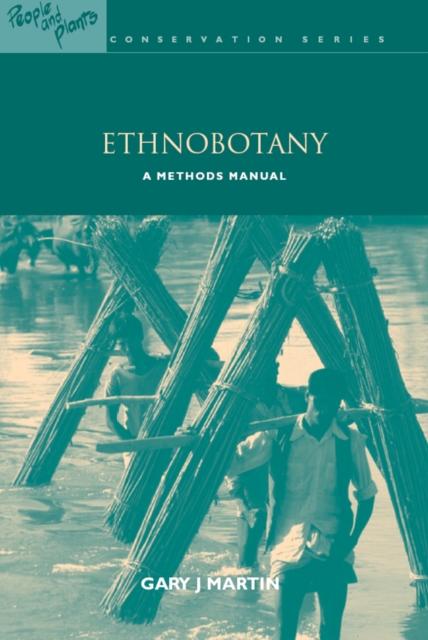
Ethnobotany
Ethnobotany, the study of the classification, use and management of plants by people, draws on a range of disciplines, including natural and social sciences, to show how conservation of plants and of local knowledge about them can be achieved. Ethnobotany is critical to the growing importance of developing new crops and products such as drugs from traditional plants.
This book is the basic introduction to the field, showing how botany, anthropology, ecology, economics and linguistics are all employed in the techniques and methods involved. It explains data collection and hypothesis testing and provides practical ideas on fieldwork ethics and the application of results to conservation and community development. Case studies illustrate the explanations, demonstrating the importance of collaboration in achieving results.
Published with WWF, UNESCO and Royal Botanic Gardens Kew.
eBook

Maya medicine : traditional healing in Yucatan
Annotation This account of the practice of traditional Maya medicine examines the work of curers in Pistâe, Mexico, a small town in the Yucatâan Peninsula near the ruins of Chichâen Itzâa. The traditions of plant use and ethnomedicine applied by these healers have been transmitted from one generation to the next since the colonial period throughout the state of Yucatâan and the adjoining states of Campeche and Quintana Roo. In addition to plants, traditional healers use Western medicine and traditional rituals that include magical elements, for curing in Yucatâan is at once deeply spiritual and empirically oriented, addressing problems of the body, spirit, and mind. Curers either learn from elders or are recruited through revelatory dreams. The men who learn their skills through dreams communicate with supernatural beings by means of divining stones and crystals. Some of the locals acknowledge their medical skills; some disparage them as rustics or vilify them as witches. The curer may act as a doctor, priest, and psychiatrist. This book traces the entire process of curing. The author collected plants with traditional healers and observed their techniques including prayer and massage as well as plant medicine, western medicine, and ritual practices. Plant medicine, she found, was the common denominator, and her book includes information on the plants she worked with and studied.
Book

Araceae Juss. used as an ornamental in Northeastern Brazil
Araceae Juss. is widely used by the local population for various purposes, including food, mysticism and crafts. The aim of this study was to conduct a survey of Araceae species used in neighborhoods in Floriano, Piauí, and to classify these species based on their origin and habit. The research employed the \"Rapport\" technique and semi-structured interviews with residents of the of Floriano, Piauí, along with an analysis of the species use value. Nineteen species belonging to thirteen genera were documented, categorized into two main uses: ornamental and mystical. Species such as Aglaonema commutatum Schott, Dieffenbachia seguine Schott, Epipremnum aureum (Linden & André) G.S.Bunting and Zamioculca zamiifolia (Lodd.)Engl. exhibited the highest use value (0.016 each). These species are predominantly cultivated and are of exotic origin, with varying habits including climbing, epiphytic, hemiepiphytic, and herbaceous. Caladium bicolor, Monstera obliqua and Philodendron acutatum are species native to Brazil, found in the Northeast region. However, only while Philodendron acutatum was recorded on the flora of the state. Studies like this contributes to the dissemination of local knowledge and facilitate the exploration of the Araceae flora. Further research is warranted to identify additional use categories and to catalog Araceae species specific to the state, given the limited availability of studies on this plant family in the region.
Journal Article