
Catalogue Search | MBRL


Are you sure you want to remove the book from the shelf?

{{itemTitle}}
17
result(s) for
"Ethnology Persian Gulf States."
Sort by:
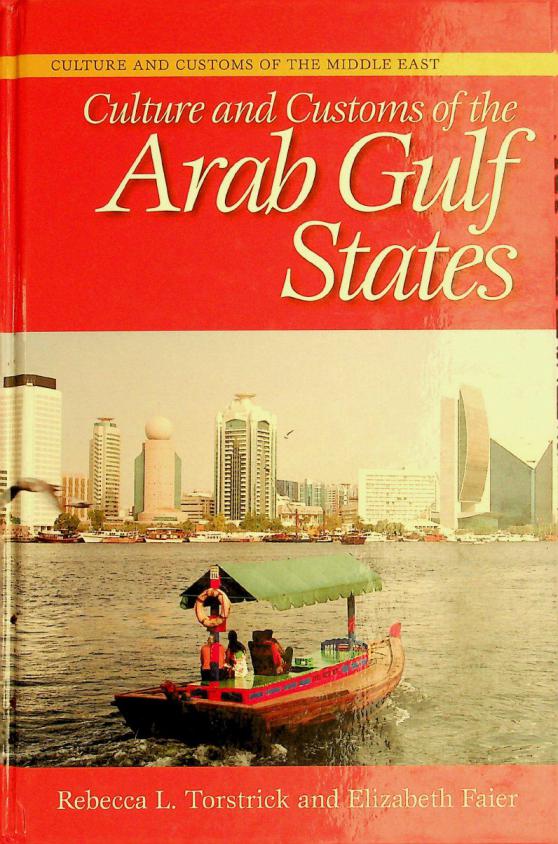
Culture and customs of the Arab Gulf States
From the Publisher: Names such as Dubai and Abu Dhabi have been emerging in the world's eye over the past decade as exotic hotspots, wealthy from oil production and advanced in the means of technology. However, at the same time, the Arab Gulf States have managed to maintain their traditional culture, adapting it to modern life. With complete coverage on Oman, Qatar, Bahrain, Kuwait, and the United Arab Emirates, Culture and Customs of the Arab Gulf States is a must-have for every high school and public library shelf. Clear and vivid descriptions of contemporary life in the Arab Gulf help students discover how traditions of the past have evolved into customs today. This exhaustive volume covers topics such as religion, festivals, cuisine, fashion, family life, literature, the media, and music, among many others. Up-to-date and comprehensive, this volume offers a unique and contemporary depiction of culture in some of the world's wealthiest, up-and-coming nations. Exciting, exhaustive, and essential coverage on the Arab Gulf States, this work is ideal for high school students and general readers.
Book

Tribal modern
In the 1970s, one of the most torrid and forbidding regions in the world burst on to the international stage. The discovery and subsequent exploitation of oil allowed tribal rulers of the U.A.E, Qatar, Bahrain, and Kuwait to dream big. How could fishermen, pearl divers and pastoral nomads catch up with the rest of the modernized world? Even today, society is skeptical about the clash between the modern and the archaic in the Gulf. But could tribal and modern be intertwined rather than mutually exclusive? Exploring everything from fantasy architecture to neo-tribal sports and from Emirati dress codes to neo-Bedouin poetry contests, Tribal Modern explodes the idea that the tribal is primitive and argues instead that it is an elite, exclusive, racist, and modern instrument for branding new nations and shaping Gulf citizenship and identity—an image used for projecting prestige at home and power abroad.
eBook

Tribal modern : branding new nations in the Arab Gulf
\"In the 1970s, one of the most torrid and forbidding regions in the world burst on to the international stage. The discovery and subsequent exploitation of oil allowed tribal rulers of the U.A.E, Qatar, Bahrain, and Kuwait to dream big. How could fishermen, pearl divers and pastoral nomads catch up with the rest of the modernized world? Even today, society is skeptical about the clash between the modern and the archaic in the Gulf. But could tribal and modern be intertwined rather than mutually exclusive? Exploring everything from fantasy architecture to neo-tribal sports and from Emirati dress codes to neo-Bedouin poetry contests, Tribal Modern explodes the idea that the tribal is primitive and argues instead that it is an elite, exclusive, racist, and modern instrument for branding new nations and shaping Gulf citizenship and identity-an image used for projecting prestige at home and power abroad\"-- Provided by publisher.
Book

The Politics and Security of the Gulf
Since the 19th century the Gulf region has been an area of intense interest, having been influenced first by the British and more recently by the Americans. This book charts the changing security and political priorities of these two powers and how they have shaped the region.
Adopting a narrative approach, the author provides background history on British involvement from the 19th century and a detailed analysis of the years after the Second World War, when oil supply became more critical. He covers the growth of US influence and the British withdrawal, and follows more recent changes as the US built up its military presence following Desert Storm and the invasion of Iraq. Looking at the three enduring missions fulfilled by the British - maintaining interstate order, protecting the free flow of commerce, which later included petroleum; and keeping out other Great Powers – the book demonstrates how these had by 1991 been assumed almost entirely by the American leaders.
A comprehensive and thorough look at the history of the Gulf and the contemporary issues affecting the region, this will be essential reading for students of Middle East history, military history and diplomatic history. Visit the author's website at www.thepoliticsandsecurityofthegulf.com
1. Great Britain’s Legacy in the Persian Gulf 2. World War II and the Arrival of the Americans 3. The Early Cold War, the Loss of India, and Nasser's Revolt Against the British, 1946-1958 4. The British Position in the Gulf under Assault 5. America Watches as the British Birth a New Gulf Order, 1968-1971 6. The Chaotic Interregnum: America Cries Enough, 1972-1991 7. Pax Americana - Bellum Americanum, 1991-present. Conclusion
Jeffrey R. Macris is a Permanent Military Professor at the U.S. Naval Academy in Annapolis, where he teaches Middle Eastern history and military history. A resident of the Persian Gulf for nearly three years, he has worked with military officers from most of the Arab states of the Gulf.
Reviews and further information on the title and the author can be found on the books website at: www.thepoliticsandsecurityofthegulf.com
\"This comprehensive work presents and in-depth analysis of how British since the 19 th century, and more recently the United States, have influenced and shaped the politics and security of the Persian Gulf region… This is a truly remarkable book of major importance that crosses several disciplines. It is a must-read for those interested in Middle East history, strategic studies, military history, and American British diplomatic history.\" – Dr. Shaheen Ayubi, professor of Political Science, Rutgers University
\"A superb political-military study of the Persian Gulf region that provides a sophisticated analysis of British interests, past and present, and how the United States inherited its current security role driven largely by Britain's withdrawal \"East of Suez\" and U.S. Cold War fears. It is a legacy, as Dr. Macris cogently points out in his conclusion, that the United States will continue to find difficult to discharge in the 21st century as guardian of global public goods.\" -- Frank L. Jones, Professor of Security Studies, U.S. Army War College
“Jeffrey Macris, has written a first-rate, timely and much-needed account of the handover of responsibility for the security of the Gulf from Britain to the United States during the past four decades. Let us hope that American and British policymakers will read it in order to avoid the mistakes of the past.” -- Dr. Saul Kelly, Defence Studies Department, King's College, London, UK Joint Services Command and Staff College
“Prof. Macris's work is an outstanding contribution to our understanding of the critically important Gulf region. His extensive research provides the reader with a well-written, balanced view of the roles of both of London and Washington in this area of the world.” -- Miriam Joyce, Ph.D., Professor of History, Purdue University Calumet
More reviews and further information on the title and the author can be found on the books website at: www.thepoliticsandsecurityofthegulf.com
eBook

Collaborative colonialism : the political economy of oil in the Persian Gulf
This book is an analysis of how oil has affected governance and human, political, and economic development in the countries of the Persian Gulf and shaped these countries' relations with the rest of the world.
eBook

Viral Gastroenteritis Associated with Genogroup II Norovirus among U.S. Military Personnel in Turkey, 2009
The present study demonstrates that multiple NoV genotypes belonging to genogroup II contributed to an acute gastroenteritis outbreak at a US military facility in Turkey that was associated with significant negative operational impact. Norovirus (NoV) is an important pathogen associated with acute gastroenteritis among military populations. We describe the genotypes of NoV outbreak occurred at a United States military facility in Turkey. Stool samples were collected from 37 out of 97 patients presenting to the clinic on base with acute gastroenteritis and evaluated for bacterial and viral pathogens. NoV genogroup II (GII) was identified by RT-PCR in 43% (16/37) stool samples. Phylogenetic analysis of a 260 base pair fragment of the NoV capsid gene from ten stool samples indicated the circulation of multiple and rare genotypes of GII NoV during the outbreak. We detected four GII.8 isolates, three GII.15, two GII.9 and a sole GII.10 NoV. Viral sequences could be grouped into four clusters, three of which have not been previously reported in Turkey. The fact that current NoV outbreak was caused by rare genotypes highlights the importance of norovirus strain typing. While NoV genogroup II is recognized as causative agent of outbreak, circulation of current genotypes has been rarely observed in large number of outbreaks.
Journal Article

Interpreters of occupation
During the Iraq War, thousands of young Baghdadis worked as interpreters for US troops, becoming the front line of the so-called War on Terror. Deployed by the military as linguistic as well as cultural interpreters-translating the \"human terrain\" of Iraq-members of this network urgently honed identification strategies amid suspicion from US forces, fellow Iraqis, and, not least of all, one another. In Interpreters of Occupation, Campbell traces the experiences of twelve individuals from their young adulthood as members of the last Ba'thist generation, to their work as interpreters, through their navigation of the US immigration pipeline, and finally to their resettlement in the United States. Throughout, Campbell considers how these men and women grappled with issues of belonging and betrayal, both on the battlefield in Iraq and in the US-based diaspora.A nuanced and richly detailed ethnography, Interpreters of Occupation gives voice to a generation of US allies through their diverse and vividly rendered life histories. In the face of what some considered a national betrayal in Iraq and their experiences of otherness within the United States, interpreters negotiate what it means to belong to a diasporic community in flux.
eBook

Medical Complaints Among Iraqi American Refugees With Mental Disorders
The Gulf War in 1991 resulted in an influx of refugees from Iraq to the United States and to other regions of the world. The purpose of this study was to describe the self-reported medical complaints of Iraqi American refugees who were seeking mental health services in southeastern Michigan. We anticipated that the frequency and pattern of medical symptoms would differ from that reported in the literature on United States Gulf War veterans or other Arab Americans who immigrated to the U.S. in the 1990s. Potential reasons for such differences include indirect effects, such as neglect of general health prior to and during the war, or direct effects, such as the impact of environmental changes from the war itself. As part of a larger study on the health of refugees from Iraq, self-reported medical conditions and symptoms were analyzed in a sample of 116 adult Iraqi immigrants (46 male, 70 female) who were seeking or already receiving outpatient mental health services (n = 87) or treatment in a partial hospitalization program (n = 29). Measures were translated into Arabic and administered in an interview format by one of two bilingual mental health workers. The results were consistent with other studies on refugees in which the number of medical complaints reported was relatively high. Discussion centers on the importance of addressing the specific medical needs of refugees in general, and of the Iraqi refugees in particular, and on how they may be better served within our primary health care systems.
Journal Article

Deadly contradictions: global warring theory and the Iraq war, 1991-2011
This essay presents global warring theory and explores its utility for explaining the recent USA-Iraq War. In global warring theory, imperial global warring is what is to be explained; contradiction, reproduction, security elites, and their hermeneutic politics as well as their public délires do the explaining. First, the two concepts to be explained are presented; next, those that do the explaining are discussed. The theory puts contradiction front and center in the understanding of contemporary wars, but introduces the notions of hermeneutic politics and public délires to account for how, and when, security elites respond with violence to contradiction. Finally, the theory is illustrated with reference to the recent Iraq War.
Journal Article

Reflections on the Culture of Veterans
Veterans, as a cultural group, present unique challenges to health care providers. Veteran culture includes health inequalities and health disparities related to posttraumatic stress disorder, depression, and substance abuse that must be understood in context to provide the best care possible to this population. Veterans are not, however, frequently viewed in terms of culturally competent nursing care. Changes in the approach to this population are necessary to provide effective, comprehensive, and compassionate care.
Journal Article