
Catalogue Search | MBRL


Are you sure you want to remove the book from the shelf?

{{itemTitle}}
12
result(s) for
"Ethnology Research Computer network resources."
Sort by:


Digital Ethnography: An Examination of the Use of New Technologies for Social Research
The rise of digital technologies has the potential to open new directions in ethnography. Despite the ubiquity of these technologies, their infiltration into popular sociological research methods is still limited compared to the insatiable uptake of online scholarly research portals. This article argues that social researchers cannot afford to continue this trend. Building upon pioneering work in 'digital ethnography', I critically examine the possibilities and problems of four new technologies - online questionnaires, digital video, social networking websites, and blogs - and their potential impacts on the research relationship. The article concludes that a balanced combination of physical and digital ethnography not only gives researchers a larger and more exciting array of methods, but also enables them to demarginalize the voice of respondents. However, access to these technologies remains stratified by class, race, and gender of both researchers and respondents.
Journal Article


Digital Ethnography
Digital ethnography can be understood as a method for representing real-life cultures through storytelling in digital media. Enabling audiences to go beyond absorbing facts, computer-based storytelling allows for immersion in the experience of another culture. A guide for anyone in the social sciences who seeks to enrich ethnographic techniques,Digital Ethnographyoffers a groundbreaking approach that utilizes interactive components to simulate cultural narratives.
Integrating insights from cultural anthropology, folklore, digital humanities, and digital heritage studies, this work brims with case studies that provide in-depth discussions of applied projects. Web links to multimedia examples are included as well, including projects, design documents, and other relevant materials related to the planning and execution of digital ethnography projects. In addition, new media tools such as database development and XML coding are explored and explained, bridging the literature on cyber-ethnography with inspiring examples such as blending cultural heritage with computer games.
One of the few books in its field to address the digital divide among researchers,Digital Ethnographyguides readers through the extraordinary potential for enrichment offered by technological resources, far from restricting research to quantitative methods usually associated with technology. The authors powerfully remind us that the study of culture is as much about affective traits of feeling and sensing as it is about cognition-an approach facilitated (not hindered) by the digital age.
eBook
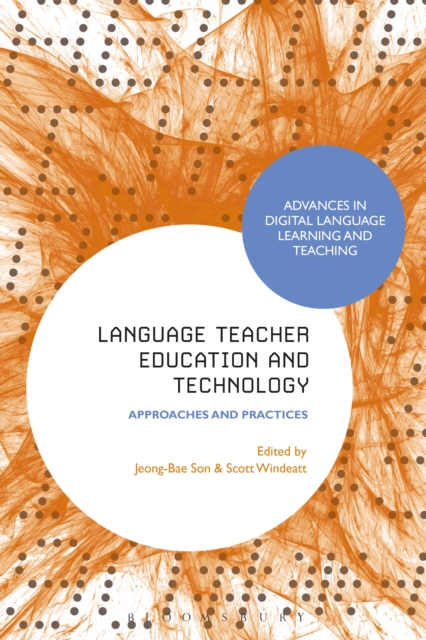
Language Teacher Education and Technology
Language teachers’ competencies in computer-assisted language learning (CALL) are a crucial factor affecting their own implementation of CALL. However, there is still a concern that many language teachers are not adequately prepared to make effective use of CALL or to identify and evaluate potential CALL solutions. This can be the result of many different factors and raises the question of how to train teachers to develop their CALL knowledge and skills to a greater degree. The discussion of approaches to training language teachers in the use of technology adopted in areas of Australia, the UK and the US provides valuable insights for those already involved in this area, and inspiration for those who have some interest in carrying out this kind of training, but as yet have little or no experience. This book explores the current status of CALL teacher education and discusses issues and challenges CALL teacher educators face in their own contexts. Specifically, it looks at postgraduate CALL courses offered at different universities to find ways of improving CALL teacher training. It represents the first overview of a topic that is relevant to most postgraduate courses in Applied Linguistics or TESOL across the globe. The use of technology for language learning and teaching is increasingly common but, as is so often the case, training for teachers in how to use that technology remains limited, to a large extent by lack of expertise among trainers.
eBook

Task-Based Language Learning in a Real-World Digital Environment
How can you use the latest digital technology to create an environment in which people can learn European languages while performing a meaningful real-world task and experiencing the cultural aspect of learning to cook European dishes?.
eBook

Qualitative research and hypermedia : ethnography for the digital age
This text sets out to equip qualitative researchers with the tools necessary to conduct ethnography in the age of email and the internet. It will investigate how digital technologies potentially transform the ways in which we do research. This text also introduces the reader to new emerging methods that utilise new technologies and explains how to conduct data collection, analysis and representation using new technologies and `hypermedia′.
eBook
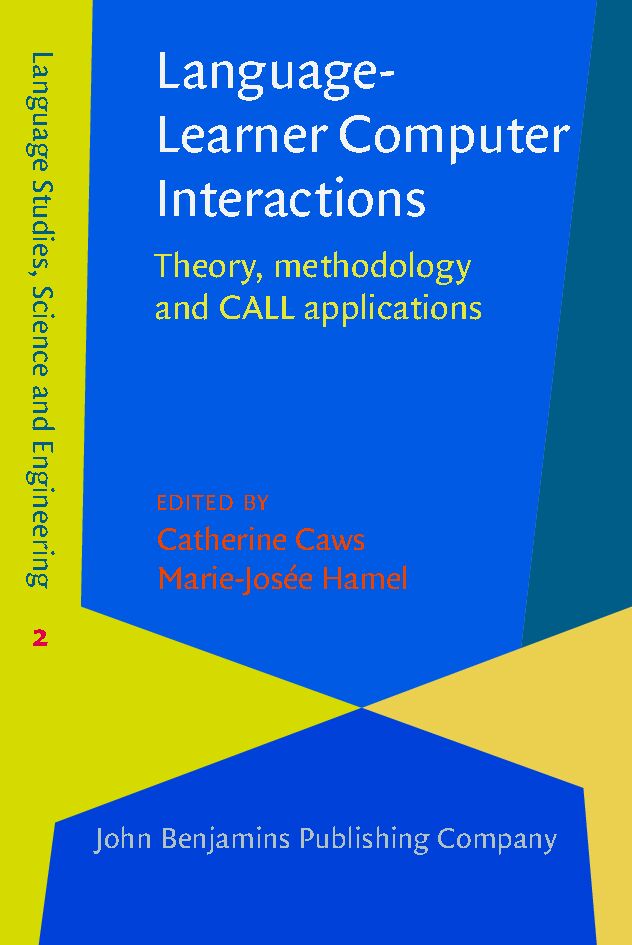
Language-Learner Computer Interactions
This book focuses on learner-computer interactions (LCI) in second language learning environments drawing largely on sociocultural theories of language development. It brings together a rich and varied range of theoretical discussions and applications in order to illustrate the way in which LCI can enrich our comprehension of technology-mediated communication, hence enhancing learners’ digital literacy skills. The book is based on the premise that, in order to fully understand the nature of language and literacy development in digital spaces, researchers and practitioners in linguistics, sciences and engineering need to borrow from each others’ theoretical and practical toolkits. In light of this premise, themes include such aspects as educational ergonomics, affordances, complex systems learning, learner personas and corpora, while also describing such data collecting tools as video screen capture devices, eye-tracking or intelligent learning tutoring systems.
eBook
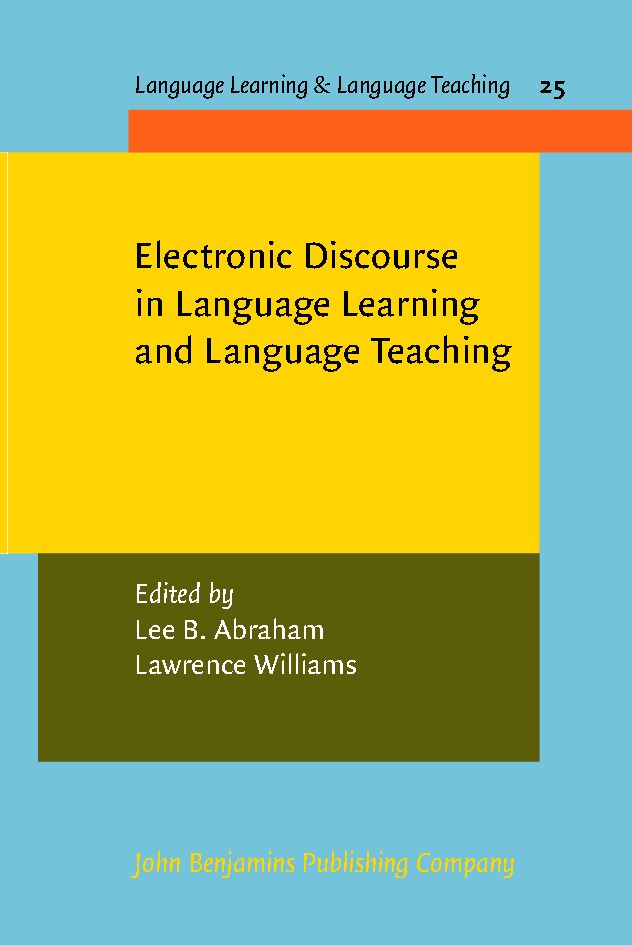
Electronic Discourse in Language Learning and Language Teaching
New technologies are constantly transforming traditional notions of language use and literacy in online communication environments. While previous research has provided a foundation for understanding the use of new technologies in instructed second language environments, few studies have investigated new literacies and electronic discourse beyond the classroom setting. This volume seeks to address this gap by providing corpus-based and empirical studies of electronic discourse analyzing social and linguistic variation as well as communicative practices in chat, discussion forums, blogs, and podcasts. Several chapters also examine the assessment and integration of new literacies. This volume will serve as a valuable resource for researchers, teachers, and students interested in exploring electronic discourse and new literacies in language learning and teaching.
eBook
Language and the Internet
David Crystal investigates the nature of the impact which the Internet is making on language. There is already a widespread popular mythology that the Internet is going to be bad for the future of language - that technospeak will rule, standards be lost, and creativity diminished as globalization imposes sameness. The argument of this book is the reverse: that the Internet is in fact enabling a dramatic expansion to take place in the range and variety of language, and is providing unprecedented opportunities for personal creativity. The Internet has now been around long enough for us to 'take a view' about the way in which it is being shaped by and is shaping language and languages, and there is no-one better placed than David Crystal to take that view. His book is written to be accessible to anyone who has used the Internet and who has an interest in language issues.
eBook