
Catalogue Search | MBRL


Are you sure you want to remove the book from the shelf?

{{itemTitle}}
10
result(s) for
"Etruria Antiquities."
Sort by:

The archaeology of Etruscan society
This is a significant new interpretation of Etruscan material culture which should transform our understanding of Etruscan society.
Book
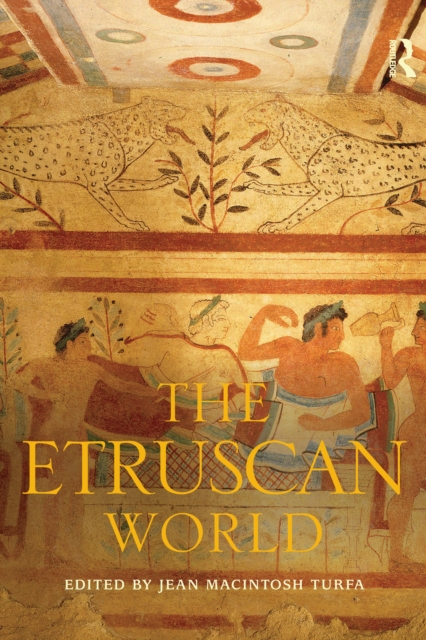
The Etruscan World
The Etruscans can be shown to have made significant, and in some cases perhaps the first, technical advances in the central and northern Mediterranean. To the Etruscan people we can attribute such developments as the tie-beam truss in large wooden structures, surveying and engineering drainage and water tunnels, the development of the foresail for fast long-distance sailing vessels, fine techniques of metal production and other pyrotechnology, post-mortem C-sections in medicine, and more. In art, many technical and iconographic developments, although they certainly happened first in Greece or the Near East, are first seen in extant Etruscan works, preserved in the lavish tombs and goods of Etruscan aristocrats. These include early portraiture, the first full-length painted portrait, the first perspective view of a human figure in monumental art, specialized techniques of bronze-casting, and reduction-fired pottery (the bucchero phenomenon). Etruscan contacts, through trade, treaty and intermarriage, linked their culture with Sardinia, Corsica and Sicily, with the Italic tribes of the peninsula, and with the Near Eastern kingdoms, Greece and the Greek colonial world, Iberia, Gaul and the Punic network of North Africa, and influenced the cultures of northern Europe.
In the past fifteen years striking advances have been made in scholarship and research techniques for Etruscan Studies. Archaeological and scientific discoveries have changed our picture of the Etruscans and furnished us with new, specialized information. Thanks to the work of dozens of international scholars, it is now possible to discuss topics of interest that could never before be researched, such as Etruscan mining and metallurgy, textile production, foods and agriculture. In this volume, over 60 experts provide insights into all these aspects of Etruscan culture, and more, with many contributions available in English for the first time to allow the reader access to research that ma
eBook


The Villanovan, Etruscan, and Hellenistic Collections in the Detroit Institute of Arts
This catalogue brings together for the first time the wide-ranging Villanovan and Etruscan collections of the Detroit Institute of Arts with photographs and relevant bibliographic sources on their cultural and religious functions in antiquity.
eBook
Votives, Places and Rituals in Etruscan Religion
By considering votive, mortuary and secular rituals, the volume offers a contribution to the continued study of Etruscan culture and gathers new material, interpretations and approaches to the less emphasized areas of Etruscan religion.
eBook
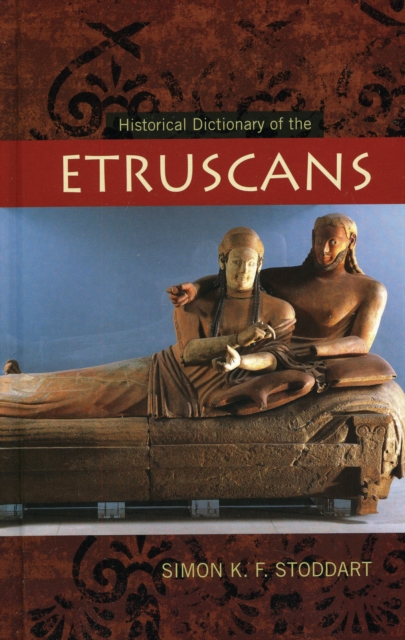
Historical Dictionary of the Etruscans
The Etruscans were the creators of one of the most highly developed cultures of the pre-Roman Era. Having, at one time, control over a significant part of the Mediterranean, the Etruscans laid the foundation of the city of Rome. They had their own language, which has never been totally decoded, and their art influenced such artists as Michelangelo. While the Etruscans were eventually conquered by the Romans, they left a rich culture behind. The Historical Dictionary of the Etruscans relates the history of this culture, focusing on aspects of their material culture and art history. A chronology, introductory essay, bibliography, appendix of museums and research institutes, and hundreds of cross-referenced dictionary entries on important persons, places, events, and institutions provide an entry into a comparative study of the Etruscans.
eBook

Learning and Knowledge Loss: Returning Antiquities from Fordham University to Italy
In May 2021 a group of 96 classical antiquities was seized from Fordham University where they had formed part of their museum collection. The seizure was directly linked to the investigation by US authorities of objects that had been handled by the dealer Edoardo Almagià. The Fordham material was dominated by objects derived from Italy: Apulian, Campanian, and Paestan figure-decorated pottery; red-on-white ware associated with Crustumerium in Lazio; and Etruscan pottery, architectural terracottas, and terracotta votives. The objects were all donated to Fordham by William D. Walsh and had largely been acquired at auctions or through a narrow group of Manhattan galleries.
Journal Article
Experiencing Etruscan Pots
In a world without plastics, ceramics, alongside organic containers, were used for almost every substance which required protection or containment: from perfume to porridge. The experience of an Etruscan person, living day to day, would have been filled with interactions with ceramics, making them objects which can recall intimate transactions in the past to the archaeologist in the present. Characterising that experience of Etruscan pottery is the concern of this book. What was it like to use and live with Etruscan pottery? How was the interaction between an Etruscan pot structured and constituted? How can that experience be related back to bigger questions about the organisation of Etruscan society, its increasingly urban nature and relationship with other Mediterranean cultures? More specifically, this volume aims to unpick both the physical encounter between vessel and hand, and the emotional interaction between the user of a pot and the images inscribed upon its surface.
eBook

Settlement and Society in Early Imperial Etruria
This paper compares the early imperial period results from thirty surveys in and around regio VII Etruria in order to identify similarities and differences of settlement, population, and economy. Three sub-regional patterns are defined: the suburbium, coastal Etruria, and inland Etruria. Consideration of methodological issues of survey comparison suggests the problem is real, but not insuperable. A range of interpretative models is discussed with particular reference to the impact of the Urbs on economic, agricultural, and social developments. The structural connections between these sub-regions are emphasized, particularly the organization of labour, demography, and agricultural strategies. The results reveal varied responses to Roman control, leading to more not less diversity. More generally, the results underline the value of comparing regional survey data.
Journal Article
Etruscan odyssey : expanding archaeology
The mysterious Etruscan civilization dominated the central region of ancient Italy, around what is now the heartland of Tuscany -- before and during the Roman dynasties. While the origins of the Etruscans are lost to pre-written history, Etruria is distinguished from other ancient societies through their remarkable culture, which featured unique language, powerful women, arcane religious beliefs, and magnificent art and architecture. This film documents the work of Dr. P. Gregory Warden and his team as they search the hilltops of Poggio Colia, Italy, for any clues into the mysterious Etruscan civilization. By restoring and cataloguing the cultural artifacts left behind by ancient settlers, modern archaeologists attempt to reconstruct a picture of daily life in Etruria. Among the issues addressed is what was it like to make the great gold jewels for the ruling families? And to build the complex sarcophagi to hold the remains?
Streaming Video