
Catalogue Search | MBRL


Are you sure you want to remove the book from the shelf?

{{itemTitle}}
1,959
result(s) for
"Eukaryotic cells Evolution."
Sort by:


Evolution of early eukaryotic cells: genomes, proteomes, and compartments
Eukaryotes arose from an endosymbiotic association of an α-proteobacterium-like organism (the ancestor of mitochondria) with a host cell (lacking mitochondria or plastids). Plants arose by the addition of a cyanobacterium-like endosymbiont (the ancestor of plastids) to the two-member association. Each member of the association brought a unique internal environment and a unique genome. Analyses of recently acquired genomic sequences with newly developed algorithms have revealed (a) that the number of endosymbiont genes that remain in eukaryotic cells--principally in the nucleus--is surprisingly large, (b) that protein products of a large number of genes (or their descendents) that entered the association in the genome of the host are now directed to an organelle derived from an endosymbiont, and (c) that protein products of genes traceable to endosymbiont genomes are directed to the nucleo-cytoplasmic compartment. Consideration of these remarkable findings has led to the present suggestion that contemporary eukaryotic cells evolved through continual chance relocation and testing of genes as well as combinations of gene products and biochemical processes in each unique cell compartment derived from a member of the eukaryotic association. Most of these events occurred during about 300 million years, or so, before contemporary forms of eukaryotic cells appear in the fossil record; they continue today.
Journal Article
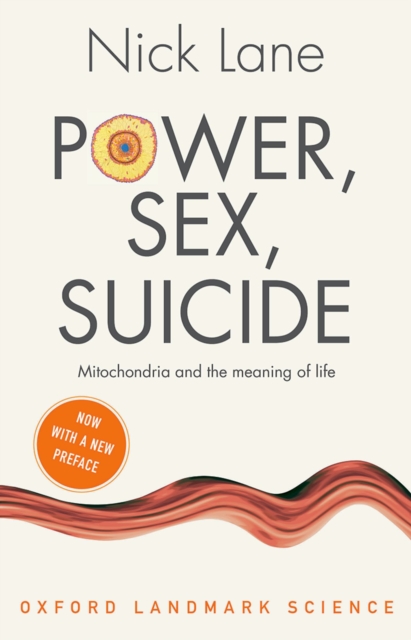
Power, sex, suicide : mitochondria and the meaning of life
Mitochondria are tiny structures within all our cells, believed to have once evolved from bacteria living independent lives. Drawing on cutting edge research, this book explores the fundamental role they play in some of the biggest themes in biology: evolution, the origin of the sexes, in growth, ageing, disease, and in death.
eBook

Isolation of an archaeon at the prokaryote–eukaryote interface
The origin of eukaryotes remains unclear
1
–
4
. Current data suggest that eukaryotes may have emerged from an archaeal lineage known as ‘Asgard’ archaea
5
,
6
. Despite the eukaryote-like genomic features that are found in these archaea, the evolutionary transition from archaea to eukaryotes remains unclear, owing to the lack of cultured representatives and corresponding physiological insights. Here we report the decade-long isolation of an Asgard archaeon related to Lokiarchaeota from deep marine sediment. The archaeon—‘
Candidatus
Prometheoarchaeum syntrophicum’ strain MK-D1—is an anaerobic, extremely slow-growing, small coccus (around 550 nm in diameter) that degrades amino acids through syntrophy. Although eukaryote-like intracellular complexes have been proposed for Asgard archaea
6
, the isolate has no visible organelle-like structure. Instead,
Ca
. P. syntrophicum is morphologically complex and has unique protrusions that are long and often branching. On the basis of the available data obtained from cultivation and genomics, and reasoned interpretations of the existing literature, we propose a hypothetical model for eukaryogenesis, termed the entangle–engulf–endogenize (also known as E
3
) model.
Isolation and characterization of an archaeon that is most closely related to eukaryotes reveals insights into how eukaryotes may have evolved from prokaryotes.
Journal Article
Asgard archaea illuminate the origin of eukaryotic cellular complexity
The origin and cellular complexity of eukaryotes represent a major enigma in biology. Current data support scenarios in which an archaeal host cell and an alphaproteobacterial (mitochondrial) endosymbiont merged together, resulting in the first eukaryotic cell. The host cell is related to Lokiarchaeota, an archaeal phylum with many eukaryotic features. The emergence of the structural complexity that characterizes eukaryotic cells remains unclear. Here we describe the ‘Asgard’ superphylum, a group of uncultivated archaea that, as well as Lokiarchaeota, includes Thor-, Odin- and Heimdallarchaeota. Asgard archaea affiliate with eukaryotes in phylogenomic analyses, and their genomes are enriched for proteins formerly considered specific to eukaryotes. Notably, thorarchaeal genomes encode several homologues of eukaryotic membrane-trafficking machinery components, including Sec23/24 and TRAPP domains. Furthermore, we identify thorarchaeal proteins with similar features to eukaryotic coat proteins involved in vesicle biogenesis. Our results expand the known repertoire of ‘eukaryote-specific’ proteins in Archaea, indicating that the archaeal host cell already contained many key components that govern eukaryotic cellular complexity.
This work describes the Asgard superphylum, an assemblage of diverse archaea that comprises Odinarchaeota, Heimdallarchaeota, Lokiarchaeota and Thorarchaeota, offering insights into the earliest days of eukaryotic cells and their complex features.
Archaea with eukaryotic tendencies
Although the origin of eukaryotic cells from prokaryotic ancestors remains an enigma, it has become clear that the root of eukaryotes lies among a group of prokaryotes known as archaea. The recent identification of newly described archaea belonging to the Asgard superphylum, including Lokiarchaeota and Thorarchaeota, revealed a group of prokaryotes containing many proteins and genetic sequences that are otherwise found only in eukaryotes. Thijs Ettema and colleagues extend the search for eukaryotic roots by describing further additions to the Asgard superphylum: the Odinarchaeota and Heimdallarchaeota. The new Asgard genomes encode homologues of several components of eukaryotic membrane-trafficking machineries, suggesting that the archaeal ancestor of eukaryotes was well equipped to evolve the complex cellular features that are characteristic of eukaryotic cells.
Journal Article
Lost world of complex life and the late rise of the eukaryotic crown
Eukaryotic life appears to have flourished surprisingly late in the history of our planet. This view is based on the low diversity of diagnostic eukaryotic fossils in marine sediments of mid-Proterozoic age (around 1,600 to 800 million years ago) and an absence of steranes, the molecular fossils of eukaryotic membrane sterols
1
,
2
. This scarcity of eukaryotic remains is difficult to reconcile with molecular clocks that suggest that the last eukaryotic common ancestor (LECA) had already emerged between around 1,200 and more than 1,800 million years ago. LECA, in turn, must have been preceded by stem-group eukaryotic forms by several hundred million years
3
. Here we report the discovery of abundant protosteroids in sedimentary rocks of mid-Proterozoic age. These primordial compounds had previously remained unnoticed because their structures represent early intermediates of the modern sterol biosynthetic pathway, as predicted by Konrad Bloch
4
. The protosteroids reveal an ecologically prominent ‘protosterol biota’ that was widespread and abundant in aquatic environments from at least 1,640 to around 800 million years ago and that probably comprised ancient protosterol-producing bacteria and deep-branching stem-group eukaryotes. Modern eukaryotes started to appear in the Tonian period (1,000 to 720 million years ago), fuelled by the proliferation of red algae (rhodophytes) by around 800 million years ago. This ‘Tonian transformation’ emerges as one of the most profound ecological turning points in the Earth’s history.
Analysis of sedimentary rocks from the mid-Proterozoic interval reveals traces of protosteroids, suggesting the widespread presence of stem-group eukaryotes that predated and co-existed with the crown-group ancestors of modern eukaryotes.
Journal Article

Dynamic RNA acetylation revealed by quantitative cross-evolutionary mapping
N
4
-acetylcytidine (ac
4
C) is an ancient and highly conserved RNA modification that is present on tRNA and rRNA and has recently been investigated in eukaryotic mRNA
1
–
3
. However, the distribution, dynamics and functions of cytidine acetylation have yet to be fully elucidated. Here we report ac
4
C-seq, a chemical genomic method for the transcriptome-wide quantitative mapping of ac
4
C at single-nucleotide resolution. In human and yeast mRNAs, ac
4
C sites are not detected but can be induced—at a conserved sequence motif—via the ectopic overexpression of eukaryotic acetyltransferase complexes. By contrast, cross-evolutionary profiling revealed unprecedented levels of ac
4
C across hundreds of residues in rRNA, tRNA, non-coding RNA and mRNA from hyperthermophilic archaea. Ac
4
C is markedly induced in response to increases in temperature, and acetyltransferase-deficient archaeal strains exhibit temperature-dependent growth defects. Visualization of wild-type and acetyltransferase-deficient archaeal ribosomes by cryo-electron microscopy provided structural insights into the temperature-dependent distribution of ac
4
C and its potential thermoadaptive role. Our studies quantitatively define the ac
4
C landscape, providing a technical and conceptual foundation for elucidating the role of this modification in biology and disease
4
–
6
.
A method termed ac
4
C-seq is introduced for the transcriptome-wide mapping of the RNA modification
N
4
-acetylcytidine, revealing widespread temperature-dependent acetylation that facilitates thermoadaptation in hyperthermophilic archaea.
Journal Article
Inference and reconstruction of the heimdallarchaeial ancestry of eukaryotes
In the ongoing debates about eukaryogenesis—the series of evolutionary events leading to the emergence of the eukaryotic cell from prokaryotic ancestors—members of the Asgard archaea play a key part as the closest archaeal relatives of eukaryotes
1
. However, the nature and phylogenetic identity of the last common ancestor of Asgard archaea and eukaryotes remain unresolved
2
,
3
–
4
. Here we analyse distinct phylogenetic marker datasets of an expanded genomic sampling of Asgard archaea and evaluate competing evolutionary scenarios using state-of-the-art phylogenomic approaches. We find that eukaryotes are placed, with high confidence, as a well-nested clade within Asgard archaea and as a sister lineage to Hodarchaeales, a newly proposed order within Heimdallarchaeia. Using sophisticated gene tree and species tree reconciliation approaches, we show that analogous to the evolution of eukaryotic genomes, genome evolution in Asgard archaea involved significantly more gene duplication and fewer gene loss events compared with other archaea. Finally, we infer that the last common ancestor of Asgard archaea was probably a thermophilic chemolithotroph and that the lineage from which eukaryotes evolved adapted to mesophilic conditions and acquired the genetic potential to support a heterotrophic lifestyle. Our work provides key insights into the prokaryote-to-eukaryote transition and a platform for better understanding the emergence of cellular complexity in eukaryotic cells.
Analyses of multiple phylogenetic marker datasets of Asgard archaea provide insight into the transition from prokaryotes to eukaryotes, specifically placing eukaryotes within Asgard archaea and as a sister lineage to Hodarchaeales.
Journal Article