
Catalogue Search | MBRL


Are you sure you want to remove the book from the shelf?

{{itemTitle}}
10
result(s) for
"Euphrates River Region"
Sort by:

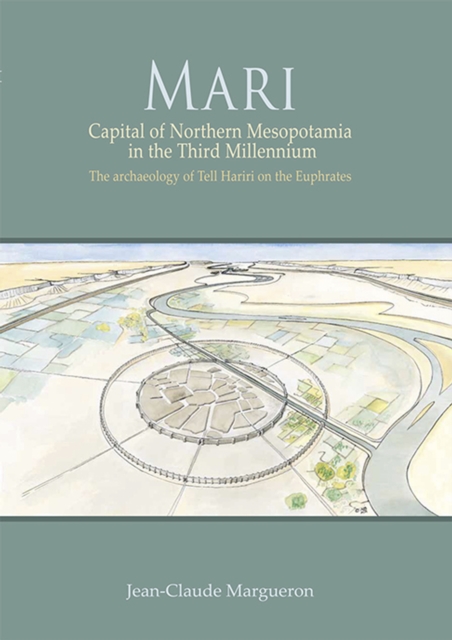
Mari : capital of northern Mesopotamia in the third millennium BC : the archaeology of Tell Hariri on the Euphrates
According to archaeological evidence gleaned over more than 70 years, Mari appears to have been the most important city in northern Mesopotamia from its foundation at about 2950 BC to 1760 BC. Situated at the heart of a river system and progressively linked with an overland network, Mari was the city that controlled the relations of central and southern Mesopotamia with the regions bordering the Taurus and Zagros mountains to the north and east and the Mediterranean coastal zone to the west. Mari drew its power from this situation, and the role it played accounts for the particularity of its features, positioned as it was between the Syrian, Assyrian, Iranian, Babylonian and Sumerian worlds.The evidence shows that there was not one city of Mari, but three successive cities, each having specific features, although there is a striking permanence in the original forms. The first, City I, founded in about 2950 BC, was based on remarkable principles of city planning, including a broad regional development with the creation of canals for irrigation and transport, one more than 120 km long. In the 23rd century BC City II was founded using impressive technology in city planning. Probably destroyed by Naram-Sin of Akkad about 2200 BC, it was entirely reconstructed as City III by a new dynasty, the Shakkanakku. In the 19th century BC this was replaced by an Amorite dynasty, which ruled until Hammurabi of Babylon destroyed Mari in 1760 BC. The diversity of the information and material that has been recovered confirms Mari's place as one of the best sources for understanding the brilliant Mesopotamian civilisation that developed between the beginning of the 3rd and the end of the 1st millennium BC.
eBook

Mari
According to archaeological evidence gleaned over more than 70 years, Mari appears to have been the most important city in northern Mesopotamia from its foundation at about 2950 BC to 1760 BC. Situated at the heart of a river system and progressively linked with an overland network, Mari was the city that controlled the relations of central and southern Mesopotamia with the regions bordering the Taurus and Zagros mountains to the north and east and the Mediterranean coastal zone to the west. Mari drew its power from this situation, and the role it played accounts for the particularity of its features, positioned as it was between the Syrian, Assyrian, Iranian, Babylonian and Sumerian worlds. The evidence shows that there was not one city of Mari, but three successive cities, each having specific features, although there is a striking permanence in the original forms. The first, City I, founded in about 2950 BC, was based on remarkable principles of city planning, including a broad regional development with the creation of canals for irrigation and transport, one more than 120 km long. In the 23rd century BC City II was founded using impressive technology in city planning. Probably destroyed by Naram-Sin of Akkad about 2200 BC, it was entirely reconstructed as City III by a new dynasty, the Shakkanakku. In the 19th century BC this was replaced by an Amorite dynasty, which ruled until Hammurabi of Babylon destroyed Mari in 1760 BC. The diversity of the information and material that has been recovered confirms Mari’s place as one of the best sources for understanding the brilliant Mesopotamian civilisation that developed between the beginning of the 3rd and the end of the 1st millennium BC.
eBook

Role of the East Asian trough on the eastern Mediterranean temperature variability in early spring and the extreme case of 2004 warm spell
This study investigates the potential influence of the East Asian trough (EAT) on the eastern Mediterranean temperature variability in early spring. In connection with this, it also examines the extreme case of the year 2004 when anomalous warming of the eastern Anatolia resulted in unprecedented snowmelt runoff amounts in the Euphrates and Tigris basins in early March. In the analyses, we used reanalysis data, gridded products of surface temperature and snow cover, river discharge data and satellite imagery. We employed an intensity index for the EAT and a trough displacement index for the Mediterranean trough (MedT) to explore the relationship between the strength of the EAT and the displacement of the MedT at pentad resolution. Our analysis shows that there are statistically significant correlations (at 99% confidence level) between the strength of the EAT and the zonal shift of the MedT on some pentads (e.g., 3rd, 13th, 37th and 59th), but that the highest correlation occurs on the 13th pentad of the year corresponding to the early days of March. It seems that, on this pentad, when the EAT is strong, the MedT tends to be located in the west of its climatological position (about
30
-
35
∘
E
) which causes warmer conditions over the eastern Mediterranean. In 2004, which appears to be an extreme year for this phenomenon, the MedT is positioned and deepened in the central Mediterranean (about
10
-
15
∘
E
), and extended towards central Africa during the early days of March. This synoptic pattern provided favorable conditions for the development of a tropical plume/atmospheric river with a southwest-northeast orientation, carrying warm tropical African air towards the eastern Mediterranean and Anatolian highlands resulting in rapid melting of the snowpack as well as severe precipitation, and thus flooding events, in the eastern Anatolia. A key finding in our analysis is that the strengthening of the EAT was instrumental to the increased amplitude of the ridge-trough system over the Euro-Mediterranean region in the early days of 2004 spring. We highlight that the response of surface and upper level meteorological conditions to the amplitude of the ridge-trough system enhanced by the strength of the EAT might be crucial in the understanding of some of the extreme hydrometeorological events in the eastern Mediterranean region.
Journal Article

Insights from Earth Map: Unraveling Environmental Dynamics in the Euphrates–Tigris Basin
The Euphrates–Tigris Basin is experiencing significant environmental transformations due to climate change, Land Use and Land Cover Change (LULCC), and anthropogenic pressures. This study employs Earth Map, an open-access remote sensing platform, to comprehensively assess climate trends, vegetation dynamics, water resource variability, and land degradation across the basin. Key findings reveal a geographic shift toward aridity, with declining precipitation in high-altitude headwater regions and rising temperatures exacerbating water scarcity. While cropland expansion and localized improvements in land productivity were observed, large areas—particularly in hyperarid and steppe zones—show early signs of degradation, increasing the risk of dust source expansion. LULCC analysis highlights substantial wetland loss, irreversible urban growth, and agricultural encroachment into fragile ecosystems, with Iraq experiencing the most pronounced transformations. Climate projections under the SSP245 and SSP585 scenarios indicate intensified warming and aridity, threatening hydrological stability. This study underscores the urgent need for integrated water management, Land Degradation Neutrality (LDN), and climate-resilient policies to safeguard the basin’s ecological and socioeconomic resilience. Earth Map is a vital tool for monitoring environmental changes, offering rapid insights for policymakers and stakeholders in this data-scarce region. Future research should include higher-resolution datasets and localized socioeconomic data to improve adaptive strategies.
Journal Article
The Future Snow Potential and Snowmelt Runoff of Mesopotamian Water Tower
Mountainous basins are frequently called “natural water towers” because they supply essential water to downstream regions for irrigation, industrial–municipal use, and hydropower generation. The possible implications of climate change on water supplies have gained prominence in recent years, particularly in snow-dominated mountainous basins. The Euphrates River, a snow-fed transboundary river that originates from the Eastern part of Türkiye with several large dam reservoirs downstream, was chosen within this scope. The study reveals the impact of climate change on two snow-dominated headwaters, namely Karasu and Murat, which have a basin area of 41,109 km2. The impact of climate change is assessed across runoff regimes and snow dynamics for future periods (2024–2099). Global Climate Model (GCM) data sets (CNRM-CM5, IPSL-CM5A, EC-EARTH, MPI-ESM-LR, NorESM1-M, HadGEM2-ES) were downscaled by Regional Circulation Models (RCMs), provided from CMIP5 EURO-CORDEX domain for climate projections under RCP4.5 and RCP8.5 scenarios. Future projections of runoff and snow variables are predicted by two conceptual hydrological models, HBV and HEC-HMS. The results indicate a dramatic shrink in snow cover extents (>65%) and snow duration (25%), a decrease in snow water equivalent (>50%), and a timely shift (up to a month) in peak runoff through early spring in the runoff hydrograph for the last future period (2075–2099). The overall assessment shows that operations of downstream water systems should be reconsidered for future changes.
Journal Article

Deltas in Arid Environments
Due to increasing water use, diversion and salinization, along with subsidence and sea-level rise, deltas in arid regions are shrinking worldwide. Some of the most ecologically important arid deltas include the Colorado, Indus, Nile, and Tigris-Euphrates. The primary stressors vary globally, but these deltas are threatened by increased salinization, water storage and diversion, eutrophication, and wetland loss. In order to make these deltas sustainable over time, some water flow, including seasonal flooding, needs to be re-established. Positive impacts have been seen in the Colorado River delta after flows to the delta were increased. In addition to increasing freshwater flow, collaboration among stakeholders and active management are necessary. For the Nile River, cooperation among different nations in the Nile drainage basin is important. River flow into the Tigris-Euphrates River delta has been affected by politics and civil strife in the Middle East, but some flow has been re-allocated to the delta. Studies commissioned for the Indus River delta recommended re-establishment of some monthly water flow to maintain the river channel and to fight saltwater intrusion. However, accelerating climate impacts, socio-political conflicts, and growing populations suggest a dire future for arid deltas.
Journal Article

Satellite altimetry for measuring river stages in remote regions
The advent in satellite altimetry with the most accurate satellite radar altimeter since 1992 and its successive missions have enabled the routine global monitoring of water-level (or stage) for surface waters and changes in the quantities of dammed water reservoirs. However, satellite altimeter measurements typically have spatial resolution capable of observing only large water bodies, such as major lakes and rivers. This paper addresses the challenges of how to investigate water levels in medium (~ 1 km in width) to small (~ 100 m and narrower) rivers. Comparisons between the ENVISAT altimetry ICE-1 waveform retracking height and standard water-level measurements for multiple sections of Ohio River, Columbia River, and Red River of the North in the United States (US) reveals that the satellite altimetry measured water levels agree well with those observed at nearby US Geological Survey gaging stations over the 10-year period starting from 2002. The significant results include those obtained at Thompson, North Dakota (ND, correlation coefficient or R value of 0.76 between satellite and in situ water-level measurements) and Fargo, ND (R = 0.74), where the stream channels of Red River are merely ~ 50 m and ~ 40 m wide, respectively, under normal climatic conditions. In addition, demonstrations of the approach over largely inaccessible portions of Tigris–Euphrates Rivers and Helmand River in the Middle East aided in understanding hydrology in these systems. This study demonstrates the ability of satellite radar altimetry to characterize rivers in these study regions which are much narrower than 100 m in width.
Journal Article

Comparison of Deterministic and Probabilistic Variational Data Assimilation Methods Using Snow and Streamflow Data Coupled in HBV Model for Upper Euphrates Basin
The operation of upstream reservoirs in mountainous regions fed by snowmelt is highly challenging. This is partly due to scarce information given harsh topographic conditions and a lack of monitoring stations. In this sense, snow observations from remote sensing provide additional and relevant information about the current conditions of the basin. This information can be used to improve the model states of a forecast using data assimilation techniques, therefore enhancing the operation of reservoirs. Typical data assimilation techniques can effectively reduce the uncertainty of forecast initialization by merging simulations and observations. However, they do not take into account model, structural, or parametric uncertainty. The uncertainty intrinsic to the model simulations introduces complexity to the forecast and restricts the daily work of operators. The novel Multi-Parametric Variational Data Assimilation (MP-VarDA) uses different parameter sets to create a pool of models that quantify the uncertainty arising from model parametrization. This study focuses on the sensitivity of the parametric reduction techniques of MP-VarDA coupled in the HBV hydrological model to create model pools and the impact of the number of parameter sets on the performance of streamflow and Snow Cover Area (SCA) forecasts. The model pool is created using Monte Carlo simulation, combined with an Aggregated Distance (AD) Method, to create different model pool instances. The tests are conducted in the Karasu Basin, located at the uppermost part of the Euphrates River in Türkiye, where snowmelt is a significant portion of the yearly runoff. The analyses were conducted for different thresholds based on the observation exceedance probabilities. According to the results in comparison with deterministic VarDA, probabilistic MP-VarDA improves the m-CRPS gains of the streamflow forecasts from 57% to 67% and BSS forecast skill gains from 52% to 68% when streamflow and SCA are assimilated. This improvement rapidly increases for the first additional model parameter sets but reaches a maximum benefit after 5 parameter sets in the model pool. The improvement is notable for both methods in SCA forecasts, but the best m-CRPS gain is obtained for VarDA (31%), while the best forecast skill is detected in MP-VarDA (12%).
Journal Article

Observations of Waterbirds on the Upper Euphrates During Autumn Migration
On 12-15 September 2004 we conducted a count of birds on a 68 km section of the Upper Euphrates, from the Atatürk dam to the town of Halfeti. Altogether 291 individuals from 30 waterbird species were noted, their density was 42.8 indiv. / 10 km. Differentiation in numbers among particular trophic and morpho-ecological groups was significant. Within the trophic groups the phytophagous and ichthyophagous species were the most abundant. The most numerous within the morpho-ecological groups were the swimmers and flight feeders. Despite the lack of appropriate foraging places for some waterbird species, this part of the Euphrates plays an important role for autumn migration in this region. In comparison with other large Western Palearctic rivers, the Upper Euphrates showed low densities of birds and low species similarity.
Journal Article