
Catalogue Search | MBRL


Are you sure you want to remove the book from the shelf?

{{itemTitle}}
859
result(s) for
"Eurasia History."
Sort by:

Eurasia at the dawn of history : urbanization and social change
\"Our current world is characterized by life in cities, the existence of social inequalities, and increasing individualization. When and how did these phenomena arise? What was the social and economic background for the development of hierarchies and the first cities? The authors of this volume analyze the processes of centralization, cultural interaction, and social differentiation that led to the development of the first urban centres and early state formations of ancient Eurasia, from the Atlantic coasts to China. The chronological framework spans a period from the Neolithic to the Late Iron Age, with a special focus on the early first millennium BC. By adopting an interdisciplinary approach structured around the concepts of identity and materiality, this book addresses the appearance of a range of key phenomena that continue to shape our world.\"--Book jacket.
Book

The Struggle for the Eurasian Borderlands : From the Rise of Early Modern Empires to the End of the First World War
This book explores the Eurasian borderlands as contested \"shatter zones\" which have generated some of the world' most significant conflicts. Analyzing the struggles of the Habsburg, Russian, Ottoman, Iranian, and Qing empires, Alfred J. Rieber surveys the period from the rise of the great multicultural, conquest empires in the late medieval/early modern period to their collapse in the early twentieth century. He charts how these empires expanded along moving, military frontiers, competing with one another in war, diplomacy, and cultural practices, while the subjugated peoples of the borderlands strove to maintain their cultures and to defend their autonomy. The gradual and fragmentary adaptation of Western constitutional ideas, military reforms, cultural practices, and economic penetration began to undermine these ruling ideologies and institutions, leading to the collapse of all five empires in revolution and war within little more than a decade between 1911 and 1923.
eBook

The struggle for the Eurasian borderlands : from the rise of early modern empires to the end of the First World War
\"This is the first in a trilogy of books to explore the Eurasian borderlands as contested 'shatter zones' which have generated some of the world's most significant conflicts. Analysing the struggles of the Habsburg, Russian, Ottoman, Iranian and Qing Empires, Alfred Rieber surveys the period from the rise of the great multicultural, conquest empires in the late medieval/early modern period to their collapse in the early twentieth century. He charts how these empires expanded along moving, military frontiers, competing with one another in war, diplomacy and cultural practices whilst the subjugated peoples of the borderlands strove to maintain their cultures and defend their autonomy. The gradual and fragmentary adaptation of Western constitutional ideas, military reforms, cultural practices and economic penetration began to undermine these ruling ideologies and institutions leading to the collapse of all five empires in revolution and war within little more than a decade between 1911 and 1923\"-- Provided by publisher.
Book

Globalising migration history : the Eurasian experience (16th-21st centuries)
Globalizing Migration History presents a new universal method to quantify and qualify cross-cultural migrations, which makes it possible to detect regional trends and explain differences in migration patterns across the globe in the last half millennium.
eBook


The Royal Hunt in Eurasian History
From antiquity to the nineteenth century, the royal hunt was a vital component of the political cultures of the Middle East, India, Central Asia, and China. Besides marking elite status, royal hunts functioned as inspection tours and imperial progresses, a means of asserting kingly authority over the countryside. The hunt was, in fact, the \"court out-of-doors,\" an open-air theater for displays of majesty, the entertainment of guests, and the bestowal of favor on subjects. In the conduct of interstate relations, great hunts were used to train armies, show the flag, and send diplomatic signals. Wars sometimes began as hunts and ended as celebratory chases. Often understood as a kind of covert military training, the royal hunt was subject to the same strict discipline as that applied in war and was also a source of innovation in military organization and tactics. Just as human subjects were to recognize royal power, so was the natural kingdom brought within the power structure by means of the royal hunt. Hunting parks were centers of botanical exchange, military depots, early conservation reserves, and important links in local ecologies. The mastery of the king over nature served an important purpose in official renderings: as a manifestation of his possession of heavenly good fortune he could tame the natural world and keep his kingdom safe from marauding threats, human or animal. The exchanges of hunting partners-cheetahs, elephants, and even birds-became diplomatic tools as well as serving to create an elite hunting culture that transcended political allegiances and ecological frontiers. This sweeping comparative work ranges from ancient Egypt to India under the Raj. With a magisterial command of contemporary sources, literature, material culture, and archaeology, Thomas T. Allsen chronicles the vast range of traditions surrounding this fabled royal occupation.
eBook


By steppe, desert, and ocean : the birth of Eurasia
The story of the peoples of Eurasia, from the birth of farming to the expansion of the Mongols in the thirteenth century. An immense historical panorama set on a huge continental stage, this is also the story of how humans first started building the global system we know today.
eBook

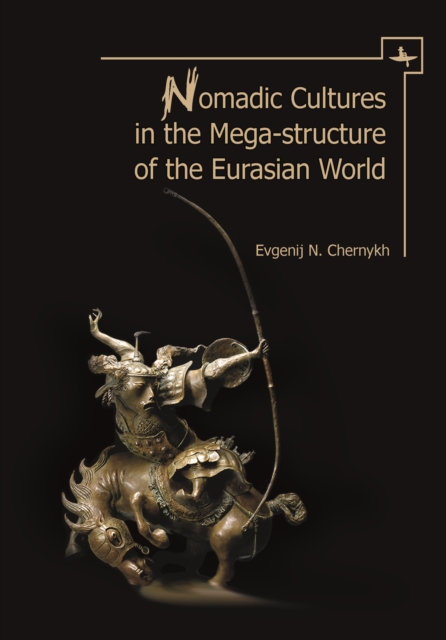
Nomadic Cultures in the Mega-Structure of the Eurasian World
Two major dividing lines have formed the megastructure of Eurasia, determining the historical epochs of the continent’s peoples. The first, vertical (longitudinal) line has separated East and West since the Paleolithic Age. The East was dominated by Mongol peoples speaking Sino -Tibetan, Manchu-Tungus, and Altaic languages. The Caucasoid peoples of the West spoke mostly Indo-European, Semite, and Finno-Ugric languages. The second line divided the continent horizontally (by latitude) into North and South. This division was closely connected with the Eurasian Steppe Belt. To the north of it lay the world of hunter-gatherers and fishermen. To the south, settled agriculture was dominant. The Steppe Belt itself was the domain of pastoralists, the nomadic and semi-nomadic herders. These lines converged at the entrance to the Great Silk Road. With the swift development of horse domestication and horseback riding, the nomads moved—from the Early Metal Age (500–400 BCE) to Genghis Khan's and the Genghisid’s Great Empire (1200–1400 CE)—to the forefront of Eurasian history as their world became increasingly involved in dramatic and sometimes tragic relationships with their southern neighbors. This book focuses on the tangle of problems in these nomadic peoples’ history.
eBook