
Catalogue Search | MBRL


Are you sure you want to remove the book from the shelf?

{{itemTitle}}
31
result(s) for
"Europe, Eastern Economic conditions 1945-"
Sort by:


Austerities and Aspirations
This monograph provides an analysis of the economic performance and living standard in Czechoslovakia and its successor states, Hungary, and Poland since 1945. The novelty of the book lies in its broad comparative perspective: it places East Central Europe in a wider European framework that underlines the themes of regional disparities and European commonalities. Going beyond the traditional growth paradigm, the author systematically studies the historical patterns of consumption, leisure, and quality of life-aspects that Tomka argues can best be considered in relation to one other. By adopting this \"triple approach,\" he undertakes a truly interdisciplinary research drawing from history, economics, sociology, and demography.
As a result of Tomka's three-pillar comparative analysis, the book makes a major contribution to the debates on the dynamics of economic growth in communist and postcommunist East Central Europe, on the socialist consumer culture along with its transformation after 1990, and on how the accounts on East Central Europe can be integrated into the emerging field of historical quality of life research.
eBook
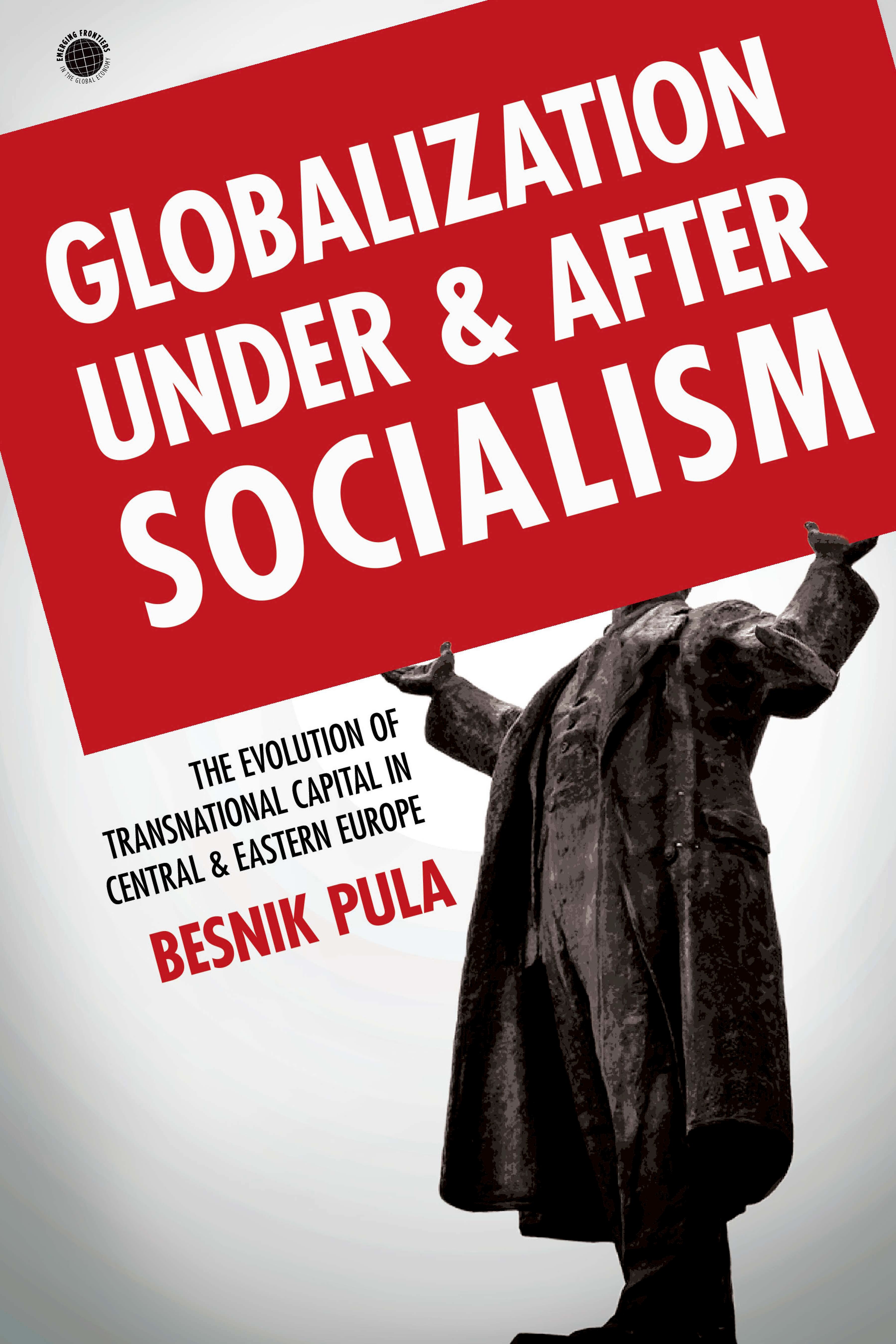
Globalization Under and After Socialism
The post-communist states of Central and Eastern Europe have gone from being among the world's most closed, autarkic economies to being some of the most export-oriented and globally integrated. While previous accounts have attributed this shift to post-1989 market reform policies, Besnik Pula sees the root causes differently. Reaching deeper into the region's history and comparatively examining its long-run industrial development, he locates critical junctures that forced the hands of Central and Eastern European elites and made them look at options beyond the domestic economy and the socialist bloc.
In the 1970s, Central and Eastern European socialist leaders intensified engagements with the capitalist West in order to expand access to markets, technology, and capital. This shift began to challenge the Stalinist developmental model in favor of exports and transnational integration. A new reliance on exports launched the integration of Eastern European industry into value chains that cut across the East-West political divide. After 1989, these chains proved to be critical gateways to foreign direct investment and circuits of global capitalism. This book enriches our understanding of a regional shift that began well before the fall of the wall, while also explaining the distinct international roles that Central and Eastern European states have assumed in the globalized twenty-first century.
eBook
Accounting in Central and Eastern Europe
Countries in Central and Eastern Europe (CEE), most of them former components of the communist bloc, have suffered diverse influences over time. Historically, the advent of communism in the 1950s has stopped the economic and political development of these countries. Its fall during the late 1980s and early 1990s triggered severe changes in the economic and social environment, with profound consequences on the countries' accounting and business models. The accounting regulatory process of these countries has mostly been a public one, although some countries also involved private sector and professional bodies. With economic and political reforms these countries are now reforming their accounting systems with for example the adoption of International Accounting Standards/International Financial Reporting Standards (IFRS). Additionally, the CEE countries' political will to join the European Union compelled the regulators to ensure a high level of harmonization with the European Directives. This volume present theoretical and empirical papers that will further our understanding of accounting issues in CEE countries.
eBook

Planning and profits in socialist economies
This study of economic reforms throughout Eastern Europe covers the history of attempts at decentralization. Countries covered include the former USSR, the former East Germany and Hungary.
eBook

The great interwar crisis and the collapse of globalization
Challenging the standard narrative of Interwar International History, this account establishes the causal relationship between the global political and economic crises of the period, and offers a radically new look at the role of ideology, racism and the leading liberal powers in the events between the First and Second World Wars
eBook
Women and Citizenship in Central and Eastern Europe
The transformations seen in women's active citizenship in Central and Eastern Europe mirror the social political and economic transformations in the region since the fall of communism at the end of the 1980s. This book challenges the universal notion of 'citizenship' by focusing on the diversity of situations women in this region have found themselves in since the end of the 1980s, looking at the challenges and struggles they have faced to assert themselves as citizens and their citizenship rights. Featuring detailed case studies which demonstrate the social and political discrimination between women that still exists, the book will be of interest to academics and post-graduate students in women's/gender studies, political sociology and European studies.
Contents: Introduction, Joanna Regulska, Jasmina Lukic, Darja Zavirsek. Part 1 Regimes: Romanian gender regimes and women's citizenship, Eniko Magyari-Vincze; Women and the law in Poland: towards active citizenship, Malgorzata Fuszara and Eleonora Zielinska; Citizenship, systemic change, and the gender division of labour in rural Hungary, Salvatore A. Engel-Di Mauro; Clashes and ordeals of women's citizenship in Central and Eastern Europe, Jacqueline Heinen; Gender equality in Latvia: achievements and challenges, Irina Novikova. Part 2 Agency: The parameters of the political: does meaning matter for participation in public life for women in Poland and in Ukraine?, Ann Graham and Joanna Regulska; Belgrade's protests 1996/97: from women in the movement to women's movement?, Marina Blagojevic; 'A right and a great need': food rights and praxis in Silesia, Poland, Anne C. Bellows; Disabled women everyday citizenship rights in East Europe: examples from Slovenia, Darja Zavirsek; The making of political responsibility: Hannah Arendt and/in the case of Serbia, Dasa Duhacek. Part 3 Transnational Dialogues: Poetics, politics and gender, Jasmina Lukic; Looking at Western Feminisms through the double lens of Eastern Europe and the Third World, Kornelia Slavova; Women's NGOs in Central and Eastern Europe and the former Soviet Union: the imperialist criticism, Nanette Funk; Cautionary tales, Ann Snitow; Epilogue: persisting struggles, Darja Zavirsek, Joanna Reguiska, Jasmina Lukic; Indexes.
Jasmina Lukic is a Recurrent Visiting Associate Professor in the Department of Gender Studies at the Central European University, Budapest, Hungary. Joanna Regulska is Professor of Women's and Gender Studies and Geography at Rutgers University, USA. Darja Zaviršek is Associate Professor of Disability and Gender Studies and teaches at the Faculty of Social Work, University of Ljubljana, Slovenia.
eBook

Luxury and pleasure in eighteenth-century Britain
This book explores the invention, making, and buying of new, semi-luxury, and fashionable consumer goods during the 18th century. It follows these goods, from china tea ware to all sorts of metal ornaments such as candlesticks, cutlery, buckles, and buttons, as they were made and shopped for, then displayed in the private domestic settings of Britain's urban middling classes. It tells the stories and analyses the developments that led from a global trade in Eastern luxuries beginning in the sixteenth century to the new global trade in British-made consumer goods by the end of the 18th century. These new products, regarded as luxuries by the rapidly growing urban and middling-class people of the 18th century, played an important part in helping to proclaim personal identities and guide social interaction. Customers enjoyed shopping for them; they took pleasure in their beauty, ingenuity or convenience. All manner of new products appeared in shop windows; sophisticated mixed-media advertising seduced customers and created new desires. This unparalleled ‘product revolution’ provoked philosophers and pundits to proclaim a ‘new luxury’, one that reached out to the middling and trading classes, unlike the elite and corrupt luxury of old. This book is built on a fresh empirical base drawn directly from customs accounts, advertising material, company papers, and contemporary correspondence. The book traces how this new consumer society of the 18th century and the products first traded, then invented to satisfy it, stimulated industrialisation itself.
eBook
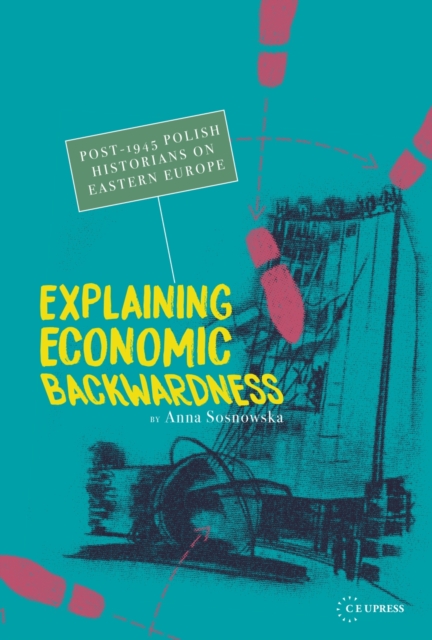
Explaining economic backwardness: post-1945 polish historians on eastern Europe
This monograph is about an exciting episode in the intellectual history of Europe: the vigorous debate among leading Polish historians on the sources of the economic development and non-development, including the origins of economic divisions within Europe. The work covers nearly fifty years of this debate between the publication of two pivotal works in 1947 and 1994.Anna Sosnowska provides an insightful interpretation of how local and generational experience shaped the notions of post-1945 Polish historians about Eastern European backwardness, and how their debate influenced Western historical sociology, social theories of development and dependency in peripheral areas, and the image of Eastern Europe in Western, Marxist-inspired social science. Although created under the adverse conditions of state socialism and censorship, this body of scholarship had an important repercussion in international social science of the post-war period, contributing an emphasis on international comparisons, as well as a stress on social theory and explanations. Sosnowska's analysis also helps to understand current differences that lead to conflicts between Europe's richest and economically most developed core and its southern and eastern peripheries. The historians she studies also investigated analogies between paths in Eastern Europe and regions of West Africa, Latin America and East Asia.
eBook

Austerities and Aspirations
This monograph updates existing scholarship on the economic performance of Czechoslovakia (and its successor states), Hungary, and Poland since 1945, in contrast with Western Europe. For this longitudinal comparative exercise, the author goes beyond the traditional growth paradigm and analyzes the historical patterns of consumption and leisure, as well as quality of life, broadly understood, aspects that Tomka argues can best be analyzed in relation to one other. By adopting this “triple approach,\" his analysis relies not only on economic history and economics, but also on the methods and results of sociology and demography. Tomka’s three-pillar description shows that the pre-World War I period was the time when East Central Europe was closest to Western Europe. The interwar period sustained this level. The book thus dispels the widespread myth of the communist era as one of catching up and convergence. Beyond providing useful quantitative information, the author provides insight on the scholarly debates ranging from the factors of growth to demographic developments to the complexities of consumption in communist regimes. The analysis finally demonstrates that the postcommunist transition, despite its high social and economic costs, allowed for qualitative and quantitative convergence, stalled only by the financial crisis of 2008.
eBook