
Catalogue Search | MBRL


Are you sure you want to remove the book from the shelf?

{{itemTitle}}
1,215
result(s) for
"Europe Antiquities."
Sort by:

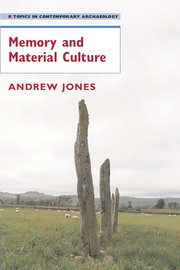
Memory and Material Culture
We take for granted the survival into the present of artifacts from the past. Indeed the discipline of archaeology would be impossible without the survival of such artifacts. What is the implication of the durability or ephemerality of past material culture for the reproduction of societies in the past? In this book, Andrew Jones argues that the material world offers a vital framework for the formation of collective memory. He uses the topic of memory to critique the treatment of artifacts as symbols by interpretative archaeologists and artifacts as units of information (or memes) by behavioral archaeologists, instead arguing for a treatment of artifacts as forms of mnemonic trace that have an impact on the senses. Using detailed case studies from prehistoric Europe, he further argues that archaeologists can study the relationship between mnemonic traces in the form of networks of reference in artifactual and architectural forms.
eBook

The megalithic architectures of Europe
\"Megalithic monuments are among the most striking remains of the Neolithic period of northern and western Europe and are scattered across landscapes from Pomerania to Portugal. Antiquarians and archaeologists early recognised the family resemblance of the different groups of tombs, attributing them to maritime peoples moving along the western seaways. More recent research sees them rather as the product of established early farming communities in their individual regions. Yet the diversity of the tombs, their chronologies and their varied cultural contexts complicates any straightforward understanding of their origins and distribution. Megalithic Architectures provides new insight by focusing on the construction and design of European megalithic tombs--on the tomb as an architectural project. It shows how much is to be learned from detailed attention to the stages and the techniques through which tombs were built, modified and enlarged, and often intentionally dismantled or decommissioned. The large slabs that were employed, often unshaped, may suggest an opportunistic approach by the Neolithic builders, but this was clearly far from the case. Each building project was unique, and detailed study of individual sites exposes the way in which tombs were built as architectural, social and symbolic undertakings. Alongside the manner in which the materials were used, it reveals a store of knowledge that sometimes differed considerably from one structure to another, even between contemporary monuments within a single region. The volume brings together regional specialists from Scandinavia, Germany, Britain, France, Belgium and Iberia to offer a series of uniquely authoritative studies. Results of recent fieldwork are fully incorporated and much of the material is published here for the first time in English. It provides an invaluable overview of the current state of research on European megalithic tombs\"--From publisher's website.
Book
Neolithic Farming in Central Europe
Neolithic Farming in Central Europe examines the nature of the earliest crop cultivation, a subject that illuminates the lives of Neolithic farming families and the day-to-day reality of the transition from hunting and gathering to farming.
Debate surrounding the nature of crop husbandry in Neolithic central Europe has focussed on the permanence of cultivation, its intensity and its seasonality: variables that carry different implications for Neolithic society.
Amy Bogaard reviews the archaeological evidence for four major competing models of Neolithic crop husbandry - shifting cultivation, extensive plough cultivation, floodplain cultivation and intensive garden cultivation - and evaluates charred crop and weed assemblages.
Her conclusions identify the most appropriate model of cultivation, and highlight the consequences of these agricultural practices for our understanding of Neolithic societies in central Europe.
eBook

The Roman West, AD 200–500
This book describes and analyses the development of the Roman West from Gibraltar to the Rhine, using primarily the extensive body of published archaeological evidence rather than the textual evidence underlying most other studies. It situates this development within a longer-term process of change, proposing the later second century rather than the 'third-century crisis' as the major turning-point, although the latter had longer-term consequences owing to the rise in importance of military identities. Elsewhere, more 'traditional' forms of settlement and display were sustained, to which was added the vocabulary of Christianity. The longer-term rhythms are also central to assessing the evidence for such aspects as rural settlement and patterns of economic interaction. The collapse of Roman imperial authority emphasised trends such as militarisation and regionalisation along with economic and cultural disintegration. Indicators of 'barbarian/Germanic' presence are reassessed within such contexts and the traditional interpretations questioned and alternatives proposed.
eBook

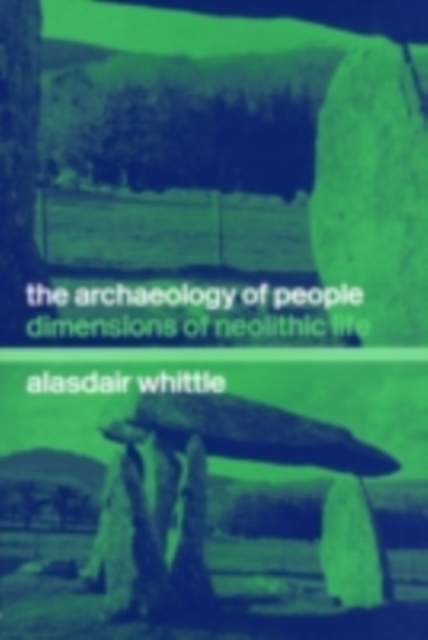
The Archaeology of People
Alasdair Whittle's new work argues powerfully for the complexity and fluidity of life in the Neolithic, through a combination of archaeological and anthropological case studies and current theoretical debate.
The book ranges from the sixth to the fourth millennium BC, and from the Great Hungarian Plain, central and western Europe and the Alpine foreland to parts of southern Britain.
Familiar terms such as individuals, agency, identity and structure are dealt with, but Professor Whittle emphasises that they are too abstract to be truly useful. Instead, he highlights the multiple dimensions which constituted Neolithic existence: the web of daily routines, group and individual identities, relations with animals, and active but varied attitudes to the past.
The result is a vivid, original and perceptive understanding of the early Neolithic which will offer insights to readers at every level.
\"Whittle's general argument is persuasive and, more, to the point, stimulating. His case studies present a rational and balanced articulation between collective structure and individual action.\" - Journal of Anthropological Research
eBook

Big men or chiefs? : rondel builders of neolithic Europe
If there is a feature of the Central European Neolithic period that deserves increased attention of researchers and all those with interest in prehistory, it is circular architecture of the dimensions of many tens of metres, from which only negative imprints of the ditches and imprints of posts in the form of postholes or narrow trenches are preserved to this day. The reason is that it offers quite a different insight into the skills and interpersonal relationships of ancient societies that lived in Europe in the first half of the fifth millennium BC. The authors ask whether these structures, most often termed rondels, can be regarded as 'architecture of power' - the first clear evidence of thought-out power strategies of some individuals or their groups. Using anthropological terms - were they skilful and exceptional entrepreneurs with an ad hoc status (such as Big Men) living in egalitarian/segmented communities, or rather powerful Chiefs living in rank and hereditary based societies/chiefdoms?0.
Book

Forging Identities in the Prehistory of Old Europe
Balkan prehistory conjures up images of the Exotic and the Other in comparison with the better-known prehistory of Western Europe - often written in unfamiliar languages about lesser known places. Combined with the information revolution in archaeology, these factors have meant that no new synthesis of Old Europe has been written in the last 20 years. This has left a backlog of rich settlement data and object-rich landscapes which have rarely been presented in theoretically challenging ways. This material is an important, and greatly neglected, part of European prehistory.This research monograph is a synthesis of the archaeology of South East, Central and Eastern Europe over four millennia (7000 - 3000 BC). The varied cultural development of the region is treated as a mosaic of local prehistories, in which people responded to major change and, in at least two cases - the development of farming and metallurgy - profound structural change through modifications of all the dimensions of their identities. Informed by a gendered perspective, this book seeks to structure the Mesolithic, Neolithic and the Chalcolithic periods in terms of a nested set of identities - the person, the household, the settlement and the regional network. This book is intended for all those prehistorians who seek to expand their general knowledge of Old Europe, as well as undergraduates, postgraduates and specialists in Balkan prehistory. The book will also attract social anthropologists and sociologists with an interest in the creation and maintenance of nested social identities in the past.
eBook