
Catalogue Search | MBRL


Are you sure you want to remove the book from the shelf?

{{itemTitle}}
19
result(s) for
"Europe Civilization African influences."
Sort by:


Black Legacies
Black Legacies looks at color-based prejudice in medieval and modern texts in order to reveal key similarities. Bringing far-removed time periods into startling conversation, this book argues that certain attitudes and practices present in Europe's Middle Ages were foundational in the development of the western concept of race.
Using historical, literary, and artistic sources, Lynn Ramey shows that twelfth- and thirteenth-century discourse was preoccupied with skin color and the coding of black as \"evil\" and white as \"good.\" Ramey demonstrates that fears of miscegenation show up in all medieval European societies. She pinpoints these same ideas in the rhetoric of later centuries. Mapmakers and travel writers of the colonial era used medieval lore of \"monstrous peoples\" to question the humanity of indigenous New World populations, and medieval arguments about humanness were employed to justify the slave trade. Ramey even analyzes how race is explored in films set in medieval Europe, revealing an enduring fascination with the Middle Ages as a touchstone for processing and coping with racial conflict in the West today.
eBook

African Europeans : an untold history
Africans and African Europeans are widely believed to be only a recent presence in Europe, a feature of our 'modern' society. But as early as the third century, St Maurice - an Egyptian - became the leader of a legendary Roman legion. Ever since, there have been richly varied encounters between those defined as 'Africans' and those called 'Europeans', right up to the stories of present-day migrants to European cities. Though at times a privileged group that facilitated exchanges between continents, African Europeans have also had to navigate the hardships of slavery, colonialism and their legacies. Olivette Otele uncovers the long history of Europeans of African descent, tracing an old and diverse African heritage in Europe through the lives of individuals both ordinary and extraordinary.
BOOK

Disorientations
This book explores from a new perspective the fraught processes of Spaniards' efforts to formulate a national identity, from the Enlightenment to the present day. Focusing on the nation's Islamic-African legacy, Susan Martin-Márquez disputes received wisdom that Spain has consistently rejected its historical relationship to Muslims and Africans. Instead, she argues, Spaniards have sometimes denied and sometimes embraced this legacy, and that vacillation has served to destabilize presumably fixed borders between Europe and the Muslim world and between Europe and Africa.
Martin-Márquez analyzes a wealth of texts produced by Spaniards as well as by Africans and Afro-Spaniards from the early nineteenth century forward. She illuminates the complexities and disorientations of Spanish identity and shows how its evolution has important implications for current debates not only in Spanish culture but also in other countries involved in negotiating a modern identity.
eBook


Frenchness and the African diaspora : identity and uprising in contemporary France
In 2005, following the death of two youths of African origin, France
erupted in a wave of violent protest. More than 10,000 automobiles were burned or
stoned, hundreds of public buildings were vandalized or burned to the ground, and
hundreds of people were injured. Charles Tshimanga, Didier Gondola, Peter J. Bloom,
and a group of international scholars seek to understand the causes and consequences
of these momentous events, while examining how the concept of Frenchness has been
reshaped by the African diaspora in France and the colonial legacy.
eBook

Black legacies : race and the European Middle Ages
Black Legacies looks at color-based prejudice in medieval and modern texts in order to reveal key similarities. Bringing far-removed time periods into startling conversation, this book argues that certain attitudes and practices present in Europe's Middle Ages were foundational in the development of the western concept of race. Using historical, literary, and artistic sources, Lynn Ramey shows that twelfth- and thirteenth-century discourse was preoccupied with skin color and the coding of black as \"evil\" and white as \"good.\" Ramey demonstrates that fears of miscegenation show up in all medie.
Book
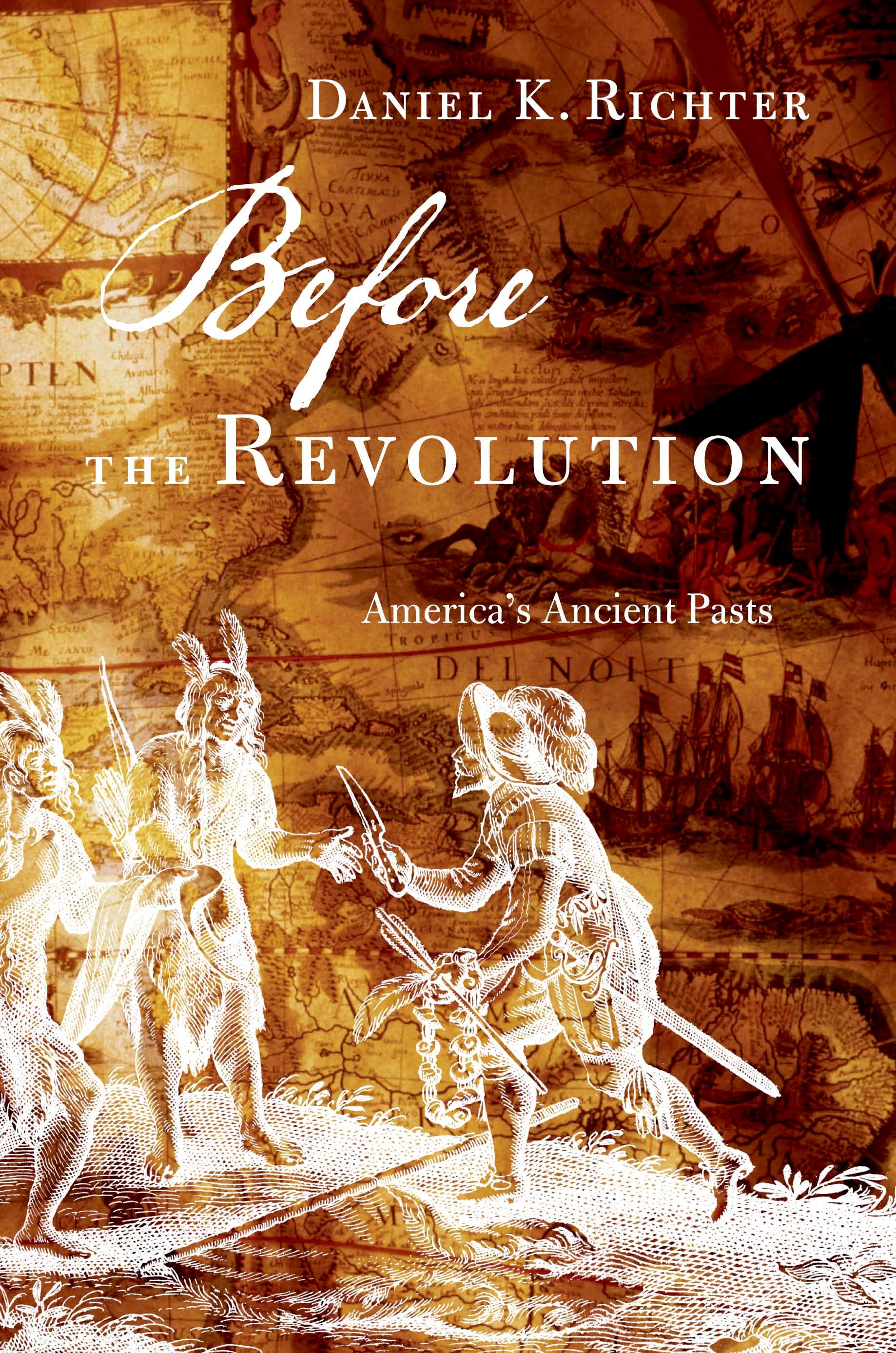
Before the Revolution : America's ancient pasts
America began, we are often told, with the Founding Fathers, the men who waged a revolution and created a unique place called the United States. We may acknowledge the early Jamestown and Puritan colonists and mourn the dispossession of Native Americans, but we rarely grapple with the complexity of the nation's pre-revolutionary past. In this pathbreaking revision, Daniel Richter shows that the United States has a much deeper history than is apparent—that far from beginning with a clean slate, it is a nation with multiple pasts that stretch back as far as the Middle Ages, pasts whose legacies continue to shape the present. Exploring a vast range of original sources, Before the Revolution spans more than seven centuries and ranges across North America, Europe, and Africa. Richter recovers the lives of a stunning array of peoples—Indians, Spaniards, French, Dutch, Africans, English—as they struggled with one another and with their own people for control of land and resources. Their struggles occurred in a global context and built upon the remains of what came before. Gradually and unpredictably, distinctive patterns of North American culture took shape on a continent where no one yet imagined there would be nations called the United States, Canada, or Mexico. By seeing these trajectories on their own dynamic terms, rather than merely as a prelude to independence, Richter's epic vision reveals the deepest origins of American history.
eBook

Transatlantic Passages
Despite a burgeoning interest in transatlantic and regional studies, the long-standing cultural connections between francophone communities on both sides of the Atlantic have received little critical attention. Transatlantic Passages presents essays, interviews, and images that address the often-neglected cultural commerce integral to understanding historical and contemporary identities in Quebec and francophone Europe.
eBook

The Birth of Orientalism
Modern Orientalism is not a brainchild of nineteenth-century European imperialists and colonialists, but, as Urs App demonstrates, was born in the eighteenth century after a very long gestation period defined less by economic or political motives than by religious ideology.
Based on sources from a dozen languages, many unavailable in English,The Birth of Orientalismpresents a completely new picture of this protracted genesis, its underlying dynamics, and the Western discovery of Asian religions from the sixteenth to the nineteenth century. App documents the immense influence of Japan and China and describes how the Near Eastern cradle of civilization moved toward mother India. Moreover, he shows that some of India's purportedly oldest texts were products of eighteenth-century European authors.
Though Western engagement with non-Abrahamic Asian religions reaches back to antiquity and can without exaggeration be called the largest-scale religiocultural encounter in history, it has so far received surprisingly little attention-which is why some of its major features and their role in the birth of modern Orientalism are described here for the first time. The study of Asian documents had a profound impact on Europe's intellectual makeup. Suddenly the Bible had much older competitors from China and India, Sanskrit threatened to replace Hebrew as the world's oldest language, and Judeo-Christianity appeared as a local phenomenon on a dramatically expanded, worldwide canvas of religions and mythologies. Orientalists were called upon as arbiters in a clash that involved neither gold and spices nor colonialism and imperialism but, rather, such fundamental questions as where we come from and who we are: questions of identity that demanded new answers as biblical authority dramatically waned.
eBook