
Catalogue Search | MBRL


Are you sure you want to remove the book from the shelf?

{{itemTitle}}
80
result(s) for
"Europe Flanders."
Sort by:

Flanders and the Anglo-Norman world, 1066-1216
\"The union of Normandy and England in 1066 recast the political map of western Europe and marked the beginning of a new era in the region's international history. This book is a groundbreaking investigation of the relations and exchanges between the county of Flanders and the Anglo-Norman realm. Among other important themes, it examines Anglo-Flemish diplomatic treaties and fiefs, international aristocratic culture, the growth of overseas commerce, immigration into England and the construction of new social and national identities. The century and a half between the conquest of England by the duke of Normandy and the conquest of Normandy by the king of France witnessed major revolutions in European society, politics and culture. This study explores the history of England, northern France and southern Low Countries in relation to each other during this period, giving fresh perspectives to the historical development of north-western Europe in the Central Middle Ages\"-- Provided by publisher.
Book
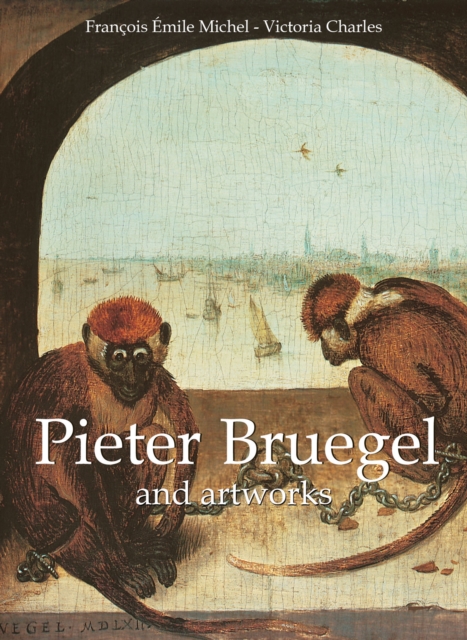
Pieter Bruegel
Pieter Brueghel was the first important member of a family of artists who were active for four generations.Firstly a drawer before becoming a painter later, he painted religious themes, such as Babel Tower, with very bright colours.
eBook

Flemish & Dutch painting = Flèamische und Niederlèandische Malerei = Vlaamse en Nederlandse schilderkunst = Pintura flamenca y holandesa
An overview of Flemish and Dutch painting from the fifteenth century until around 1700, including works by Rubens, van Dyck and Vermeer.
Book

Secessionism and the European Union
Secessionist (also called, nationalist, or pro-independence) political parties exist in many countries in the developed world; they raise—and then spend—a lot of money, win votes in elections, and their elected officials serve in seats in local, regional, and national parliaments. Yet, despite all of this effort, there has not been a successful case of secession since 1921 when the Irish Free State effectively seceded from the United Kingdom (UK). Perhaps the biggest issue is that these secessionist political parties have rarely been popular enough to form a government even amongst their core ethnic group. This is further compounded by the fact that secessionist parties have historically been unable to win support from immigrants or people outside their core ethnic and/or linguistic group. Given this context, four central questions are posed in this study including: whether—and also why—any of the secessionist parties have transitioned from ethnic-based to civic-based policy platforms? Why have these secessionist parties not yet achieved independence? And, what role does the European Union (EU) play in facilitating or deterring secession in independence-seeking regions within member states?
This study examines three different cases—Flanders in Belgium, Scotland in the UK, and Catalonia in Spain—to investigate how secessionist political parties are approaching the issue of independence. All of the cases are different with respect to history, governmental structure, and economic situation. Yet all of the cases are similar in some ways—they are close to the same size (in terms of population), operate within mature democratic political systems, have distinct secessionist political parties, and all reside within member states of the EU. Categorically, in all cases, there are also shared influences of the ability of the region to secede: institutions, interests, and ideas.
eBook


Galbert of Bruges and the Historiography of Medieval Flanders
Edited by two of the world's most prominent specialists on Galbert today, Jeff Rider and Alan V. Murray, this book brings together essays by established scholars who have been largely responsible for the radical changes in the understanding of Galbert and his work that have occurred over the last thirty years and essays by younger scholars.
eBook

God's scribe : the historiographical art of Galbert of Bruges
Intended as a companion volume to the De multro, the book provides an outline of the Flemish crisis of 1127-28 and summarizes what is known about Galbert. It traces the elaboration of the De multro from a set of wax notes to a nearly completed chronicle.
eBook

Lordship and Governance by the Inheriting Countesses of Boulogne, 1160-1260
Traditional scholarship argues that the changes fostered by the growth of royal power and feudalism in Western Europe directly impacted women's public power and authority in the later twelfth and thirteenth centuries. Focusing on the inheriting countesses of Boulogne (1160-1260) and their neighbours in northern France, this monograph investigates the influence of the rise of centralized government on elite women's power. This chronological and comparative analysis highlights successive countesses' governance of inherited lands, the roles they played in their spouses' lands and in political affairs outside their inherited lands, along with crucial assessments of the social identity and status of the family. It challenges the established interpretation and shows that the establishment of feudalism and the elaboration of bureaucracy did not curtail elite women's access to or exercise of lordship to any significant degree.
eBook

Who benefits? The social distribution of subsidized childcare in Sweden and Flanders
The main goal of this article is to unravel the social distribution of childcare policies: Who benefits from government investment in public childcare? The analysis complements earlier research on the distribution of social policy outcomes and confronts the growing concern over selectivity. By nature, childcare services tend to be used mainly by people in work, i.e. those in higher income brackets. Concern therefore arises about the consequences of increasing childcare budgets for the overall distribution of the benefits of social policy. This relates to the immediate outcome of social policy (net family income), but also to its increasingly central component: labour market participation. Indeed, if childcare actually benefits 'labour market insiders' only, one may wonder whether it is effective as an instrument activating mothers with young children. In this contribution, we look into the distributional impact of subsidized childcare for two countries (Flanders/Belgium and Sweden) already reaching the Barcelona targets for under 3s and interpret the results in a European perspective. Although both cases report high coverage rates, we find that Sweden and Flanders have different — even opposite — distributional outcomes. Both examples provide us with valuable lessons on the redistributive nature of 'new risk policies' and the effectiveness of childcare as an instrument of labour market activation.
Journal Article

Language as a barrier to colorectal cancer screening in Flanders: an ecological study
Background
Despite its potential with regard to the prevention and early detection of colorectal cancer (CRC), participation in the organized CRC screening programme of the Belgian region of Flanders is suboptimal. The role of language discordance as a determinant of screening participation in Europe is poorly understood, despite being identified as a potential barrier in qualitative and non-European studies.
Methods
In an ecological study analysing data on the level of Flemish municipalities (
n
= 300) from 2016 to 2021, we investigated whether the proportion of non-Dutch speakers at home is correlated with the response rate to CRC screening programme invitations and/or the total CRC screening coverage using multiple linear regression. We also performed Kruskal-Wallis tests and Dunn’s tests to examine municipal differences in screening based on their adjacency to the regions of Brussels and Wallonia.
Results
After adjusting for confounders, the proportion of secondary school pupils that primarily speak a language other than Dutch at home was associated with a lower screening response rate (β = -0.327, 95% CI -0.359; -0.296)) and lower total screening coverage (β = -0.195, 95% CI -0.219; -0.171). Response rates and coverage were higher in municipalities at least two municipalities away from the border with Wallonia, Brussels or France. Our findings suggest that a high proportion of French speakers is particularly indicative of linguistic barriers to screening in Flemish municipalities (β = -0.358, 95% CI -0.397; -0.319 for response rate and β = -0.213, 95% CI -0.238; -0.188 for total coverage).
Conclusion
Our study highlights the need to consider potential linguistic challenges when optimizing CRC screening policies.
Journal Article