
Catalogue Search | MBRL


Are you sure you want to remove the book from the shelf?

{{itemTitle}}
3,549
result(s) for
"European Archaeology"
Sort by:

Local antiquities, local identities : art, literature and antiquarianism in Europe, c. 1400-1700
This collection investigates the wide array of local antiquarian practices that developed across Europe in the early modern era, c. 1400-1700. Breaking new ground, it explores local concepts of antiquity in a period that has been defined as a uniform 'Renaissance'. Contributors take a novel approach to the revival of the antique in different parts of Italy, as well as examining other, less widely studied antiquarian traditions in France, the Netherlands, Spain, Portugal, Britain and Poland. They consider how real or fictive ruins, inscriptions and literary works were used to demonstrate a particular idea of local origins, to rewrite history or to vaunt civic pride. In doing so, they tackle such varied subjects as municipal antiquities collections in Southern Italy and France, the antiquarian response to the pagan, Christian and Islamic past on the Iberian Peninsula, and Netherlandish interest in megalithic ruins thought to be traces of a prehistoric race of Giants. -- .
Book

Iron Age Myth and Materiality
Iron Age Myth and Materiality: an Archaeology of Scandinavia AD 400-1000 considers the relationship between myth and materiality in Scandinavia from the beginning of the post-Roman era and the European Migrations up until the coming of Christianity. It pursues an interdisciplinary interpretation of text and material culture and examines how the documentation of an oral past relates to its material embodiment.
While the material evidence is from the Iron Age, most Old Norse texts were written down in the thirteenth century or even later. With a time lag of 300 to 900 years from the archaeological evidence, the textual material has until recently been ruled out as a usable source for any study of the pagan past. However, Hedeager argues that this is true regarding any study of a society's short-term history, but it should not be the crucial requirement for defining the sources relevant for studying long-term structures of the longue durée, or their potential contributions to a theoretical understanding of cultural changes and transformation. In Iron Age Scandinavia we are dealing with persistent and slow-changing structures of worldviews and ideologies over a wavelength of nearly a millennium. Furthermore, iconography can often date the arrival of new mythical themes anchoring written narratives in a much older archaeological context.
Old Norse myths are explored with particular attention to one of the central mythical narratives of the Old Norse canon, the mythic cycle of Odin, king of the Norse pantheon. In addition, contemporaneous historical sources from late Antiquity and the early European Middle Age - the narratives of Jordanes, Gregory of Tours, and Paul the Deacon in particular - will be explored. No other study provides such a broad ranging and authoritative study of the relationship of myth to the archaeology of Scandinavia.
eBook

Roman Period Statuettes in the Netherlands and beyond
The subject of this study is a relatively rare category of artefacts, bronze and terracotta statuettes that represent deities, human figures and animals. They were introduced in the northwestern provinces by Roman troops from the end of the first century BCE onwards. The statuettes have been recovered from military and non-military settlements, the surrounding landscape and, to a far lesser extent, from sanctuaries and graves. Until now, their meaning and function have seldom been analysed in relation to their find-spots. Contrary to traditional studies, they have been examined as one separate category of artefacts, which offers new insights into the distribution pattern and iconographic representation of deities. When studying a group of artefacts, a large research area or a large dataset is required, as well as dateable artefacts and find-contexts. These conditions do not apply to the Netherlands and to the majority of statuettes that are central to this study. Moreover, although the changing appearance of statuettes suggest a transformation of cults, the identities of the owners of these statuettes remain invisible to us. Therefore, the issue of Romanization is not put central here. Instead, the focus is on a specific aspect of religion, known as lived religion, within the wider subject of its transformation in the Roman period: how people used statuettes in everyday life, in the context of their houses and settlements.
eBook
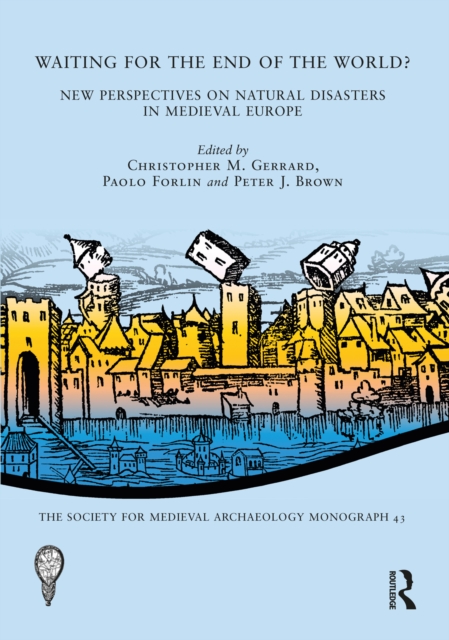
Waiting for the End of the World?
Waiting for the End of the World? addresses the archaeological, architectural, historical, and geological evidence for natural disasters in the Middle Ages between the 11th and 16th centuries. This volume adopts a fresh interdisciplinary approach to explore the many ways in which environmental hazards affected European populations and, in turn, how medieval communities coped and responded to short- and long-term consequences. Three sections, which focus on geotectonic hazards (Part I), severe storms and hydrological hazards (Part II) and biophysical hazards (Part III), draw together 18 papers of the latest research while additional detail is provided in a catalogue of the 20 most significant disasters to have affected Europe during the period. These include earthquakes, landslides, tsunamis, storms, floods and outbreaks of infectious diseases. Spanning Europe from the British Isles to Italy and from the Canary Islands to Cyprus, these contributions will be of interest to earth scientists, geographers, historians, sociologists, anthropologists and climatologists but are also relevant to students and non-specialist readers interested in medieval archaeology and history as well as those studying human geography and disaster studies. Despite a different set of beliefs relating to the natural world and protection against environmental hazards, the evidence suggests that medieval communities frequently adopted a surprisingly ‘modern’, well-informed and practically-minded outlook.
eBook
Neolithic Farming in Central Europe
Neolithic Farming in Central Europe examines the nature of the earliest crop cultivation, a subject that illuminates the lives of Neolithic farming families and the day-to-day reality of the transition from hunting and gathering to farming.
Debate surrounding the nature of crop husbandry in Neolithic central Europe has focussed on the permanence of cultivation, its intensity and its seasonality: variables that carry different implications for Neolithic society.
Amy Bogaard reviews the archaeological evidence for four major competing models of Neolithic crop husbandry - shifting cultivation, extensive plough cultivation, floodplain cultivation and intensive garden cultivation - and evaluates charred crop and weed assemblages.
Her conclusions identify the most appropriate model of cultivation, and highlight the consequences of these agricultural practices for our understanding of Neolithic societies in central Europe.
eBook

Ethnic Identity and the Archaeology of the aduentus Saxonum
For centuries, archaeologists have excavated the soils of Britain to uncover finds from the early medieval past. These finds have been used to reconstruct the alleged communities, migration patterns, and expressions of identity of coherent groups who can be regarded as ethnic 'Anglo-Saxons'. Even in the modern day, when social constructionism has been largely accepted by scholars, this paradigm still persists. This book challenges the ethnic paradigm. As the first historiographical study of approaches to ethnic identity in modern 'Anglo-Saxon' archaeology, it reveals these approaches to be incompatible with current scholarly understandings of ethnicity. Drawing upon post-structuralist approaches to self and community, it highlights the empirical difficulties the archaeology of ethnicity in early medieval Britain faces, and proposes steps toward an alternative understanding of the role played by the communities of lowland Britain - both migrants from across the North Sea and those already present - in transforming the Roman world.
eBook

Bioarchaeology and Dietary Reconstruction Across Late Antiquity and the Middle Ages in Tuscany, Central Italy
This volume presents the first multidisciplinary bioarchaeological analysis to reconstruct life conditions in ancient Tuscany between Late Antiquity and the Middle Ages. This was done through the examination of stress markers, including adult stature, periosteal reaction, cranial porosities, linear enamel hypoplasia and paleodietary reconstruction.
eBook
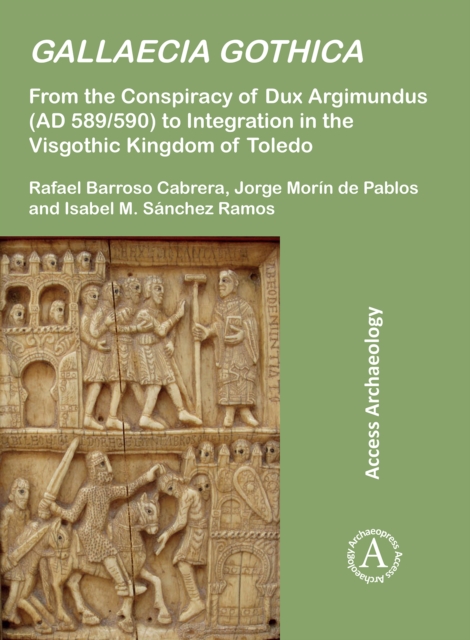
Gallaecia Gothica
Gallaecia Gothica offers a new interpretation of the Argimundus rebellion, one of the most difficult challenges of Reccared's reign. There are no specific details of how the conspiracy came about, but the throne was seriously threatened. The Chronicle of John of Biclaro underlined the gravity of this menace in his description of the punishment suffered by the rebel and his collaborators. His categorical condemnation of the attempted overthrow of the monarch is unlike that given to any other uprising narrated in the Chronicle, and it shows the importance that the abbot of Biclaro gave it in his narration.The fact that the Chronicle notes that Argimundus was not only a member of the Aula Regia but also a dux prouinciae (duke of a province), combined with the status of Gallaecia as a newly conquered province, suggests that this was not just a palace conspiracy, but a genuine provincial revolt which could have ruined the political settlement established by Leovigild and Reccared. However, it is difficult to prove Argimundus' ultimate aim: to replace Reccared on the Visigothic throne or, on the contrary, to restore the old Suevic kingdom in Gallaecia. This book uses numismatic and archaeological evidence seems to suggest the latter view.
eBook
Archaeologies of Complexity
An up-to-date and critical analysis of how archaeologists study past societies, Archaeologies of Complexity addresses the nature of contemporary archaeology and the study of social change, and debates the transition from perceived simple, egalitarian societies to the complex power structures and divisions of our modern world.
Since the eighteenth century, archaeologists have examined complexity in terms of successive types of societies, from early bands, tribes and chiefdoms to states; through stages of social evolution, including 'savagery', 'barbarism' and 'civilisation', to the present state of complexity and inequality.
Presenting a radical, alternative view of ancient state societies, the book explains the often ambiguous terms of 'complexity', 'hierarchy' and inequality' and provides a critical account of the Anglo-American research of the last forty years which has heavily influenced the subject.
1. A Complex and Unequal World: Knowledge, Relevance and Experience 2. Archaeological Theory and Practice: From the Outside Looking In 3. Models of Society and Social Change: From the Inside Looking Out 4. Matters of Terminology: Back to Basics 5. A Class Act: Representing the Prehistoric Past of South-East Spain 6. The Uses and Abuses of Complexity: Prehistoric Societies in the West Mediterranean 7. Complex Archaeologies and Archaeologies of Complexity
Robert Chapman is Professor of Archaeology at the University of Reading.
eBook
Living on the Lake in Prehistoric Europe
The chance discovery in 1854 of a prehistoric lake village on Lake Zurich triggered what we now call the 'lake-dwelling phenomenon'. One hundred and fifty years of research and animated academic disputes have transformed the phenomenon into one of the most reliable sources of information in wetland archaeology. This definitive volume provides an overview of the development of lake village studies, explores the impact of a range of scientific techniques on the settlements and considers how the public can relate to this evocative and exciting branch of archaeology. It explains how the multidisciplinary research context has significantly improved our knowledge of prehistoric wetland communities, from an environmental as well as a cultural perspective.
Francesco Menotti is research associate at the Institute of Archaeology, Oxford University. His field of expertise is later European prehistory with a special emphasis in places upon wetland and underwater archaeology.
eBook