
Catalogue Search | MBRL


Are you sure you want to remove the book from the shelf?

{{itemTitle}}
179
result(s) for
"European Economic Community Turkey."
Sort by:


Debating Turkish Modernity
Debating Turkish Modernity describes the opening act of Turkey's half century bid to join the European Community. Between 1959 and 1980, Turks from all walks of life weighed in on their prospective integration into Europe. This book details how these Turks made sense of the project of European Unification and how they spoke about it. It argues that Turkey's EEC debates, by resurrecting past questions over Turkey's relationship to Europe, became the principle forum where Turks of the Second Republic defined who they were, where they came from, and where they were going.
eBook

Affective spaces, melancholic objects: ruination and the production of anthropological knowledge
This article critically engages with recent theoretical writings on affect and non-human agency by way of studying the emotive energies discharged by properties and objects appropriated during war from members of the so-called 'enemy' community. The ethnographic material comes from long-term fieldwork in Northern Cyprus, focusing on how it feels to live with the objects and within the ruins left behind by the other, now displaced, community. I study Turkish-Cypriots' relations to houses, land, and objects that they appropriated from the Greek-Cypriots during the war of 1974 and the subsequent partition of Cyprus. My ethnographic material leads me to reflect critically on the object-centred philosophy of Actor Network Theory and on the affective turn in the human sciences after the work of Gilles Deleuze. With the metaphor of 'ruination', I study what goes amiss in scholarly declarations of theoretical turns or shifts. Instead, proposing an anthropologically engaged theory of affect through an ethnographic reflection on spatial and material melancholia, I argue that ethnography, in its most productive moments, is trans-paradigmatic. Retaining what has been ruined as still needful of consideration, I suggest an approach which merges theories of affect and subjectivity as well as of language and materiality. /// L'article examine sous un angle critique les écrits théoriques récents sur l'affect et l'agency non humaine pour étudier les énergies émotives libérées par les biens et objets confisqués lors d'un conflit armé aux membres de la communauté dite \"ennemie\". Le matériel ethnographique provient d'un travail de terrain de longue durée dans le Nord de Chypre, qui portait sur le ressenti de ceux qui vivent avec ces objets, dans les ruines laissées par l'autre communauté désormais déplacée. L'auteure étudie les relations des Chypriotes turcs avec les maisons, les terres et les objets qu'ils se sont appropriés sur les Chypriotes grecs lors de la guerre de 1974 et de la partition de Chypre. Le matériel ethnographique la conduit à une réflexion critique sur la philosophie centrée sur les objets de la théorie de l'acteur-réseau et sur le tournant affectif des sciences humaines à la suite des travaux de Gilles Deleuze. Par la métaphore de la \"ruine\", l'auteur sonde ce qui ne va pas dans les proclamations académiques de tournants théoriques et de changements paradigmatiques. En lieu et place, elle propose une théorie de l'affect engagée dans l'anthropologie, par une réflexion ethnographique sur la mélancolie spatiale et matérielle, et affirme que l'ethnographie, dans ses moments les plus productifs, est trans-paradigmatique. En gardant ce qui est \"ruiné\" comme digne encore de considération, l'auteure suggère une approche qui concilie les théories de l'affect et de la subjectivité et du langage et de la matérialité.
Journal Article

Genetic diversity and domestication of hazelnut (Corylus avellana L.) in Turkey
Societal Impact Statement Hazelnut is consumed worldwide and is of critical economic importance to the rural communities of Turkey's northern coast. A new disease outbreak has drastically decreased yields across Turkey and climate change is emerging as a new threat to cultivation. Our study is the first to provide a genomic perspective on diversity in this vulnerable crop, which will prove valuable for future breeding efforts. Such research into perennial crops like hazelnut can help to improve farmer livelihoods and ensure the sustainability of crop production in a changing world. Summary Assessing and describing genetic diversity in crop plants is a crucial first step toward their improvement. The European hazelnut, Corylus avellana L., is one of the most economically important tree nut crops worldwide. It is primarily produced in Turkey where rural communities depend on it for their livelihoods. Despite this, we know little about its domestication history and the genetic diversity it holds. We use double digest restriction‐site associated DNA (ddRAD) sequencing to produce a genome‐wide dataset containing wild and domesticated hazelnut. We uncover patterns of population structure and diversity, determine levels of crop‐wild gene flow, and estimate the relationships among different genetic clusters. We use a dataset of over 60k single nucleotide polymorphisms to find that genetic clusters of cultivars do not reflect their given names and that there is limited evidence for a reduction in genetic diversity in domesticated individuals. We find evidence that hazelnut may have been domesticated more than once and that admixture has likely occurred multiple times between wild and domesticated hazelnut. We provide the first genomic assessment of Turkish hazelnut diversity and suggest that there has not been an extreme bottleneck during the domestication of this crop, leading to cultivars at different stages of domestication. Our study provides a platform for further research that will protect hazelnut from the threats of climate change and an emerging fungal disease. Hazelnut is consumed worldwide and is of critical economic importance to the rural communities of Turkey's northern coast. A new disease outbreak has drastically decreased yields across Turkey and climate change is emerging as a new threat to cultivation. Our study is the first to provide a genomic perspective on diversity in this vulnerable crop, which will prove valuable for future breeding efforts. Such research into perennial crops like hazelnut can help to improve farmer livelihoods and ensure the sustainability of crop production in a changing world.
Journal Article

Meeting the Global Challenges of Doing Business in the Five Candidate Countries on the Road to Join the European Union
The success of indigenous business firms is no longer exclusively an internal process given increasing competition and globalization. Achieving success under dynamic conditions requires active involvement of governments to provide proper environments for local businesses to survive global challenges. Many also want to attract foreign investors to start new businesses. The role of governments is no longer limited to providing preconditions for basic infrastructure needs but now also includes fortifying business environmental factors such as the Internet, legal systems, trained work forces, and equitable tax systems. The purpose of this study is to investigate the conditions in Albania, The Former Yugoslav Republic of Macedonia (FYROM), Montenegro, Serbia, and Turkey. Using the Enterprise Survey from the World Bank, this study evaluates these nations’ adaptation to the global challenges of doing business. These five nations were selected because of their status of potentially joining the European Union (EU). The findings indicate that there are problems and significant gaps among these nations. Suggestions include that national leaders develop policies that go beyond simply addressing the identified obstacles. Additionally, company managers can also use the insights from this study when evaluating these nations as potential EU members before entering these markets.
Journal Article

European Turkey and European Morocco: Two Identity Construction cases in the path to the EEC membership
This article analyzes Kingdom of Morocco’s and Turkey’s full membership application processes to the European Economic Community (EEC) in 1987 from an identity perspective. Construction of both Morocco’s and Turkey’s European-ness are being analyzed following the postcolonial and modernization theories aspects of poststructuralist approach by taking official discourses of the political leaders in the two states at the time of application into account. In the conventional narratives of the establishment of their modern states, Morocco perceived Europe as the other in terms of its being former colonizer whereas Turkey perceived Europe as the other in terms of its being threat to its national unity before the establishment of the Republic in 1923. In spite of this, two states tried to add European-ness onto their national identity with their application to the EEC in 1987 by being obliged to demonstrate not why European but how European they were. This obligation was shaped around the postcolonial theory for Morocco’s case, whereas it was around the modernization one for Turkey. The article, then, takes the official discourses on European-ness by the Moroccan and Turkish leaders which were taken as dynamic processes. Later, it analyzes them in the light of postcolonial nationalism for Morocco and modernization theory for Turkey. In this respect, the article demonstrates how Europe and European-ness that was once regarded as the “other” by Turkey and Morocco were tried to add in Moroccan and Turkish national identities in the path to become a full member to the EEC.
Journal Article
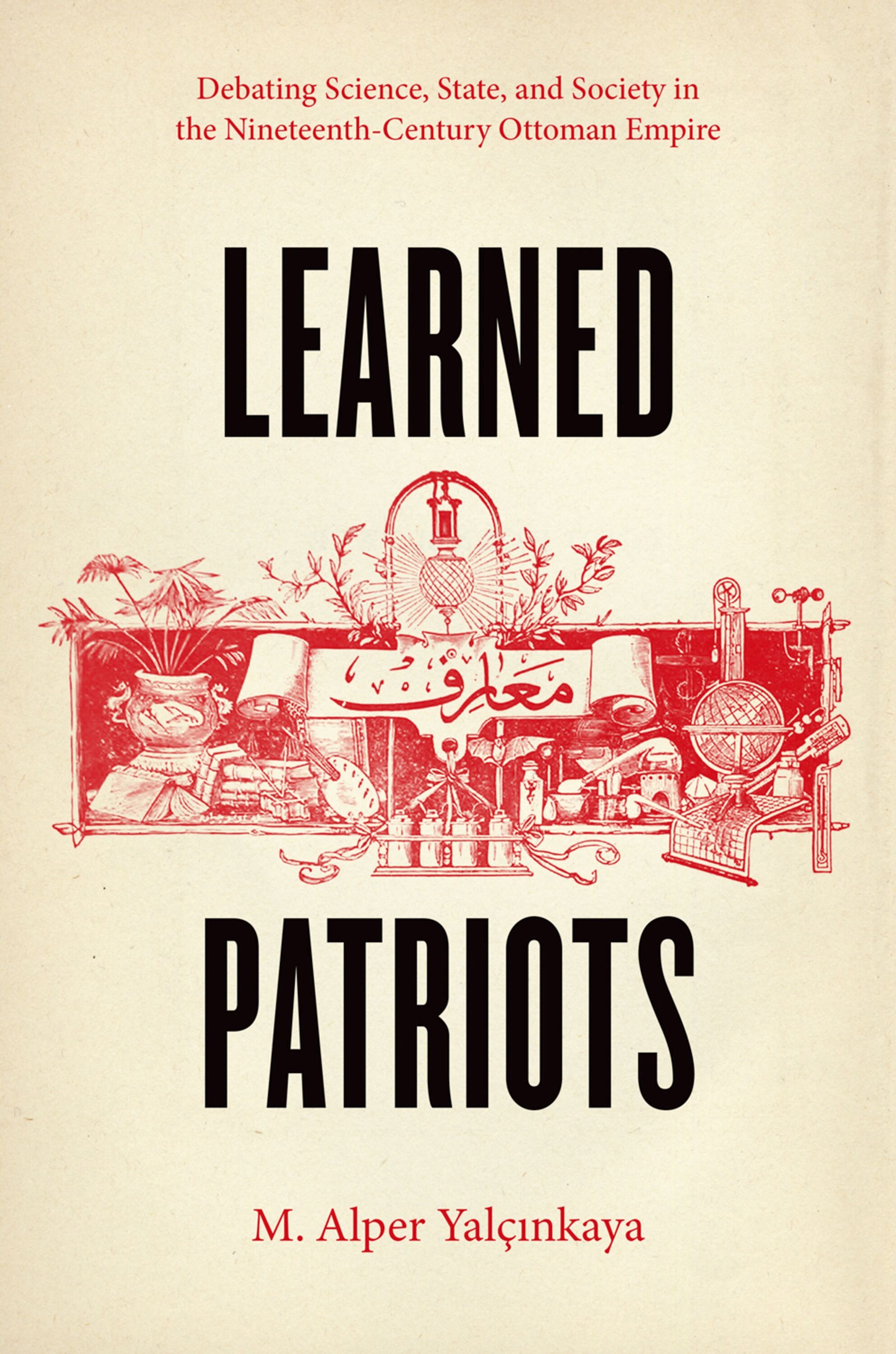
Learned Patriots
The nineteenth century was, for many societies, a period of coming to grips with the growing, and seemingly unstoppable, domination of the world by the \"Great Powers\" of Europe. The Ottoman Empire was no exception: Ottomans from all walks of life—elite and non-elite, Muslim and non-Muslim—debated the reasons for what they considered to be the Ottoman decline and European ascendance. One of the most popular explanations was deceptively simple: science. If the Ottomans would adopt the new sciences of the Europeans, it was frequently argued, the glory days of the empire could be revived.
In Learned Patriots, M. Alper Yalçinkaya examines what it meant for nineteenth-century Ottoman elites themselves to have a debate about science. Yalçinkaya finds that for anxious nineteenth-century Ottoman politicians, intellectuals, and litterateurs, the chief question was not about the meaning, merits, or dangers of science. Rather, what mattered were the qualities of the new \"men of science.\" Would young, ambitious men with scientific education be loyal to the state? Were they \"proper\" members of the community? Science, Yalçinkaya shows, became a topic that could hardly be discussed without reference to identity and morality.
Approaching science in culture, Learned Patriots contributes to the growing literature on how science travels, representations and public perception of science, science and religion, and science and morality. Additionally, it will appeal to students of the intellectual history of the Middle East and Turkish politics.
eBook

Integrating Agricultural Risks Management Strategies in Selected EU Partner Countries: Syria, Tunisia, Turkey
Dynamics and transitions in the agricultural sector of emerging countries are not yet well understood. A decade of major political and economic changes is challenging the Mediterranean Economies, affecting the primary sectors of transition economies which are largely influenced by recent trends. The resulting exposure of agriculture to risks has called great attention on risk management strategies and public intervention. We explore their role in three different economies with a view to a unified policy framework. The analysis is conducted through a field activity in Syria, Tunisia and Turkey that has allowed understanding the key issues. The experts' opinions draw a clear picture of retrospect and prospects and stimulate a comparative analysis that widens the current knowledge of risk management in the EU Partner Countries.
Journal Article

European integration, Bosnia-Herzegovina and stability in the Western Balkans: a new strategy
The February 2014 protests in Bosnia-Herzegovina have shown clearly that Bosnia-Herzegovina is still- 20 years after the signing of the Dayton Accords- the key country for security in the Western Balkans. These protests have also shown the limits of the influence of EU policies in the region, and have again sparked local and international discussions about the future role of the international community in general, and the EU in particular. Besides the discussion about quick and large-scale change to the Dayton Constitution, some observers and students of Balkan politics have pointed to the need for partial reforms, while others favour the idea that the international community should stop meddling in Bosnian affairs. The early reactions of EU officials to the events in Bosnia-Herzegovina have prioritised socio-economic measures rather than constitutional reforms. The following article stresses the importance of an increased EU commitment to Bosnia-Herzegovina under a revised and comprehensive strategy. The new strategy should include improving the economy as one of its priorities; however, the EU should also increase its efforts for constitutional reforms and assume more responsibility to make the Bosnian state functional. The article also highlights that recent events in Bosnia-Herzegovina have illustrated the urgency for a more decisive enlargement policy towards the Western Balkans and argues that the integration of the Western Balkans and Turkey with the EU are not rival processes but complementary. The article first examines the Euro-Atlantic integration of the Balkans in the post-Dayton period and then makes suggestions to improve security and stability in the Western Balkans.
Journal Article

Integrating Turkish Communities: A German Dilemma
The social and economic integration of the Turkish minority into German society reflects a systemic problem to which policy makers have not yet found a response. Marginalized by the larger society and separated by cultural and religious life styles, a significant proportion of the Turkish minority is becoming part of a \"parallel society\" reinforced by discrimination, restricted educational achievements, and a low socioeconomic status.
Journal Article