
Catalogue Search | MBRL


Are you sure you want to remove the book from the shelf?

{{itemTitle}}
1,736
result(s) for
"European Islam"
Sort by:

The Emancipation of Europe's Muslims
The Emancipation of Europe's Muslims traces how governments across Western Europe have responded to the growing presence of Muslim immigrants in their countries over the past fifty years. Drawing on hundreds of in-depth interviews with government officials and religious leaders in France, Germany, Italy, the Netherlands, the United Kingdom, Morocco, and Turkey, Jonathan Laurence challenges the widespread notion that Europe's Muslim minorities represent a threat to liberal democracy.
eBook

Constructing the image of Muhammad in Europe
The volume represents a significant contribution to the complex history of the conceptualization and pictorialization of the Prophet Muhammad in the West. It gives a rapid and though deep overview of the history of the making of an image of the Prophet Muhammad in Europe and thus reflects the whole history of the making of the image of Islam in the Latin West, from the early medieval times till the 19th century. The book also provides the reader with ready access to the most recent scholarship concerning the image of Muhammad in Europe, in the form of comprehensive footnotes provided throughout the text and an extensive bibliography.
Book

Critical Issues in Islamic Education Studies: Rethinking Islamic and Western Liberal Secular Values of Education
This paper examines two sets of interrelated issues informing contemporary discussions on Islam and education that take place within both Muslim majority and minority contexts. The first set of issues concerns the academic conceptualisation of the study of education within diverse historical and contemporary Islamic cultural, intellectual, political, theological and spiritual traditions. After a critical examination of the current literature, the paper suggests that ‘Islamic Education Studies’ offers a distinctive academic framing that incorporates an interdisciplinary empirical and scholarly inquiry strategy capable of generating a body of knowledge and understanding guiding the professional practice and policy development in the field. Lack of conceptual clarity in various current depictions of the field, including ‘Muslim Education’, ‘Islamic Pedagogy’, ‘Islamic Nurture’ and ‘Islamic Religious Pedagogy’, is outlined and the frequent confusion of Islamic Education with Islamic Studies is critiqued. The field of Islamic Education Studies has theological and educational foundations and integrates interdisciplinary methodological designs in Social Sciences and Humanities. The second part of the inquiry draws attention to the lack of new theoretical insights and critical perspectives in Islamic Education. The pedagogic practice in diverse Muslim formal and informal educational settings does not show much variation and mostly is engaged with re-inscribing the existing power relations shaping the society. The juxtaposition of inherited Islamic and borrowed or enforced Western secular educational cultures appears to be largely forming mutually exclusive, antagonistic and often rigid ‘foreclosed’ minds within contemporary Muslim societies. The impact of the educational culture and educational institutions on the formation of resentful Islamic religiosities and the reproduction of authoritarian leadership within the wider mainstream Muslim communities have not been adequately explored. The study stresses the need to have a paradigm shift in addressing this widely acknowledged educational crisis. The formation of a transformative educational culture remains the key to being able to facilitate reflective and critical Muslim religiosities, and positive socio-economic and political change in Muslim majority and minority societies. This inquiry explores a significant aspect of this crisis by re-examining the degree to which Islamic and Western, liberal, secular conceptions and values of education remain irreconcilably divergent or open to a convergent dialogue of exchange, reciprocity and complementarity. The originality of the paper lies in offering a critical rethinking of Islamic Education through mapping the main relevant literature and identifying and engaging with the central theoretical issues while suggesting a new academic framing of the field and its interdisciplinary research agenda.
Journal Article

Mythologies of the Prophet Muhammad in early modern English culture
\"The figure of 'Mahomet' was widely known in early modern England. A grotesque version of the Prophet Muhammad, Mahomet was a product of vilification, caricature and misinformation placed at the centre of Christian conceptions of Islam. In Mythologies of the Prophet Muhammad in Early Modern English Culture Matthew Dimmock draws on an eclectic range of early modern sources - literary, historical, visual - to explore the nature and use of Mahomet in a period bounded by the beginnings of print and the early Enlightenment. This fabricated figure and his spurious biography were endlessly recycled, but also challenged and vindicated, and the tales the English told about him offer new perspectives on their sense of the world - its geographies and religions, near and far - and their place within it. This book explores the role played by Mahomet in the making of Englishness, and reflects on what this might reveal about England's present circumstances\"-- Provided by publisher.
Book
Lived Religion, Lived Citizenship: The Everyday Experiences of Young Muslims in Italy Between Religion, Morality and Civic Engagement
In recent years, both religious studies and citizenship studies have developed research approaches grounded in the everyday experience of social actors, leading to the concepts of lived religion and lived citizenship. The convergence of these approaches has fostered innovative research exploring the interplay between citizenship and religious experience, particularly among migrants and their descendants. Building on these theoretical developments, this paper explores how the lived experience of religiosity intersects with and reinforces that of citizenship among young Muslims with migrant backgrounds in Italy. The research is set in Italy, where Islam is often portrayed as the ultimate form of otherness and focuses on young migrants’ descendants, who have frequently articulated claims to citizenship in relation to their religious belonging. The paper draws on 40 biographical interviews and 4 focus groups conducted with young Muslims with migratory backgrounds living in Italy, collected in the framework of the project ‘Growing old, feeling like citizens?’ (Universities of Padua and Milan-Bicocca). The paper illustrates how the everyday experience of Islam among the young participants entails the upholding of religious and moral values that closely align with the notion of being ‘good citizens’. This convergence between lived citizenship and religion is particularly significant, as it is strategically employed by the interviewees to assert their legitimacy in participating, as Muslims, in Italian civic life.
Journal Article

Journey into Europe : Islam, immigration, and identity
An unprecedented, richly detailed, and clear-eyed exploration of Islam in Europe and the place of Islam in European history and civilization.
BOOK

Expanding our horizons for new discourses about
This article echoes the calls for systemically revisiting the theo-ontology and epistemology from which discourses on ʾIslām and Islamic living are construed. It highlights some Qurʾānic ideas that could contribute to founding this endeavour and approaches revelation from the Qurʾānic semiotics of divine revelation. Despite referring to the Qurʾānic Text, this contribution is not exegetical.ContributionThis article represents a reflection on Islamic fundamental theology. Although the revelation of the Qurʾān has ended, the process of reading, interpreting, and living continues.
Journal Article

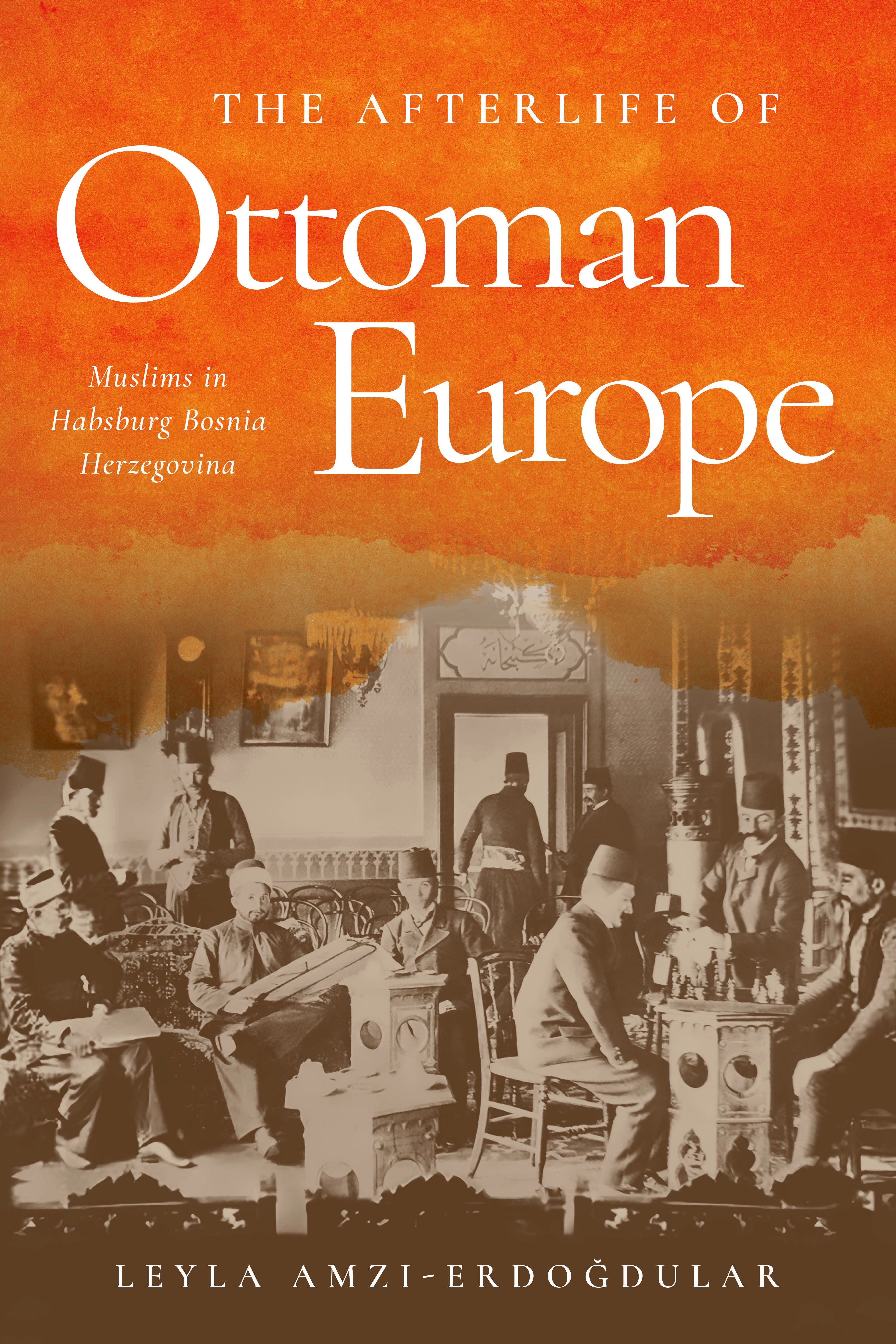
The Afterlife of Ottoman Europe
The Afterlife of Ottoman Europe examines how Bosnian
Muslims navigated the Ottoman and Habsburg domains following the
Habsburg occupation of Bosnia Herzegovina after the 1878 Berlin
Congress. Prominent members of the Ottoman imperial polity, Bosnian
Muslims became minority subjects of Austria-Hungary, developing a
relationship with the new authorities in Vienna while transforming
their interactions with Istanbul and the rest of the Muslim world.
Leyla Amzi-Erdoğdular explores the enduring influence of the
Ottoman Empire during this period-an influence perpetuated by the
efforts of the imperial state from afar, and by its former subjects
in Bosnia Herzegovina negotiating their new geopolitical reality.
Muslims' endeavors to maintain their prominence and shape their
organizations and institutions influenced imperial considerations
and policies on occupation, sovereignty, minorities, and
migration.
This book introduces Ottoman archival sources and draws on
Ottoman and Eastern European historiographies to reframe the study
of Habsburg Bosnia Herzegovina within broader intellectual and
political trends at the turn of the twentieth century. Tracing
transregional connections, imperial continuities, and multilayered
allegiances, The Afterlife of Ottoman Europe bridges
Ottoman, Islamic, Middle Eastern, and Balkan studies.
Amzi-Erdoğdular tells the story of Muslims who redefined their
place and influence in both empires and the modern world, and
argues for the inclusion of Islamic intellectual history within the
history of Bosnia Herzegovina and Eastern Europe.
eBook