
Catalogue Search | MBRL


Are you sure you want to remove the book from the shelf?

{{itemTitle}}
4,239
result(s) for
"European Music"
Sort by:

Engaging Cultural Ideologies
Engaging Cultural Ideologies offers a recontextualization of the effects of Poland’s cultural practices, especially those concerning issues such as nationalism, elitism, and race, on the genesis and performance of contemporary Polish compositions from 1918 to 1956. Based on extensive archival research that includes the first comprehensive examination of concert programs in Poland as well as a series of case studies focused on composers’ challenges in the midst of nearly constant turmoil, Bylander brings fresh insights into the public and private power struggles concerning artistic freedom that were animated by similar points of contention across seemingly diverse historical eras.
eBook

Becoming an Irish Traditional Musician
Coupling the narratives of twenty-two Irish traditional musicians alongside intensive field research, Becoming an Irish Traditional Musician explores the rich and diverse ways traditional musicians hone their craft. It details the educational benefits and challenges associated with each learning practice, outlining the motivations and obstacles learners experience during musical development. By exploring learning from the point of view of the learners themselves, the author provides new insights into modern Irish traditional music culture and how people begin to embody a musical tradition. This book charts the journey of becoming an Irish traditional musician and explores how musicality is learned, developed, and embodied.
eBook
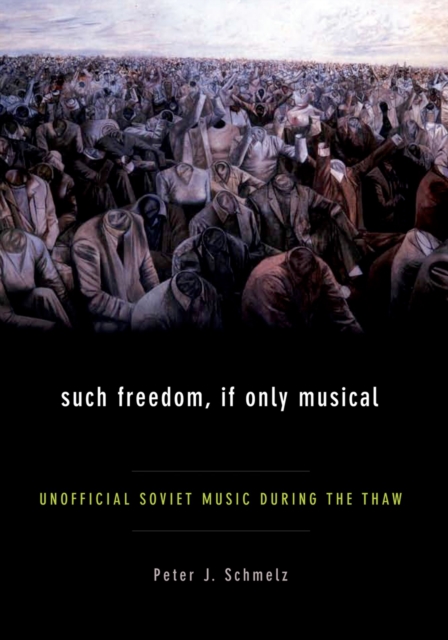
Such Freedom, If Only Musical
Drawing upon oral history, analysis, and a critical synthesis of secondary literature, this book examines the construction and reception of the “unofficial” music in the Soviet Union produced during the Thaw (roughly 1956–74) by composers including Alfred Schnittke, Arvo Pärt, Sofia Gubaidulina, Valentin Silvestrov, Andrey Volkonsky, and Edison Denisov. This book addresses “unofficial” music in all of its contradictions, and argues for a more refined understanding of its changing meanings during the Thaw (and the cold war). The book traces two interrelated phenomena. The first is the developing social function provided by “unofficial” concert life, which allowed Soviet listeners to congregate and question traditional socialist realist verities, and by extension many other facets of life in the USSR. The second is the shifting nature of the musical styles embraced by “unofficial” composers. Initially, while still conservatory students in the 1950s, they encountered music previously off‐limits, including scores by Schoenberg, Boulez, and other Western modernists. They avidly pursued the serial compositional techniques in these “new” scores. However, tiring of the limited expressive possibilities they perceived in these methods, they turned in other directions, first to aleatory devices, and then to quotations from familiar tonal works. The stylistic development of this generation thereby moved from “abstraction” to “mimesis” (borrowing musicologist Karol Berger's terminology). In their mimetic works from the end of the 1960s, the “unofficial” Soviet composers more directly engaged the contemporary situation in the USSR and in so doing received more favorable responses from listeners and Soviet critics alike. Andrey Volkonsky Edison Denisov Alfred Schnittke Sofia Gubaidulina Valentin Silvestrov Arvo Pärt serialism aleatory cold war oral history
eBook
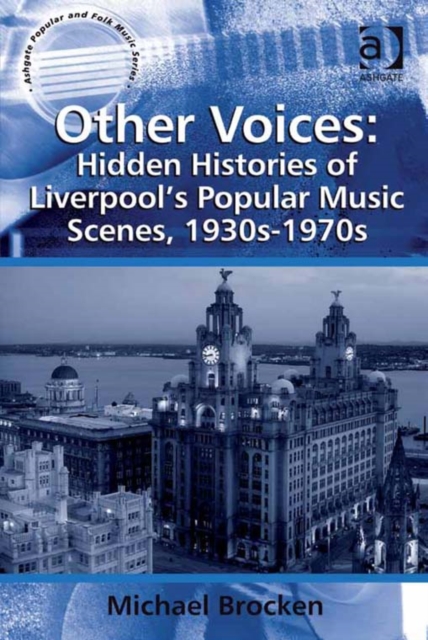
Other Voices: Hidden Histories of Liverpool's Popular Music Scenes, 1930s-1970s
At times it appears that a whole industry exists to perpetuate the myth of origin of the Beatles. There certainly exists a popular music (or perhaps 'rock') origin myth concerning this group and the city of Liverpool and this draws in devotees, as if on a pilgrimage, to Liverpool itself. Once 'within' the city, local businesses exist primarily to escort these pilgrims around several almost iconic spaces and places associated with the group. At times it all almost seems 'spiritual'. One might argue however that, like any function myth, the music history of the Liverpool in which the Beatles grew and then departed is not fully represented. Beatles historians and businessmen-alike have seized upon myriad musical experiences and reworked them into a discourse that homogenizes not only the diverse collective articulations that initially put them into place, but also the receptive practices of those travellers willing to listen to a somewhat linear, exclusive narrative. Other Voices therefore exists as a history of the disparate and now partially hidden musical strands that contributed to Liverpool's musical countenance. It is also a critique of Beatles-related institutionalized popular music mythology. Via a critical historical investigation of several thus far partially hidden popular music activities in pre- and post-Second World War Liverpool, Michael Brocken reveals different yet intrinsic musical and socio-cultural processes from within the city of Liverpool. By addressing such 'scenes' as those involving dance bands, traditional jazz, folk music, country and western, and rhythm and blues, together with a consideration of partially hidden key places and individuals, and Liverpool's first 'real' record label, an assemblage of 'other voices' bears witness to an 'other', seldom discussed, Liverpool. By doing so, Brocken - born and raised in Liverpool - asks questions about not only the historicity of the Beatles-Liverpool narrative, but also about the absence o
eBook

Tonal pitch space
This book builds on and in many ways completes the project of Fred Lerdahl and Ray Jackendoff's influential A Generative Theory of Tonal Music. Like the earlier volume, this book is both a music-theoretic treatise and a contribution to the cognitive science of music. After presenting some modifications to Lerdahl and Jackendoff's original framework, the book develops a quantitative model of listeners' intuitions of the relative distances of pitches, chords, and regions from a given tonic. The model is used to derive prolongational structure, trace paths through pitch space at multiple prolongational levels, and compute patterns of tonal tension and attraction as musical events unfold. The consideration of pitch-space paths illuminates issues of musical narrative, and the treatment of tonal tension and attraction provides a technical basis for studies of musical expectation and expression. These investigations lead to a fresh theory of tonal function and reveal an underlying parallel between tonal and metrical structures. Later portions of the book apply these ideas to highly chromatic tonal as well as atonal music. In response to stylistic differences, the shape of pitch space changes and psychoacoustic features become increasingly important, while underlying features of the theory remain constant, reflecting unvarying features of the musical mind. The theory is illustrated throughout by analyses of music from Bach to Schoenberg, and frequent connections are made to the music-theoretic and psychological literature.
eBook

Listening as spiritual practice in early modern Italy
The early seventeenth century, when the first operas were written and technical advances with far-reaching consequences—such as tonal music—began to develop, is also notable for another shift: the displacement of aristocratic music-makers by a new professional class of performers. In this book, Andrew Dell’Antonio looks at a related phenomenon: the rise of a cultivated audience whose skill involved listening rather than playing or singing. Drawing from contemporaneous discourses and other commentaries on music, the visual arts, and Church doctrine, Dell'Antonio links the new ideas about cultivated listening with other intellectual trends of the period: humanistic learning, contemplative listening (or watching) as an active spiritual practice, and musical mysticism as an ideal promoted by the Church as part of the Catholic Reformation.
eBook

British Rock Modernism, 1967-1977
British Rock Modernism, 1967-1977 explains how the definitive British rock performers of this epoch aimed, not at the youthful rebellion for which they are legendary, but at a highly self-conscious project of commenting on the business in which they were engaged. They did so by ironically appropriating the traditional forms of Victorian music hall. Faulk focuses on the mid to late 1960s, when British rock bands who had already achieved commercial prominence began to aspire to aesthetic distinction. The book discusses recordings such as the Beatles' Magical Mystery Tour album, the Kinks' The Village Green Preservation Society, and the Sex Pistols' Never Mind the Bollocks, Here's the Sex Pistols, and television films such as the Beatles' Magical Mystery Tour and the Rolling Stones' Rock and Roll Circus that defined rock's early high art moment. Faulk argues that these 'texts' disclose the primary strategies by which British rock groups, mostly comprised of young working and lower middle-class men, made their bid for aesthetic merit by sampling music hall sounds. The result was a symbolically charged form whose main purpose was to unsettle the hierarchy that set traditional popular culture above the new medium. Rock groups engaged with the music of the past in order both to demonstrate the comparative vitality of the new form and signify rock's new art status, compared to earlier British pop music. The book historicizes punk rock as a later development of earlier British rock, rather than a rupture. Unlike earlier groups, the Sex Pistols did not appropriate music hall form in an ironic way, but the band and their manager Malcolm McLaren were obsessed with the meaning of the past for the present in a distinctly modernist fashion.
eBook

Forschungsprojekt: Music Migrations in the Early Modern Age: the Meeting of the European East, West and South
Information on the research project is presented.
Journal Article

Music for a mixed taste : style, genre, and meaning in Telemann's instrumental works
Georg Philipp Telemann provided a rich legacy of instrumental music from the 18th century. Though considered a definitive contribution to the genre during his lifetime, his concertos, sonatas, and suites were then virtually ignored for nearly two centuries following his death. Yet these works are now among the most popular in the baroque repertory. Music for a Mixed Taste considers Telemann’s music from stylistic, generic, and cultural perspectives. It investigates the composer’s cosmopolitan “mixed taste”—a blending of the French, Italian, English, and Polish national styles—and his imaginative expansion of this concept to embrace mixtures of the old (late baroque) and new (galant) styles. Telemann had an equally remarkable penchant for generic amalgamation, exemplified by his pioneering role in developing hybrid types such as the sonata in concerto style (“Sonate auf Concertenart”) and overture-suite with solo instrument (“Concert en ouverture”). The book examines the extramusical meanings of Telemann’s “characteristic” overture-suites, which bear descriptive texts associating them with literature, medicine, politics, religion, and the natural world, and which acted as vehicles for the composer’s keen sense of musical humor. It then explores Telemann’s unprecedented self-publishing enterprise at Hamburg, and sheds light on the previously unrecognized borrowing by J. S. Bach from a Telemann concerto. Music for a Mixed Taste further reveals how Telemann’s style polonaise generates musical and social meanings through the timeless oppositions of Orient-Occident, urban-rural, and serious-comic.
eBook

Mozart and Enlightenment Semiotics
In this groundbreaking, historically-informed semiotic study of late eighteenth-century music, Stephen Rumph focuses on Mozart to explore musical meaning within the context of Enlightenment sign and language theory. Illuminating his discussion with French, British, German, and Italian writings on signs and language, Rumph analyzes movements from Mozart’s symphonies, concertos, operas, and church music. He argues that Mozartian semiosis is best understood within the empiricist tradition of Condillac, Vico, Herder, or Adam Smith, which emphasized the constitutive role of signs within human cognition. Recognizing that the rationalist model of neoclassical rhetoric has guided much recent work on Mozart and his contemporaries, Rumph demonstrates how the dialogic tension between opposing paradigms enabled the composer to negotiate contradictions within Enlightenment thought.
eBook