
Catalogue Search | MBRL


Are you sure you want to remove the book from the shelf?

{{itemTitle}}
2,497
result(s) for
"European federation."
Sort by:

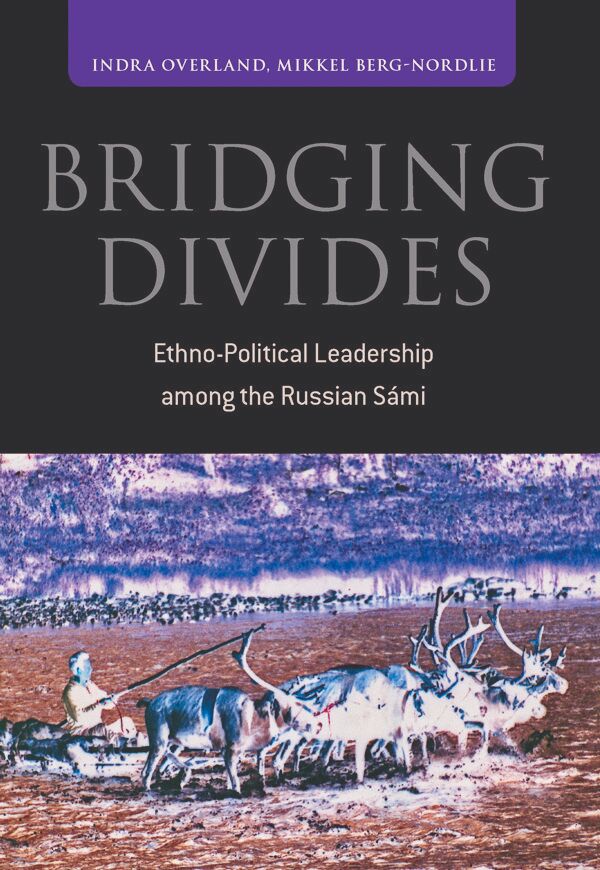
Bridging Divides
The Sami are a Northern indigenous people whose land, Sapmi, covers territory in Finland, Norway, Russia and Sweden. For the Nordic Sami, the last decades of the 20th century saw their indigenous rights partially recognized, a cultural and linguistic revival and the establishment of Sami parliaments. The Russian Sami, however, did not have the same opportunities and were isolated behind the closed border until the dissolution of the Soviet Union. This book examines the following two decades and the Russian Sami's attempt to achieve a linguistic revival, to mend the Cold War scars, and to establish their own independent ethno-political organizations.
eBook


A Community of Europeans?
In A Community of Europeans? a thoughtful observer of the
ongoing project of European integration evaluates the state of the
art about European identity and European public spheres. Thomas
Risse argues that integration has had profound and long-term
effects on the citizens of EU countries, most of whom now have at
least a secondary \"European identity\" to complement their national
identities. Risse also claims that we can see the gradual emergence
of transnational European communities of communication. Exploring
the outlines of this European identity and of the communicative
spaces, Risse sheds light on some pressing questions: What do
\"Europe\" and \"the EU\" mean in the various public debates? How do
European identities and transnational public spheres affect
policymaking in the EU? And how do they matter in discussions about
enlargement, particularly Turkish accession to the EU? What will be
the consequences of the growing contestation and politicization of
European affairs for European democracy?
This focus on identity allows Risse to address the \"democratic
deficit\" of the EU, the disparity between the level of decision
making over increasingly relevant issues for peoples' lives (at the
EU) and the level where politics plays itself out-in the member
states. He argues that the EU's democratic deficit can only be
tackled through politicization and that \"debating Europe\" might
prove the only way to defend modern and cosmopolitan Europe against
the increasingly forceful voices of Euroskepticism.
In A Community of Europeans? , a thoughtful observer of
the ongoing project of European integration evaluates the state of
the art about European identity and European public spheres. Thomas
Risse argues that integration has had profound and long-term
effects on the citizens of EU countries, most of whom now have at
least a secondary \"European identity\" to complement their national
identities. Risse also claims that we can see the gradual emergence
of transnational European communities of communication.Exploring
the outlines of this European identity and of the communicative
spaces, Risse sheds light on some pressing questions: What do
\"Europe\" and \"the EU\" mean in the various public debates? How do
European identities and transnational public spheres affect
policymaking in the EU? And how do they matter in discussions about
enlargement, particularly Turkish accession to the EU? What will be
the consequences of the growing contestation and politicization of
European affairs for European democracy?This focus on identity
allows Risse to address the \"democratic deficit\" of the EU, the
disparity between the level of decision making over increasingly
relevant issues for peoples' lives (at the EU) and the level where
politics plays itself out-in the member states. He argues that the
EU's democratic deficit can only be tackled through politicization
and that \"debating Europe\" might prove the only way to defend
modern and cosmopolitan Europe against the increasingly forceful
voices of Euroskepticism.
eBook


EU-Russian Border Security
The land border between Russia and the European Union is one of the longest land borders in the world, with very considerable trade flowing across the border in both directions. This book examines the nature of the EU-Russia border, and the issues connected with its management. It describes the territories and the societies on each side of the border, discusses the challenges which confront border management, including migration and criminal activities, and explores how people on both sides perceive each other and perceive threats and security issues. It concludes by assessing achievements to date in managing the border and by assessing continuing unresolved challenges.
eBook


Practising EU foreign policy
This book is a novel contribution to the ‘practice theory’ turn in International Relations. It looks at practitioners’ approaches to the EU’s foreign policy to its eastern neighbourhood, particularly Russia, and offers a new methodology for capturing practices using the analytical approach of Discursive International Relations and the Discursive Practice Model. Drawing on data from the European Council, the European Commission and the European Parliament’s AFET committee members, the study concludes that EU practitioners are concerned with the collective EU identity, normative and moral duties and collective security interests when considering EU policy towards Russia and other eastern neighbours. This suggest that practitioners are a lot more pragmatic when it comes to this policy area than previously assumed by the vast literature on the EU as a normative power.
eBook


Between yesterday and tomorrow
An intellectual and cultural history of mid-twentieth century plans for European integration, this book calls into question the usual pre- and post-war periodizations that have structured approaches to twentieth-century European history. It focuses not simply on the ideas of leading politicians but analyses debates about Europe in \"civil society\" and the party-political sphere in Germany, asking if, and how, a \"permissive consensus\" was formed around the issue of integration. Taking Germany as its case study, the book offers context to the post-war debates, analysing the continuities that existed between interwar and post-war plans for European integration. It draws attention to the abiding scepticism of democracy displayed by many advocates of integration, indeed suggesting that groups across the ideological spectrum converged around support for European integration as a way of constraining the practice of democracy within nation-states.
eBook