
Catalogue Search | MBRL


Are you sure you want to remove the book from the shelf?

{{itemTitle}}
7
result(s) for
"Europeans -- America -- Ethnic identity -- Historiography"
Sort by:


Writing Captivity in the Early Modern Atlantic
Drawing on texts written by and about European and Euro-American captives in a variety of languages and genres, Lisa Voigt explores the role of captivity in the production of knowledge, identity, and authority in the early modern imperial world.The practice of captivity attests to the violence that infused relations between peoples of different faiths and cultures in an age of extraordinary religious divisiveness and imperial ambitions. But as Voigt demonstrates, tales of Christian captives among Muslims, Amerindians, and hostile European nations were not only exploited in order to emphasize cultural oppositions and geopolitical hostilities. Voigt's examination of Spanish, Portuguese, and English texts reveals another early modern discourse about captivity--one that valorized the knowledge and mediating abilities acquired by captives through cross-cultural experience.Voigt demonstrates how the flexible identities of captives complicate clear-cut national, colonial, and religious distinctions. Using fictional and nonfictional, canonical and little-known works about captivity in Europe, North Africa, and the Americas, Voigt exposes the circulation of texts, discourses, and peoples across cultural borders and in both directions across the Atlantic.
eBook

Defining America’s Racial Boundaries: Blacks, Mexicans, and European Immigrants, 1890–1945
Contemporary race and immigration scholars often rely on historical analogies to help them analyze America's current and future color lines. If European immigrants became white, they claim, perhaps today's immigrants can as well. But too often these scholars ignore ongoing debates in the historical literature about America's past racial boundaries. Meanwhile, the historical literature is itself needlessly muddled. In order to address these problems, the authors borrow concepts from the social science literature on boundaries to systematically compare the experiences of blacks, Mexicans, and southern and eastern Europeans (SEEs) in the first half of the 20th century. Their findings challenge whiteness historiography; caution against making broad claims about the reinvention, blurring, or shifting of America's color lines; and suggest that the Mexican story might have more to teach us about these current and future lines than the SEE one. Adapted from the source document.
Journal Article

Anglicizing America
The thirteen mainland colonies of early America were arguably never more British than on the eve of their War of Independence from Britain. Though home to settlers of diverse national and cultural backgrounds, colonial America gradually became more like Britain in its political and judicial systems, material culture, economies, religious systems, and engagements with the empire. At the same time and by the same process, these politically distinct and geographically distant colonies forged a shared cultural identityone that would bind them together as a nation during the Revolution.
Anglicizing Americarevisits the theory of Anglicization, considering its application to the history of the Atlantic world, from Britain to the Caribbean to the western wildernesses, at key moments before, during, and after the American Revolution. Ten essays by senior historians trace the complex processes by which global forces, local economies, and individual motives interacted to reinforce a more centralized and unified social movement. They examine the ways English ideas about labor influenced plantation slavery, how Great Britain's imperial aspirations shaped American militarization, the influence of religious tolerance on political unity, and how Americans' relationship to Great Britain after the war impacted the early republic's naval and taxation policies. As a whole,Anglicizing Americaoffers a compelling framework for explaining the complex processes at work in the western hemisphere during the age of revolutions.
Contributors: Denver Brunsman, William Howard Carter, Ignacio Gallup-Diaz, Anthony M. Joseph, Simon P. Newman, Geoffrey Plank, Nancy L. Rhoden, Andrew Shankman, David J. Silverman, Jeremy A. Stern.
eBook
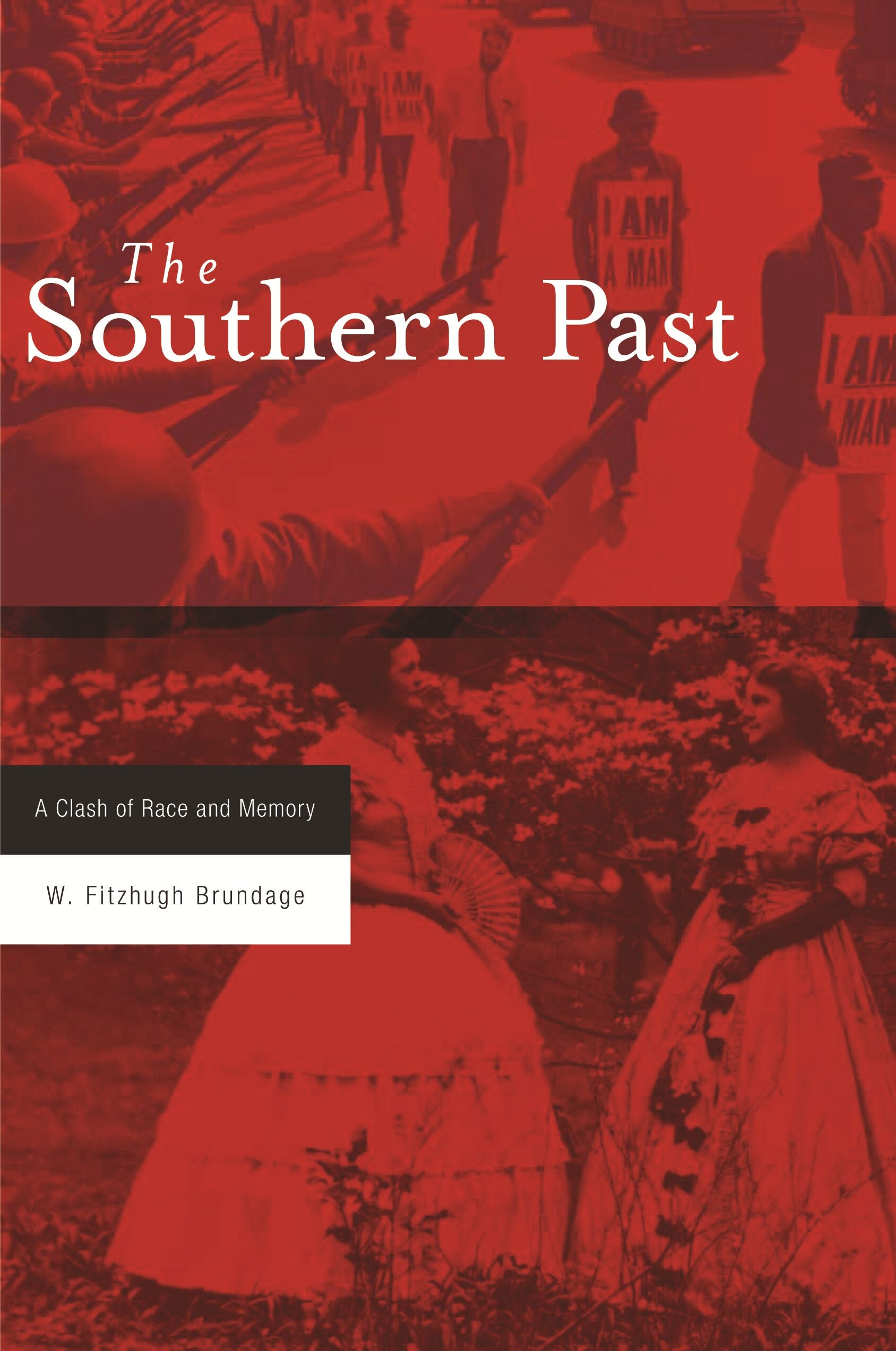
The Southern past : a clash of race and memory
Since the Civil War whites and blacks have struggled over the meanings and uses of the Southern past. The Southern Past argues that these battles are ultimately about who has the power to determine what we remember of the past, and whether that remembrance will honor all Southerners or only select groups.
eBook

American Jewish Historians, Colonial Jews and Blacks, and the Limits of \Wissenschaft\: A Critical Review
A quite visible (though not universally admired) stream of new works in various fields of Jewish studies makes use of some of the new and fruitful approaches inspired by \"theory.\" Unfortunately, few cover the early colonial period.(11) In some ways, Jewish historiography has been from its outset a form of subaltern studies. Even before \"theory,\" Jewish historiography -- in part because of the rhizomatic and ever-mutating nature of its object of study -- had long understood the importance of environmental factors (i.e., other peoples and cultures). Most of these studies, however, took the dialogical history of Jewish identity in the Diaspora resolutely to mean only that dialogue between Jews and Christians, occasionally the dialogue between Jews and Muslims, but almost never with regard to any other group. In his classic work on Jews in the Renaissance, Cecil Roth was at least honest in prefacing his study with the statement that \"Of the two cultures with whose interaction this book deals...\"(12) This myopic perspective replays most ironically the allegations of Christian oppression of Jews as a bond of intimacy, a family quarrel. Here Jewish history is more Eurocentric than the Europeans (perhaps a common failing of converts and Creoles). This perspective has been most amusingly stated, and with characteristic aplomb, by the \"father\" of American Jewish history as an academic discipline, Jacob Rader Marcus, in the preface to his three-volume summation, The Colonial American Jew: \"The typical American Jew turned his buttocks to the frontier and the wilderness; the culture he knew and cherished was transatlantic, European.\"(13) Yosef Hayim Yerushalmi's demarcation of \"Early Modern Jewish History\" also neatly exemplifies the Eurocentricity of the Jewish historiography of the period, which goes from \"the expulsion of the Jews of Spain in 1492 to the emancipation of the Jews of France in 1790-1.\"(14) This liminal period, this threshold to the modern era, marks the crisis in a love story of sorts, but the spurned lover is taken back and all ends happily. Modern Jewish historiography seemingly must replay the courtship and wedding stories Jews told about their coming into the family of Europeans (stories whose bias the non-European cousins might dispute). The Jews were not \"automatically\" anything, certainly not \"white.\"(49) The \"unhealthy climate\" of the Caribbean, according to Cohen, controlled \"Jew and gentile alike. In that sense, environmental factors completely negated all possible impact norms may have had upon Jewish behavior\" (131). Whatever Cohen's cryptic and dubious sentence means, he continues just as cryptically: \"Demographic behavior alone, however, does not form the historic process of development. The fact that Jews responded demographically in a similar way to the environmental pressures as their Christian counterparts does not mean that in other aspects they behaved like them.\" Again, just what does Cohen mean here? \"Even in the comparatively tolerant West Indian society they were discriminated against, economically as well as socially. They were largely an urban population living off trade, while most of the general population was plantation-oriented\" (131). But was West Indian society really comparatively tolerant? Jamaica? Martinique? Tolerant to whom, one wants to ask.(50) Is it possible that Cohen's elliptical language reveals a subtext behind the seemingly dry and objective statistics? This is a subtext that wants things both ways: Jews had no choice but to adapt to the \"environment,\" hence owned and used slaves, but even so, never to the extent of the main body of cruel (non-Jewish) slaveowners. Cohen's excellent, useful collection of data, despite its flaws but also despite its awareness of the colonial context of its objects of study, reflects Jewish historiography's habit of masking racial attitudes behind quantification.(51) Because slaves had already been \"coming under particularly close scrutiny\" (123) in demographic historiography of the Caribbean, Cohen turned his attention to the neglected Jews but unfortunately without genuinely integrating their various histories. Peter Novick may be correct to note, as quoted at the beginning of my article, how \"those who wrote of blacks as subjects, were overwhelmingly Jewish,\" but this would seem to exclude those Jews who remained scholars of early modern Jewish history. Blacks, that is, could safely stand as subjects in their own right only if such subjectivity did not threaten certain conceptions of Jewish passivity and disempowerment.
Journal Article

The Construction of a Secular Jewish Identity
The curriculum of Zionist schools during the half century from the Yishuv (the pre-state Jewish settlement in Palestine) through the early years of statehood was a reaction to Jewish life as most educators experienced and remembered it in Europe. It reflected their impatience with the passive religiosity they identified as a prime target for reform. At the same time, it was rooted in what they admired and wished to retain from the culture of their birthplace. In debates over the content and structure of the new curriculum, educators openly expressed misgivings over their success in selectively rejecting and preserving the
Book Chapter