
Catalogue Search | MBRL


Are you sure you want to remove the book from the shelf?

{{itemTitle}}
418
result(s) for
"Euthanasie"
Sort by:

Three wild dogs (and the truth) : a memoir
\"What happens when the Zusak family opens their home to three big, wild, street-hardened dogs--Reuben, more wolf than hound; Archer, blond, beautiful, destructive; and the rancorously smiling Frosty, who walks like a rolling thunderstorm? The answer can only be chaos: there are street fights, park fights, public shamings, property damages, injuries, hospital visits, wellness checks, pure comedy, shocking tragedy, and carnage that must be read to be believed. ... [This is a] memoir about the human need for both connection and disorder, a love letter to the animals who bring hilarity and beauty--but also the visceral truth of the natural world--straight to our doors and into our lives and change us forever\"-- Provided by publisher.
BOOK

Little’s Disease During National Socialism
In diesem Artikel wird untersucht, wie unterschiedliche „Therapieformen“ bei Morbus Little die varrierenden Auffassungen zu Ätiologie und Pathogenese dieser Erkrankung in Nazi-Deutschland widerspiegeln. Einige Patienten waren Opfer der Aktion T4 und wurden getötet, während andere orthopädische Behandlungen erhielten. Dies ergibt sich aus der Tatsache, dass immer noch unklar war, ob diese Krankheit vererbt wurde, eine Folge von Komplikationen bei der Geburt war oder eine Mischung aus beiden Ursachen darstellte. Die Little-Krankheit veranschaulicht daher, dass die Tötung von Patienten im nationalsozialistischen Deutschland von einer Vielzahl von Faktoren, einschließlich eugenischer Bedenken, abhängig war und je nach Ort, dem Grad der Fürsprache der Familie und den Vorstellungen des einzelnen Arztes über die Entstehung der Krankheit stark variierte.
This article examines how different treatments of Little’s disease reflected the disparate understanding of the illness in Nazi Germany. Some patients were victims of Aktion T4 and were killed, while others received orthopaedic treatments. This emerges from the fact that it was still unclear if this illness was inherited, a result of complications at birth, or a mix of the two causes. Therefore, Little’s disease illustrates how the killing of patients in Nazi Germany depended on various factors, including eugenic concerns, and varied widely depending on location, degree of family advocacy, and the individual doctor’s ideas on how the illness developed.
Journal Article

Euthanasia and assisted suicide in patients with personality disorders: a review of current practice and challenges
Background
Over the last two decades an increasing number of countries have legalized euthanasia and physician-assisted suicide (EAS) leading to considerable debate over the inherent ethical dilemmas. Increasing numbers of people with personality disorders, faced with unbearable suffering, have requested and received assistance in terminating their lives. EAS in people with personality disorders has, however, received very sparse attention from clinicians and researchers. In this paper, we examine the literature on the practice and prevalence of EAS in people with personality disorders to date and discuss the associated challenges for research and practice.
Methods
Narrative review of the literature combined with the authors’ collective experience and knowledge of personality disorders.
Results
In six of the eight countries where EAS is currently legal, mental disorders are accepted as disorders for which EAS may be granted. In four of these countries, EAS in minors with mental disorders is also accepted. Our literature search resulted in 9 papers on the subject of EAS in people with personality disorders. These studies suggest that most clinicians who grant EAS have indeed perceived their patients’ suffering as chronic, unbearable and untreatable without prospect of improvement. The majority of patients with personality disorders had tried some form of psychotherapy, but very few had received any of the relevant evidence-based treatments. The decision to grant EAS based on a perception of the patient’s illness as being untreatable with no prospect of improvement, could, thus, in many cases fail to meet the due care criteria listed in EAS laws. People with personality disorders more often wish for death for extended periods of time than people without these disorders. However, there is ample empirical data to show that suicidal tendencies and behaviour can be treated and that they fluctuate rapidly over time.
Conclusions
In light of our findings, we believe that the current legislation and practice of EAS for people with personality disorders is based on an inadequate understanding of underlying psychopathology and a lack of awareness about the contemporary treatment literature. Moreover, we assert that this practice neglects the individual’s potential for having a life worth living.
Journal Article
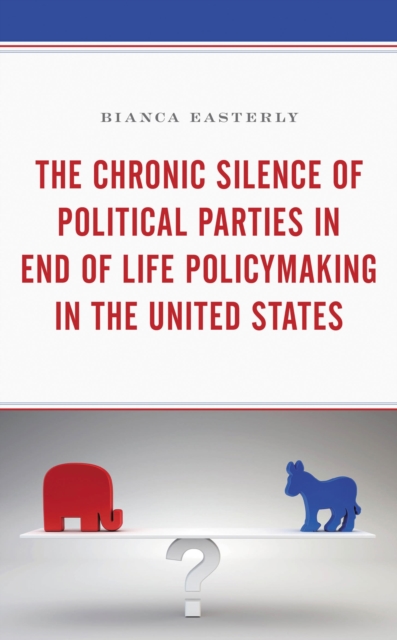
The Chronic Silence of Political Parties in End of Life Policymaking in the United States
In recent decades, the level of moral acceptability of choice at the end of life has reached record highs.Legislative responsiveness to public opinion, however, has resulted in far fewer and much slower adoption patterns.For example, if a growing number of Americans support aid in dying legislation, why are so few states adopting them?.
eBook
Little’s Disease During National Socialism
In diesem Artikel wird untersucht, wie unterschiedliche „Therapieformen“ bei Morbus Little die varrierenden Auffassungen zu Ätiologie und Pathogenese dieser Erkrankung in Nazi-Deutschland widerspiegeln. Einige Patienten waren Opfer der Aktion T4 und wurden getötet, während andere orthopädische Behandlungen erhielten. Dies ergibt sich aus der Tatsache, dass immer noch unklar war, ob diese Krankheit vererbt wurde, eine Folge von Komplikationen bei der Geburt war oder eine Mischung aus beiden Ursachen darstellte. Die Little-Krankheit veranschaulicht daher, dass die Tötung von Patienten im nationalsozialistischen Deutschland von einer Vielzahl von Faktoren, einschließlich eugenischer Bedenken, abhängig war und je nach Ort, dem Grad der Fürsprache der Familie und den Vorstellungen des einzelnen Arztes über die Entstehung der Krankheit stark variierte.
This article examines how different treatments of Little’s disease reflected the disparate understanding of the illness in Nazi Germany. Some patients were victims of Aktion T4 and were killed, while others received orthopaedic treatments. This emerges from the fact that it was still unclear if this illness was inherited, a result of complications at birth, or a mix of the two causes. Therefore, Little’s disease illustrates how the killing of patients in Nazi Germany depended on various factors, including eugenic concerns, and varied widely depending on location, degree of family advocacy, and the individual doctor’s ideas on how the illness developed.
Journal Article

Réflexions interdisciplinaires pour l’accompagnement de demandes d’euthanasie de mineurs en Belgique
Cadre de la recherche : En Belgique, l’euthanasie a été ouverte aux mineurs en février 2014. La demande à mourir doit être formulée par le mineur. Elle doit recevoir l’accord des parents. Elle est réglementée par un processus d’évaluation et d’accompagnement interdisciplinaire pour des situations de souffrance physique constante, insupportable et inapaisable ne présentant aucune autre solution raisonnable dans le contexte d’une affection incurable. Objectifs : Partager les réflexions et recommandations sur l’accompagnement des enfants, de leurs familles et des équipes dans le cadre des demandes d’euthanasie. Elles visent à pointer les éléments que cet accompagnement a en commun avec tout processus de soin, mais également ceux qui le caractérisent proprement.Méthodologie : Dès 2014, l’équipe mobile de soins palliatifs pédiatriques de l’Hôpital Universitaire des Enfants Reine Fabiola (HUDERF) de l’Hôpital Universitaire de Bruxelles (HUB) de l’Université Libre de Bruxelles (ULB) s’est réunie régulièrement de manière interdisciplinaire afin d’examiner et de discuter les différents aspects de la loi.Résultats : Le résultat de ce dialogue ouvre un champ de réflexions et de balises pour assurer un soin adapté et réglementé. Il vise à favoriser l’accompagnement de l’ensemble des personnes mobilisées par l’émergence d’une demande d’euthanasie. Il ne s’agit pas de définir un cadre strict, mais de proposer des repères généralisables et capables d’y assurer un soin dynamique, non linéaire, collaboratif et compréhensif.Conclusions : L’euthanasie est un processus de soin et d’accompagnement allant aux rythmes multiples des personnes dont il a la responsabilité. Les balises de ce cheminement trouvent place à travers une constellation humaine et interdisciplinaire. Contribution : L’euthanasie de mineur en Belgique est une pratique rare, peu étudiée mais jamais anodine. Cet article interroge l’exceptionnelle singularité de ces processus de soin et les ressources interdisciplinaires nécessaires pour l’accompagner.
Journal Article

End of Life Choices for Cancer Patients
There have been impressive improvements in the diagnosis and treatment of cancer in recent decades. In economically advantaged countries with well-developed healthcare systems over 50% of all cancer patients achieve long term survival and are probably cured. Not only has survival improved radically for cancer patients but also there has been an increasing focus on the quality of patient's lives, on improving the patient experience of care and on developing effective support for the very many cancer survivors. Despite the progress in cancer treatment, unfortunately a substantial number of cancer patients will still ultimately die of their disease. For many this will follow periods of successful treatment which results in good remissions and good quality of life. Helping patients to make the right choices about their care towards the end of their lives is one of the greatest and most challenging responsibilities of all healthcare professionals. Legal change on the provision of assisted dying by healthcare professionals has occurred in a substantial number of jurisdictions. This work brings together contributions on end of life choices from experienced professionals from oncology disciplines, palliative care, law, nurses and professions allied to medicine. The goals are: To better inform cancer care professionals and the wider community about developments in choices in end of life care for cancer patients internationally. To better answer questions from patients and respond to requests from patients, including questions about and requests for assisted dying in countries where it is legal to do so. To have a balanced and well informed dialogue about choices available to patients without developing a formal policy position on change in law. To provide a basis of information for future educational activities.
eBook

Multidirektionale Erinnerung in Heinrich Bölls „Daniel, der Gerechte“ (1954): von der Kolonialpsychiatrie zur „Aktion T4
En el presente artículo pretende realizarse, a través de los conceptos de ‘prememoria’ y ‘memoria multidireccional’, un estudio de los elementos estéticos propios del contexto colonial utilizados para construir el universo ficcional de la obra de Heinrich Böll Daniel, der Gerechte (1954). Esta Kurzgeschichte, publicada poco después de la finalización de la Segunda Guerra Mundial, hace referencia al programa de eutanasia nacionalsocialista “Aktion T4” y, para construir la acción, se apoya en conceptos ya presentes en la experiencia colonial europea previa – como el trauma, la psiquiatría y la biologización de social –.
Journal Article
Euthanasia and the Ethics of a Doctor's Decisions
Why do so many doctors have profound misgivings about the push to legalise euthanasia and assisted suicide? Ole Hartling uses his background as a physician, university professor and former chairman of the Danish Council of Ethics to introduce new elements into what can often be understood as an all too simple debate. Alive to the case that assisted dying can be driven by an unattainable yearning for control, Hartling concentrates on two fundamental questions: whether the answer to suffering is to remove the sufferer, and whether self-determination in dying and death is an illusion. He draws on his own experience as a medical doctor to personalize the ethical arguments, share patients' narratives and make references to medical literature. Here is a sceptical stance towards euthanasia, one that is respectful to those who hold different opinions and well-informed about the details and nuances of different euthanasia practices. Written from a Scandinavian perspective, where respect for autonomy and high quality palliative care go hand in hand, Hartling's is a nuanced, valuable contribution to the arguments that surround a question doctors have faced since the birth of medicine. He shows us how the intentions of doing something good can sometimes lead to even greater dilemmas, opening us up to those situations where an inclination to end suffering by ending life is deeply conflicting both for the clinician and for any fellow human being.
eBook

Victims and Survivors of Nazi Human Experiments
While the coerced human experiments are notorious among all the atrocities under National Socialism, they have been marginalised by mainstream historians. This book seeks to remedy the marginalisation, and to place the experiments in the context of the broad history of National Socialism and the Holocaust. Paul Weindling bases this study on the reconstruction of a victim group through individual victims’ life histories, and by weaving the victims’ experiences collectively together in terms of different groupings, especially gender, ethnicity and religion, age, and nationality. The timing of the experiments, where they occurred, how many victims there were, and who they were, is analysed, as are hitherto under-researched aspects such as Nazi anatomy and executions. The experiments are also linked, more broadly, to major elements in the dynamic and fluid Nazi power structure and the implementation of racial policies. The approach is informed by social history from below, exploring both the rationales and motives of perpetrators, but assessing these critically in the light of victim narratives.
eBook