
Catalogue Search | MBRL


Are you sure you want to remove the book from the shelf?

{{itemTitle}}
5,990
result(s) for
"Evolution (Biology) Mathematical models."
Sort by:


Analysis of Evolutionary Processes
Quantitative approaches to evolutionary biology traditionally consider evolutionary change in isolation from an important pressure in natural selection: the demography of coevolving populations. InAnalysis of Evolutionary Processes, Fabio Dercole and Sergio Rinaldi have written the first comprehensive book on Adaptive Dynamics (AD), a quantitative modeling approach that explicitly links evolutionary changes to demographic ones. The book shows how the so-called AD canonical equation can answer questions of paramount interest in biology, engineering, and the social sciences, especially economics.
After introducing the basics of evolutionary processes and classifying available modeling approaches, Dercole and Rinaldi give a detailed presentation of the derivation of the AD canonical equation, an ordinary differential equation that focuses on evolutionary processes driven by rare and small innovations. The authors then look at important features of evolutionary dynamics as viewed through the lens of AD. They present their discovery of the first chaotic evolutionary attractor, which calls into question the common view that coevolution produces exquisitely harmonious adaptations between species. And, opening up potential new lines of research by providing the first application of AD to economics, they show how AD can explain the emergence of technological variety.
Analysis of Evolutionary Processeswill interest anyone looking for a self-contained treatment of AD for self-study or teaching, including graduate students and researchers in mathematical and theoretical biology, applied mathematics, and theoretical economics.
eBook

Supercooperators : altruism, evolution, and why we need each other to succeed
Looks at the importance of cooperation in human beings and in nature, arguing that this social tool is as important an aspect of evolution as mutation and natural selection.
Book

Adaptive Diversification (MPB-48)
Understanding the mechanisms driving biological diversity remains a central problem in ecology and evolutionary biology. Traditional explanations assume that differences in selection pressures lead to different adaptations in geographically separated locations. This book takes a different approach and explores adaptive diversification--diversification rooted in ecological interactions and frequency-dependent selection. In any ecosystem, birth and death rates of individuals are affected by interactions with other individuals. What is an advantageous phenotype therefore depends on the phenotype of other individuals, and it may often be best to be ecologically different from the majority phenotype. Such rare-type advantage is a hallmark of frequency-dependent selection and opens the scope for processes of diversification that require ecological contact rather than geographical isolation.
eBook
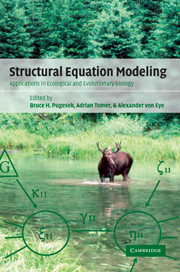
Structural Equation Modeling
Structural equation modelling (SEM) is a technique that is used to estimate, analyse and test models that specify relationships among variables. The ability to conduct such analyses is essential for many problems in ecology and evolutionary biology. This book begins by explaining the theory behind the statistical methodology, including chapters on conceptual issues, the implementation of an SEM study and the history of the development of SEM. The second section provides examples of analyses on biological data including multi-group models, means models, P-technique and time-series. The final section of the book deals with computer applications and contrasts three popular SEM software packages. Aimed specifically at biological researchers and graduate students, this book will serve as valuable resource for both learning and teaching the SEM methodology. Moreover, data sets and programs that are presented in the book can also be downloaded from a website to assist the learning process.
eBook

Reconstructing evolution : new mathematical and computational advances
Evolution is a complex process, acting at multiple scales, from DNA sequences and proteins to populations of species. Understanding and reconstructing evolution is of major importance in numerous subfields of biology. For example, phylogenetics and sequence evolution is central to comparative genomics, attempts to decipher genomes, and molecular epidemiology. Phylogenetics is also the focal point of large-scale international biodiversity assessment initiatives such as the 'Tree of Life' project, which aims to build the evolutionary tree for all extant species. Since the pioneering work in phylogenetics in the 1960s, models have become increasingly sophisticated to account for the inherent complexity of evolution. They rely heavily on mathematics and aim at modelling and analyzing biological phenomena such as horizontal gene transfer, heterogeneity of mutation, and speciation and extinction processes. This book presents these recent models, their biological relevance, their mathematical basis, their properties, and the algorithms to infer them from data. A number of subfields from mathematics and computer science are involved: combinatorics, graph theory, stringology, probabilistic and Markov models, information theory, statistical inference, Monte Carlo methods, continuous and discrete algorithmics. This book arises from the Mathematics of Evolution and Phylogenetics meeting at the Mathematical Institute Henri Poincaré, Paris, in June 2005 and is based on the outstanding state-of-the-art reports presented by the conference speakers. Ten chapters - based around five themes - provide a detailed overview of key topics, from the underlying concepts to the latest results, some of which are at the forefront of current research.
eBook
Evolutionary Processes and Applications
This book presents and discusses new developments in the study of evolutionary processes. Topics discussed include evolution of magneto-acoustic waves in isothermal atmosphere, quantum dynamical semigroups, traveling waves in discrete models of biological population, motion of electrorheological fluids, Stacklberg control of a backward linear heat equation, Leray weak solutions of Navier-Stokes equation involving one directional derivative, and initial value boundary problem of an evolutionary p(x)-Laplacian equation.
eBook

Evolutionary Algorithms in Theory and Practice
This book presents a unified view of evolutionary algorithms: the exciting new probabilistic search tools inspired by biological models that have immense potential as practical problem-solvers in a wide variety of settings, academic, commercial, and industrial.
eBook

Twisted pseudodifferential calculus and application to the quantum evolution of molecules
The authors construct an abstract pseudodifferential calculus with operator-valued symbol, suitable for the treatment of Coulomb-type interactions, and they apply it to the study of the quantum evolution of molecules in the Born-Oppenheimer approximation, in the case of the electronic Hamiltonian admitting a local gap in its spectrum. In particular, they show that the molecular evolution can be reduced to the one of a system of smooth semiclassical operators, the symbol of which can be computed explicitly. In addition, they study the propagation of certain wave packets up to long time values of Ehrenfest order.
eBook

Adaptive Diversification (MPB-48)
Understanding the mechanisms driving biological diversity remains a central problem in ecology and evolutionary biology. Traditional explanations assume that differences in selection pressures lead to different adaptations in geographically separated locations. This book takes a different approach and explores adaptive diversification--diversification rooted in ecological interactions and frequency-dependent selection. In any ecosystem, birth and death rates of individuals are affected by interactions with other individuals. What is an advantageous phenotype therefore depends on the phenotype of other individuals, and it may often be best to be ecologically different from the majority phenotype. Such rare-type advantage is a hallmark of frequency-dependent selection and opens the scope for processes of diversification that require ecological contact rather than geographical isolation.
Michael Doebeli investigates adaptive diversification using the mathematical framework of adaptive dynamics. Evolutionary branching is a paradigmatic feature of adaptive dynamics that serves as a basic metaphor for adaptive diversification, and Doebeli explores the scope of evolutionary branching in many different ecological scenarios, including models of coevolution, cooperation, and cultural evolution. He also uses alternative modeling approaches. Stochastic, individual-based models are particularly useful for studying adaptive speciation in sexual populations, and partial differential equation models confirm the pervasiveness of adaptive diversification.
Showing that frequency-dependent interactions are an important driver of biological diversity,Adaptive Diversificationprovides a comprehensive theoretical treatment of adaptive diversification.
eBook