
Catalogue Search | MBRL


Are you sure you want to remove the book from the shelf?

{{itemTitle}}
5,374
result(s) for
"Evolution Social aspects."
Sort by:

Blueprint : the evolutionary origins of a good society
An exploration of the biological roots of positive social behavior reveals how human genes have countered violence and self-interest with equally inherent, society-building tendencies toward friendship, cooperation, and learning.
Book

Biohistory
Western civilisation is on a path to destruction. In coming decades, economies will shrink, democracy will retreat and nations crumble. The long-term result will be grinding poverty, superstition and disease. This isn't scaremongering - it is science. In Biohistory: The Decline and Fall of the West, Dr Jim Penman, PhD, details a revolutionary new theory about why civilizations collapse. For the first time, Penman directly links human biology with the rise and fall of civilisations-a cataclysmic relationship that brought the Romans, the ancient Greeks and all other Empires to their knees. Based on pioneering scientific research, Penman reveals the deadly, invisible forces at play across human and animal history-and why the West will be the next victim. Biohistory makes use of the latest findings in epigenetics, the study of how the environment affects our genes. Presented in easy-to-digest language, it draws on history, biology, anthropology and economics to explain the real drivers of social change and how evolutionary mechanisms designed to adapt animal social behaviour to changing food conditions determine the fate of civilisation. The West's only hope of avoiding catastrophe lies with the biological sciences, but is it already too late to change the course of history?.
eBook


The Evolving World
Today, evolutionary biology is much more than an explanatory concept. It is indispensable to the world we live in. This book provides the first truly accessible and balanced account of how evolution has become a tool with applications that are thoroughly integrated, and deeply useful, in our everyday lives and our societies, often in ways that we do not realize. The Evolving World convinces us as never before that evolutionary biology has become absolutely necessary for human existence.
eBook
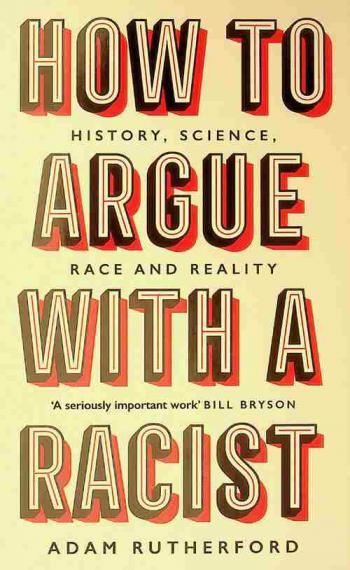
How to argue with a racist : history, science, race and reality
Race is real because we perceive it. Racism is real because we enact it. But the appeal to science to strengthen racist ideologies is on the rise - and increasingly part of the public discourse on politics, migration, education, sport and intelligence. Stereotypes and myths about race are expressed not just by overt racists, but also by well-intentioned people whose experience and cultural baggage steer them towards views that are not supported by the modern study of human genetics. Even some scientists are uncomfortable expressing opinions deriving from their research where it relates to race. Yet, if understood correctly, science and history can be powerful allies against racism, granting the clearest view of how people actually are, rather than how we judge them to be.

Darwinistas! The Construction of Evolutionary Thought in Nineteenth Century Argentina
After setting out the intellectual, cultural, and political context of the reception of Darwinism in Argentina, this book presents original translations of central texts in that reception, most of which have never before appeared in English.
eBook

The punisher's brain : the evolution of judge and jury
\"Evolution built us to punish cheaters. Without that punishment instinct, we would never have been able to live in small groups, and would never have realized all the significant benefits that small-group living conferred, including mutual defense, cooperative hunting, property, divisions of labor and economies of scale. In fact, to a large extent our notions of right and wrong, of empathy and compassion, of fairness and justice, all come from the tensions of group living, and thus indirectly owe their very existence to punishment. It may sound strange that one key to civilization is our willingness to punish each other, but every parent knows it's true. Every parent also feels the irresistible pull not to punish too much, and in fact maybe not to punish at all - to forgive - and this, too, is a remnant of evolution. Our punishment instinct is not so much a sword ready to fall as it is a finely tuned balance, sometimes susceptible to the gentlest of breezes\"-- Provided by publisher.
Book

Like ants: civilization and eusocial development
Turnbull challenges conventional wisdom about how human civilization developed. Most species survive for half a million years, while humanity is already about one million years old. We survive because we cooperate, he says. However, ants have been around for at least 100 times as long. Should we act more like them, or have we gone too far already?
eBook

Like Ants
Turnbull challenges conventional wisdom about how human civilization developed. Most species survive for half a million years, while humanity is already about one million years old. We survive because we cooperate, he says. However, ants have been around for at least 100 times as long. Should we act more like them, or have we gone too far already?.
eBook