
Catalogue Search | MBRL


Are you sure you want to remove the book from the shelf?

{{itemTitle}}
8
result(s) for
"Excavations (Archaeology) Australia New South Wales."
Sort by:

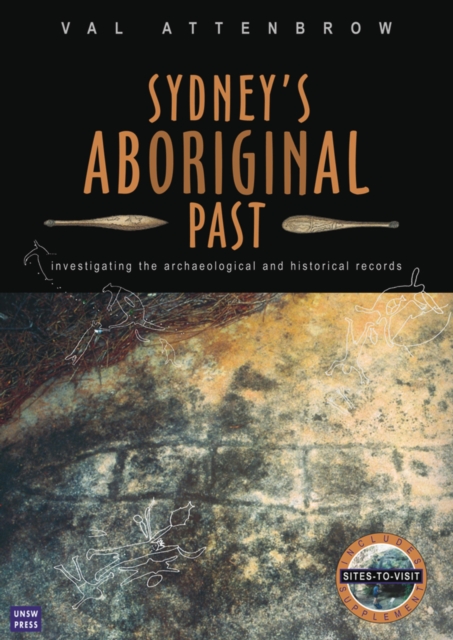
Sydney's Aboriginal past : investigating the archaeological and historical records
Revealing the diversity of Aboriginal life in the Sydney region, this study examines a variety of source documents that discuss not only Aboriginal life before colonization in 1788 but also the early years of first contact. This is the only work to explore the minutiae of Sydney Aboriginal daily life, detailing the food they ate; the tools, weapons, and equipment they used; and the beliefs, ceremonial life, and rituals they practiced. This updated edition has been revised to include recent discoveries and the analyses of the past seven years, adding yet more value to this 2004 winner of the John Mulvaney award for best archaeology book from the Australian Archaeological Association. The inclusion of a special supplement that details the important sites in the Sydney region and how to access them makes the book especially appealing to those interested in visiting the sites.
eBook

The Convict System of New South Wales: A review of archaeological research since 2001
The last ten years of archaeological research on convict sites in NSW has seen a wealth of new discoveries thanks to unprecedented access to urban settings as a result of the development boom in the greater Sydney area. Not surprisingly, the direction of research has therefore largely been dictated by the nature of these mitigation projects and consequently favors greater understanding of convict urban landscapes. However, the pressure to complete successive large scale projects, limited funding for post-excavation analysis and interpretation, a growing body of incomplete reports, and the lack of an overall framework for NSW convict archaeological studies has seen an uneven advance in our knowledge of convict life since the last review by Denis Gojak in 2001. This paper reports on some of the main discoveries and describes efforts by academic and professional archaeologists to collaborate and facilitate further convict research in NSW, especially further analysis and syntheses of material, through the Archaeology of Sydney Research Group, the NSW Archaeology Online grey literature project and targeted student research.
Journal Article

Community-based archaeology in Australia
Outside the Antipodes, Australian archaeology is best known as an archaeology of the distant Palaeolithic past. However, where communities have been closely involved in developing and undertaking archaeological research programs, the focus of archaeological research has been radically different, often dealing with the archaeology of the recent, remembered past and crossing disciplinary boundaries between Aboriginal and historical archaeology. Distinguishing between 'community-based archaeology' and reactive or 'consent-based' community involvement in archaeology,this paper reviews the state of archaeology and its engagement with communities in Australia. Through several case studies in both indigenous and post-contact archaeology, it demonstrates the way in which community-based research and practise is changing what it is we think of as 'archaeology' in Australia.
Journal Article

Conversations and Material Memories: Insights into Outback Household Practices at the Old Kinchega Homestead
Since 1996, the Kinchega Archaeological Research Project (KARP) has been conducting a household archaeology project at the late-19th- to mid-20th-century Old Kinchega Homestead in outback New South Wales, Australia. The research is driven by investigations of the homestead's material remains, but interactions with the local community are providing oral and documentary evidence that play a significant role, both as a contextual framework and in steering the project's research agenda. This article discusses how different people, and different types of interactions and processes involved in gathering personal histories throughout the project, are impacting the interpretative procedures used for investigating household consumption practices at Old Kinchega Homestead.
Journal Article

Footprints in the sand: appraising the archaeology of the Willandra Lakes, western New South Wales, Australia
Here is a paper of pivotal importance to all prehistorians attempting to reconstruct societies from assemblages of shells or stone artefacts in dispersed sites deposited over tens of thousands of years. The authors demonstrate the perilous connections between the distribution and content of sites, their geomorphic formation process and the models used to analyse them. In particular they warn against extrapolating the enticing evidence from Pleistocene Willandra into behavioural patterns by drawing on the models presented by nineteenth-century anthropologists. They propose new strategies at once more revealing and more ethical.
Journal Article

The Old Kinchega Homestead: Doing Household Archaeology in Outback New South Wales, Australia
The Kinchega Pastoral Station in western New South Wales, Australia, was one of the earliest and largest in the area. A study of one of the station's homestead is demonstrating how the integration and negotiation of material and documentary evidence produces information on domestic behavior in rural Australia in the late nineteenth and early twentieth centuries and highlights the activities of women and children in an environment whose history has been dominated by the exploits of men.
Journal Article
Quarrying Masses of Information: An Approach to the Recording and Interpretation of a Quarry Assemblage
A detailed study using a non-site distributional approach has focused on
Quarry 35, situated in the Mt Wood Range of Sturt National Park,
Northwestern New South Wales. The analysis illustrates how accurate
recording and appropriate sampling techniques were used to firstly
understand the spatial and technological variation in a quarry
assemblage and secondly to identify its role as a resource in the wider
landscape. The results show that the procurement of stone from Quarry 35
was planned, highly organised and was essential to the successful
acquisition of resources in a difficult arid zone environment.
Journal Article