
Catalogue Search | MBRL


Are you sure you want to remove the book from the shelf?

{{itemTitle}}
1,396
result(s) for
"Exodus"
Sort by:
Philo
The philosopher Philo was born about 20 BCE to a prominent Jewish family in Alexandria, the chief home of the Jewish Diaspora as well as the chief center of Hellenistic culture; he was trained in Greek as well as Jewish learning. In attempting to reconcile biblical teachings with Greek philosophy he developed ideas that had wide influence on Christian and Jewish religious thought.
Book
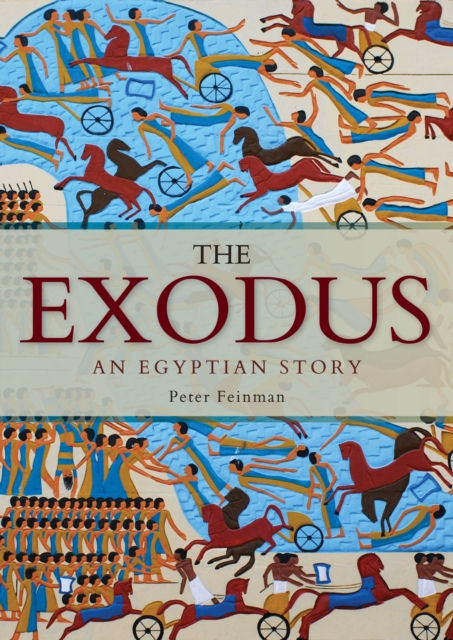
The Exodus
Did the Exodus occur? This question has been asked in biblical scholarship since its origin as a modern science. The desire to resolve the question scientifically was a key component in the funding of archaeological excavations in the nineteenth century. Egyptian archaeologists routinely equated sites with their presumed biblical counterpart. Initially, it was taken for granted that the Exodus had occurred. It was simply a matter of finding the archaeological data to prove it. So far, those results have been for naught. The Exodus: An Egyptian Story takes a very real-world approach to understanding the Exodus. It is not a story of cosmic spectaculars that miraculously or coincidentally occurred when a people prepared to leave Egypt. There are no special effects in the telling of this story. Instead, the story is told with real people in the real world doing what real people do. Peter Feinman does not rely on the biblical text and is not trying to prove that the Bible is true. He places the Exodus within Egyptian history based on the Egyptian archaeological record. It is a story of the rejection of the Egyptian cultural construct and defiance of Ramses II. Egyptologists, not biblical scholars, are the guides to telling the Exodus story. What would you expect Ramses II to say after he had been humiliated? If there is an Egyptian smoking gun for the Exodus, how would you recognize it? To answer these questions requires us to take the Exodus seriously as a major event at the royal level in Egyptian history.
eBook

Make Me a Sanctuary
This contribution offers a new reading and reconstruction of an addition found in the text of Exod 24:18–25:1 as preserved in 4Q364 (4QRPb) 15. Alluding to Exod 25:8 (and possibly 9), it appears to elucidate the purpose of Moses’s forty days’ long stay atop Mount Sinai and serves as a nexus between Exod 24:18 and the following discussion of the Tabernacle.
Journal Article

HOW AND WHY DOES GOD CHANGE? EXPLORING THE LOGIC OF THE DIVINE SHIFT AFTER THE GOLDEN CALF
After the idolatry of the golden calf, God tells Moses that the covenant is effectively canceled and that he intends to destroy the Israelites and start over with Moses. Not only does Moses refuse the offer, he convinces God not to destroy Israel, and even to accompany them on the journey to the Promised Land (which God initially had refused to do). Finally, Moses receives from God a personal theophany (a revelation of divine glory), accompanied by a new revelation of the meaning of the divine name (beyond that given in Exodus 3). This new revelation signifies a change in God’s modus operandi with Israel from a conditional to an unconditional covenant, evident from a comparison of Exod 20:4–6 with Exod 34:6–7. This essay explores the nature and significance of the shift between Exodus 20 and 34, grounded in God’s mercy or love, while noting analogous shifts in Deuteronomy, Jeremiah, and Ezekiel. Through an examination of the pattern underlying these shifts, the essay reflects on what the significance of this pattern might be for understanding the complicated characterization of the God of Israel.
Journal Article

Writing as Reading: Deuteronomy’s Perspective on the Day of the Assembly
This article studies the Torah’s depictions of God’s descent on Sinai, ‘the Day of the Assembly,’ within Exodus 19–20 and across Deuteronomy to argue that Israel’s failure to go on the mountain in Exodus 19:16 is sin. The Torah’s cumulative depictions of this moment convey the Torah’s theology of how God and man approach each other. After a brief contrast with Kibbe’s recent study, this article examines the plausibility and profitability of interpreting Exodus 19 as a discussion of two covenantal relationships between God and Israel by testing its ideas through summary exegesis of Exodus 19–20 and Deuteronomy 4, 5, 9, 10, 18. The Torah revisits Israel’s fear to transform that one moment into a larger story of how God changes the human heart. Israel’s request for God’s words to become Moses’ words sets Moses’ written mediation as the key to His people living with God. Exodus’s and Deuteronomy 5’s accounts of that day unveil the people’s movement from a bad fear of God, which disobeys Him, to a good fear of God, which heeds His words, with the Ten Words standing between the narratives. Deuteronomy 9–10 characterize the trembling of Exodus 19:16 as sin, and Deuteronomy 18 connects that day’s transformation to the request for the Prophet Like Moses and the promise of His victory over death. While Moses could not overcome death, Moses’ book promises the Prophet Like Moses who will overcome death and bring God’s people into God’s presence in the end.
Journal Article

The Role of Circulating Tumor Cells as a Liquid Biopsy for Cancer: Advances, Biology, Technical Challenges, and Clinical Relevance
Cancer remains a leading cause of mortality worldwide, with metastasis significantly contributing to its lethality. The metastatic spread of tumor cells, primarily through the bloodstream, underscores the importance of circulating tumor cells (CTCs) in oncological research. As a critical component of liquid biopsies, CTCs offer a non-invasive and dynamic window into tumor biology, providing invaluable insights into cancer dissemination, disease progression, and response to treatment. This review article delves into the recent advancements in CTC research, highlighting their emerging role as a biomarker in various cancer types. We explore the latest technologies and methods for CTC isolation and detection, alongside novel approaches to characterizing their biology through genomics, transcriptomics, proteomics, and epigenetic profiling. Additionally, we examine the clinical implementation of these findings, assessing how CTCs are transforming the landscape of cancer diagnosis, prognosis, and management. By offering a comprehensive overview of current developments and potential future directions, this review underscores the significance of CTCs in enhancing our understanding of cancer and in shaping personalized therapeutic strategies, particularly for patients with metastatic disease.
Journal Article

Through Fire and Water
Despite being one of the earliest Middle-earth texts and a central component of the legendarium, J.R.R. Tolkien's Fall of Gondolin has received far less attention than the tale deserves. Building upon the works of David Greenman, Bruce Alexander, and Austin Freeman and their studies comparing The Fall of Gondolin to Virgil's Aeneid as well as Tom Shippey's monograph, The Road to Middle-earth, this article seeks to expand current scholarship surrounding The Fall of Gondolin by the examination of Exodus, as both a Medieval and religious text, as a potential source for the narrative structure, characters, and themes found in Tolkien's Fall of Gondolin.
Journal Article

Beyond Boundaries: Ethnicity, Gender, and Class in Exod 1:8–2:10
Exodus 2:1–10 has been thoroughly analyzed from a feminist perspective. This is appropriate because women play a significant role in the story. However, it is important to note that these female characters are not only defined by gender but also by ethnicity and social status. Combining analyses of ethnicity, gender, and class, this article demonstrates how the female figures in Exod 2:1–10 ignore, challenge, and subvert the polarizations established in Exod 1:8–22 by the Egyptian king. Exodus 2:1–10 can even be read as an example of cross-ethnic, cross-class, and cross-generational solidarity against a despotic regime that marginalizes and oppresses by using marks of differences. However, upon closer analysis it becomes evident that the female figures’ interactions are also determined by an unequal power dynamic. The article demonstrates how examining differences in gender, ethnicity, and class provides a nuanced understanding of power relations within biblical texts.
Journal Article

Secrets of Heaven Volume 8
The eighth volume in Swedenborg's monumental study of the Bible, its meaning, and themes.Secrets of Heaven is Emanuel Swedenborg's magnum opus, a fifteen-volume work that delves into the inner, spiritual meaning of the Bible.
eBook