
Catalogue Search | MBRL


Are you sure you want to remove the book from the shelf?

{{itemTitle}}
2,689
result(s) for
"Exorcism."
Sort by:

The exorcist
A young girl becomes possessed by the devil and causes several violent deaths before she can be cured.
Book


Demonic Possession and Exorcism in Early Modern England
This book is exclusively devoted to demonic possession and exorcism in early modern England. It offers modernized versions of the most significant early modern texts on nine cases of demonic possession from the period 1570 to 1650, the key period in English history for demonic possession. The nine stories were all written by eyewitnesses or were derived from eyewitness reports. They involve matters of life and death, sin and sanctity, guilt and innocence, of crimes which could not be committed and punishments which could not be deserved. The nine critical introductions which accompany the stories address the different strategic intentions of those who wrote them. The modernized texts and critical introductions are placed within the context of a wide-ranging general Introduction to demonic possession in England across the period 1550 to 1700.
eBook

Vicious circle
In this supernatural thriller, freelance exorcist Felix Castor gets a seemingly insignificant \"missing ghost\" case that inexorably drags himself and his loved ones into the middle of a horrific plot to raise one of Hell's fiercest demons. When Satanists, sacrifice farms, stolen spirits, and possessed churches all appear on the same police report, the name of Felix Castor can't be too far behind.
Book

The Vajra Exorcism Dance at Yonghegong Lamasery in Beijing: A Semiotic Analysis
This study examines the Vajra Exorcism Dance—commonly known as “Beating the Devils” (tiao buzha)—as performed at Yonghegong Lamasery in Beijing, positioning it as a quintessential example of monastic Nuoxi in which ritual form serves as the active embodiment of doctrinal content. By situating the performance within its historical, religious, and socio-political contexts, this paper argues that the dance’s choreography, iconography, music, and costumes are not merely aesthetic expressions but systematically structured manifestations of Vajrayana Buddhist soteriology and cosmology. Through a semiotic and performative analysis of ethnographic, historical, and visual sources, the study demonstrates how each formal element is meticulously designed to fulfill the ritual’s core objectives: the destruction of mental defilements and the establishment of a purified sacred realm. Furthermore, the paper investigates how the ritual’s transformation—from an imperial ceremony under Qing patronage to a public urban spectacle—reflects an ongoing negotiation between esoteric efficacy and popular accessibility, with its continued survival dependent upon this dynamic symbiosis.
Journal Article
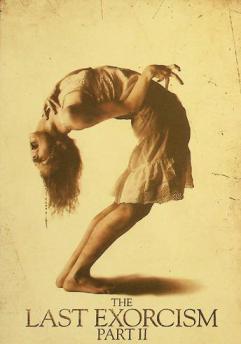
The last exorcism. Part II
At a New Orleans halfway house for girls, Nell Sweetzer attempts to recover from her trauma, but the demon that possessed her returns with an even more horrific plan.
DVD
The Devil and the Doctor: The (De)Medicalization of Exorcism in the Roman Catholic Church
Exorcists are once again in demand for their very specific set of skills in (religious) healing. The founding of the International Association of Exorcists (AIE), the development of the “Exorcism and Prayer of Liberation Course” at a Vatican university, and countless publications from prominent Catholic exorcists are evidence for the relevance of exorcism in contemporary societies. Even though it is strictly speaking a liturgical practice, current exorcism discourses incorporate medical approaches and terminology. The relationship between religion and medicine is subject to change in late modern societies, as illness, health, and healing have increasingly shifted from the realm of religion to the realm of modern medicine. While mainstream churches come to terms with the prevailing paradigms of modernity, healing practices such as exorcism are (again) gaining importance on the margins. This article illuminates the tension between religion and medicine, as religious experts (exorcists) interact with medical experts and give their religious healing practices legitimacy through reference to medical and psychological methods.
Journal Article

Thicker than water
\"Old ghosts are coming back to haunt Felix. Names and faces he thought he'd left behind in Liverpool resurface in London, bringing Felix far more trouble than he'd anticipated. Childhood memories, family traumas, sins old and new, and a council estate that was meant to be a modern utopia until it turned into something like hell....These are just some of the sticks life uses to beat Felix Castor with, as things go from bad to worse for London's favorite freelance exorcist\"--Amazon.com.
Book

SATAN UNBOUND
The rite is similar to rituals in the churches of the East-the Byzantine Catholic Church calls it the Great Blessing of Waters on the Eve of Theophany-and it entered the Roman Ritual in 1890, the same year Pope Leo XIII composed his \"Exorcism Against Satan and the Apostate Angels,\" a longer version of his familiar 1886 St. Michael prayer. Many parishioners attended the blessing in the church that night, bringing with them water in receptacles of every kind, from antique glass perfume bottles to plastic gallon jugs, all of which were spread out on the rosewood floor around the altar. Faith healers and deliverance ministers, self-appointed prophets and preachers routinely called out Satan in public, tearing down strongholds and binding every proud obstacle to the knowledge of God. In the dispositions of ordinary Catholics, I discovered a remarkable confidence in God's providence, and a literally cruciform faith, which accepted sufferings as crosses from God's hand.
Journal Article