
Catalogue Search | MBRL


Are you sure you want to remove the book from the shelf?

{{itemTitle}}
71
result(s) for
"Experimental fiction, American."
Sort by:


Reading Network Fiction
The marriage of narrative and the computer dates back to
the 1980s, with the hypertext experiments of luminaries such as
Judy Malloy and Michael Joyce. What has been variously called
\"hypertext fiction,\" \"literary hypertext,\" and \"hyperfiction\" has
surely surrendered any claim to newness in the 21st century.
David Ciccoricco establishes the category of \"network fiction\" as
distinguishable from other forms of hypertext and cybertext:
network fictions are narrative texts in digitally networked
environments that make use of hypertext technology in order to
create emergent and recombinant narratives. Though they both
pre-date and post-date the World Wide Web, they share with it an
aesthetic drive that exploits the networking potential of digital
composition and foregrounds notions of narrative recurrence and
return. Ciccoricco analyzes innovative developments in network
fiction from first-generation writers Michael Joyce (
Twilight, a symphony , 1997) and Stuart Moulthrop (
Victory Garden , 1991) through Judd Morrissey’s
The Jew's Daughter (2000), an acclaimed example of
digital literature in its latter instantiations on the Web. Each
investigation demonstrates not only what the digital environment
might mean for narrative theory but also the ability of network
fictions to sustain a mode of reading that might, arguably, be
called \"literary.\" The movement in the arts away from
representation and toward simulation, away from the dynamics of
reading and interpretation and toward the dynamics of interaction
and play, has indeed led to exaggerated or alarmist claims of the
endangerment of the literary arts. At the same time, some have
simply doubted that the conceptual and discursive intricacy of
print fiction can migrate to new media. Against these claims,
Reading Network Fiction attests to the verbal complexity
and conceptual depth of a body of writing created for the surface
of the screen.
eBook

The garbage times : a novella ; White ibis : a novella
\"From the freezing alleys of Chicago to the dew-blanketed bayou of Florida. From bouncing drunks and cleaning up puke to biking through the swamp laughing at peacocks. Freeze to thaw. Filth and broken glass and black water backed up in showers; lizards and Girl Scouts and themed birthday parties. A baby rat freed from the bottom of a dumpster becomes a white ibis wandering the wet driveway after a storm. Goodbye, hello, goodbye. It was the garbage times; it was time for something else. A tale of two tales, connected by a mysterious sunlit portal\"-- Provided by publisher.
Book
Warme Arktische Nächte
Yuriy Tarnawsky schildert in seinem neuen, vielgelobten Roman Warme arktische Nächte die packende Geschichte eines Jungen, der mit einem unstillbaren Durst nach dem Unbekannten und zugleich grenzenloser Phantasie ausgestattet ist und inmitten des gewaltigen politischen Aufruhrs des Zweiten Weltkriegs aufwächst, zunächst in einem idyllischen.
eBook


Perspectives on Barry Hannah
Perspectives on Barry Hannahis a collection of essays devoted to the work of the award-winning fiction writer Barry Hannah. The anthology features a broad range of critical approaches and covers the span of Hannah's career fromGeronimo Rex(1972) toYonder Stands Your Orphan(2001). The book also includes a previously unpublished interview with Hannah.
The ten essays cover all of Hannah's thirteen published books. The contributors give fresh perspectives on Hannah's classic works (AirshipsandRay), provide illuminating readings of important fiction that has received less critical attention (Nighwatchmen,Hey Jack!, andNever Die), and offer the first sustained criticism of Hannah's acclaimed later fiction (Bats Out of Hell,High Lonesome, andYonder Stands Your Orphan). As Martyn Bone explains in his introduction, the essays--though varied in approach and style--consistently hone in on the recurrent themes that characterize Hannah's career: his relationship to postmodernism; his interrogation of traditional ideas of masculinity and heroism; his complex engagement with southern history, literature, and culture; and his growing concern with spirituality and morality.
The essays inPerspectives on Barry Hannahmake connections between Hannah's work and that of several prominent modern and postmodern authors, including William Faulkner, Ernest Hemingway, James Joyce, Allen Tate, John Irving, J. M. Coetzee, and Cormac McCarthy. Contributors also consider Hannah's fiction in relation to non-literary cultural forms such as sport, film, and popular music. Ultimately,Perspectives on Barry Hannahaffirms Hannah's status as a leading figure in contemporary American literature.
Martyn Bone is assistant professor of American literature at the Institute for English, German, and Romance Languages at the University of Copenhagen. His previous publications includeThe Postsouthern Sense of Place in Contemporary Fiction.
eBook

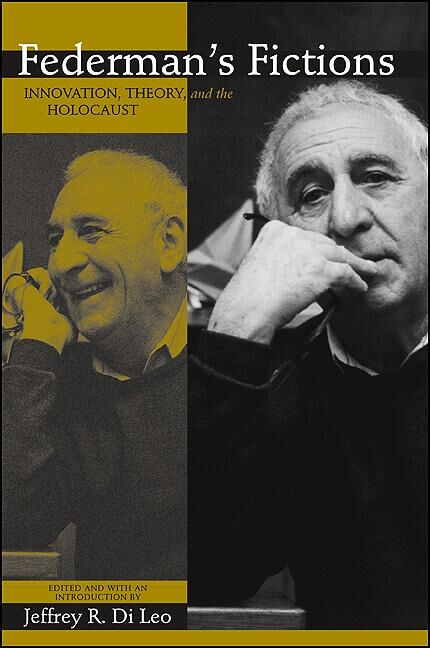
Federman's Fictions
This collection of essays offers an authoritative examination and appraisal of the French-American novelist Raymond Federman's many contributions to humanities scholarship, including Holocaust studies, Beckett studies, translation studies, experimental fiction, postmodernism, and autobiography. Although known primarily as a novelist, Federman (1928–2009) is also the author of numerous books of poetry, essays, translations, and criticism. After emigrating to the United States in 1942 and receiving a Ph.D. in comparative literature at UCLA in 1957, he held professorships in the University at Buffalo's departments of French and English from 1964 to 1999. Together with Steve Katz and Ronald Sukenick, he was one of the original founders of the Fiction Collective, a nonprofit publishing house dedicated to avant garde, experimental prose. Far too many accounts treat Federman as merely a member of a small group of writers who pioneered \"metafictional\" or \"postmodern\" American literature. Federman's Fiction will introduce (or, for some, reintroduce) to the broader scholarly community a creative and daring thinker whose work is significant not just to considerations of the development of innovative fiction, but to a number of other distinct disciplines and emerging critical discourses.
eBook


Donald Barthelme : the genesis of a cool sound
Chronicling a literary life that ended not so long ago, Donald Barthelme: The Genesis of a Cool Sound gives the reader a glimpse at the years when Barthelme began to find his literary voice. A revealing look at Donald Barthelme's influences and development, this account begins with a detailed biographical sketch of his life and spans his growth into a true avant-garde literary figure.
Donald Barthleme was born in Philadelphia but raised in Houston, the son of a forward-thinking architect father and a literary mother. Educated at the University of Houston, he became a fine arts critic for the Houston Post; then, following duty in the Korean conflict, he returned to the Post for a short time before becoming editor for Forum literary magazine. After that, he was also director of the Contemporary Arts Museum while writing and publishing his first stories.
In the 1960s he moved to New York, where he became editor of Location and was able to practice the art of short fiction in such vehicles as the New Yorker and Harper's Bazaar. In a witty, playful, ironic, and bizarrely imaginative style, he wrote more than one hundred short stories and several novels over the years.
In this literary memoir, Donald Barthelme's former wife, Helen Moore Barthelme, offers insights into his career as well as his private life, focusing especially on the decade they were married, from the mid-fifties to the mid-sixties, a period when he was developing the forms and genres that made him famous. During that time Barthelme was finding his voice as a writer and his short stories were beginning to receive notice. In her memoir, Helen Moore Barthelme writes about Donald's early years and her life with him in Houston and New York. In open, straightforward language she tells about their love for each other and about the events that finally divided them. She also describes, from the point of view of the person closest to Donald during that time, the making of one of the most original and imaginative American writers of the twentieth century.
Scholars of avant-garde American literature will gain insider perspective to one man's life and the years which, for all their myriad joys and downturns, produced some of the best-remembered works in the literary canon.
eBook