
Catalogue Search | MBRL


Are you sure you want to remove the book from the shelf?

{{itemTitle}}
1
result(s) for
"Experimental poetry -- 20th century -- History and criticism -- Great Britain"
Sort by:
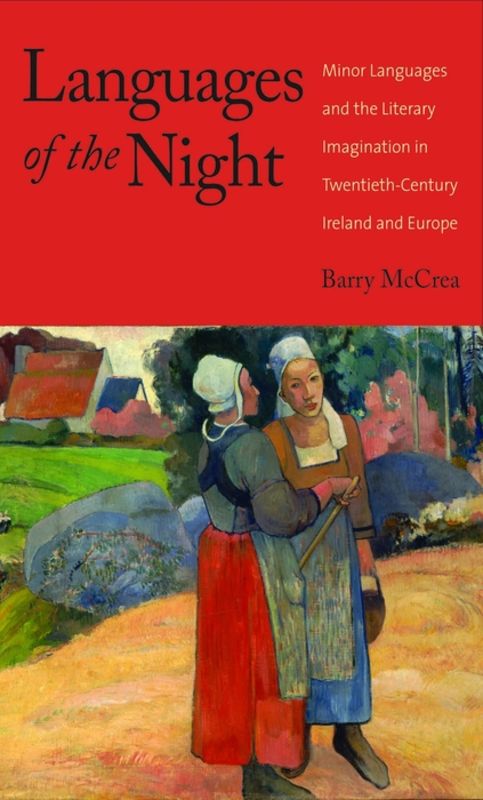
Languages of the Night
In the first decades of the twentieth century, rural populations throughout Europe changed the language they used in everyday life, abandoning their traditional vernaculars-such as French patois, local Italian dialects, and the Irish language-in favor of major metropolitan languages such as French, Italian, and English. .In this book, Barry McCrea argues that the sudden linguistic homogenization of the European countryside was a key impulse in the development of literary modernism. The decline of rural vernaculars caused these languages to become the objects of powerful longings and projections. Seán Ó Ríordáin in Ireland and Pier Paolo Pasolini in Italy reshaped minor languages for use as private idioms of poetry; the revivalist idealization of Irish as a lost utopian language deeply affected the work of James Joyce; the disappearing dialects of northern France seemed to Marcel Proust to offer an escape from time itself.Drawing on a broad range of linguistic and cultural examples to present a major reevaluation of the sources and meanings of European literary modernism, Barry McCrea shows how metropolitan literary culture was fundamentally shaped by the vanishing vernaculars of the European countryside.
eBook