
Catalogue Search | MBRL


Are you sure you want to remove the book from the shelf?

{{itemTitle}}
40
result(s) for
"Expertising"
Sort by:


A real van gogh
Vincent van Gogh’s paintings and drawings are fabulously expensive. Millions of people admire his work, but are those masterpieces all genuine? To this day, the international art world struggles to separate the real Van Goghs from the fake ones, and the key question addressed in this book is what may happen to art experts when they publicly voice their opinions on a particular Van Gogh (or not). The story starts with art expert J.B. de la Faille who discovered to his own bewilderment that he had included dozens of fake Van Goghs in his 1928 catalogue raisonné. He wanted to set the record straight, but met with strong resistance from art dealers, collectors, critics, politicians and others, marking the beginning of a fierce clash of interests that had seized the art world for many decades of the twentieth century.
eBook

Leonardo's lost princess : one man's quest to authenticate an unknown portrait by Leonardo da Vinci
\"How an oddly attributed $19,000 picture proved to be a $100 million work by Leonardo da Vinci-a true art-world detective storyIn late 2010, art collector Peter Silverman revealed that a \"German, early 19th century\" portrait he had bought for $19,000 was, in fact, a previously unknown drawing by Leonardo da Vinci-an exquisite depiction of Bianca Sforza, rendered 500 years ago. In Leonardo's Lost Princess, Silverman gives a riveting first person account of how his initial suspicions of the portrait's provenance were confirmed repeatedly by scientists and art experts. He describes the path to authentication, fraught with opposition and controversy. The twists and turns of this fascinating, decade-long quest lead from art history to cutting-edge science, and from a New York art gallery to Paris, Milan, Zurich, and finally a Warsaw library where the final, convincing evidence that the portrait was indeed by Da Vinci was found. Takes an up-close look at the workings of the art world and at figures ranging from dealers and connoisseurs to a suspected forger Discusses current scientific techniques used to investigate and authenticate works of art, such as carbon dating and cutting-edge photography Uses Silverman's drawing as an entree into Leonardo da Vinci's world: his studio, his style, and his methods Explores the intersection of art and science in the authentication process, involving the work of a man who embodied that intersection Unearthing the secrets of a work that were almost lost to history, the book is ideal reading for art lovers and anyone interested in an astounding case of \"whodunnit\"\"-- Provided by publisher.
Book
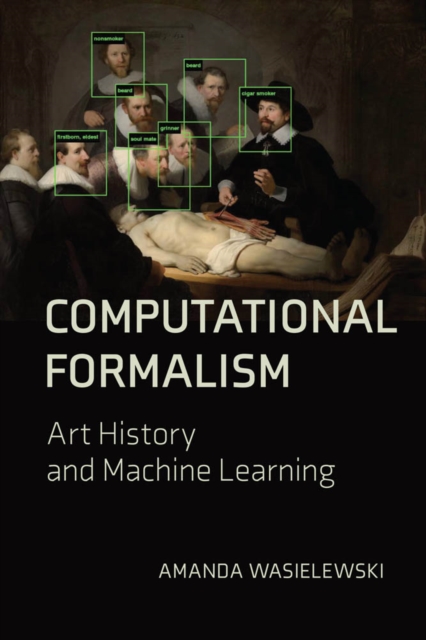
Computational formalism : art history and machine learning
How the use of machine learning to analyze art images has revived formalism in art history, presenting a golden opportunity for art historians and computer scientists to learn from one another.Though formalism is an essential tool for art historians, much recent art history has focused on the social and political aspects of art. But now art historians are adopting machine learning methods to develop new ways to analyze the purely visual in datasets of art images. Amanda Wasielewski uses the term “computational formalism” todescribe this use of machine learning and computer vision technique in art historical research. At the same time that art historians are analyzing art images in new ways, computer scientists are using art images for experiments in machine learning and computer vision. Their research, says Wasielewski, would be greatly enriched by the inclusion of humanistic issues.The main purpose in applying computational techniques such as machine learning to art datasets is to automate the process of categorization using metrics such as style, a historically fraught concept in art history. After examining a fifteen-year trajectory in image categorization and art dataset creation in the fields of machine learning and computer vision, Wasielewski considers deep learning techniques that both create and detect forgeries and fakes in art. She investigates examples of art historical analysis in the fields of computer and information sciences, placing this research in the context of art historiography. She also raises questions as which artworks are chosen for digitization, and of those artworks that are born digital, which works gain acceptance into the canon of high art.
eBook


Literature and artistic practice in the sixteenth-century Italy
A study on the technique of painting through cross-analysis of literary texts by Leonardo, Vasari, Armenini, Borghini, Lomazzo and works of art, examining some significant paintings in the Capodimonte Museum, Naples.
eBook

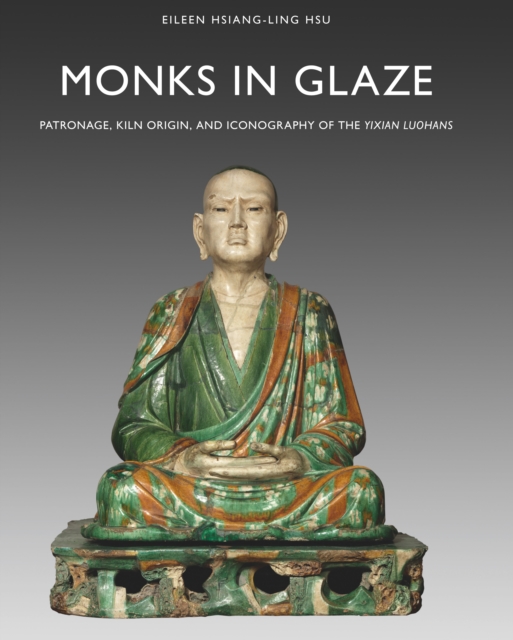
Monks in glaze : patronage, kiln origin, and iconography of the Yixian Luohans
Monks in Glaze is a complete reassessment of the Yixian Luohans. Drawing upon hitherto-unknown epigraphic documents, Eileen Hsiang-ling Hsu proposes a new date for the group's production and identifies the kiln centre near Beijing as its birthplace.
eBook

The art of forgery : the minds, motives and methods of master forgers
Explores the stories, dramas, and human intrigues surrounding the world's most famous forgeries, investigating the motivations of the artists and criminals who've faked great works of art, and in doing so conned the public and the art establishment alike.
Book

Art forgery
Art Forgery charts the changing status of art forgery from the time of its appearance in the Renaissance, when it was initially hailed as a true artistic feat, to its condemnation in modern times. Lenain describes the genealogy of faking and the anxious, sometimes neurotic, reactions that these clever frauds trigger.
eBook