
Catalogue Search | MBRL


Are you sure you want to remove the book from the shelf?

{{itemTitle}}
31
result(s) for
"Explorers Australia Biography."
Sort by:

Matthew Flinders, maritime explorer of Australia
\"This book provides a thoroughly researched biography of the naval career of Matthew Flinders, with particular emphasis on his importance for the maritime discovery of Australia. Sailing in the wake of the 18th-century voyages of exploration by Captain Cook and others, Flinders was the first naval commander to circumnavigate Australia's coastline. He contributed more to the mapping and naming of places in Australia than virtually any other single person. His voyage to Australia on H.M.S. Investigator expanded the scope of imperial, geographical and scientific knowledge. This biography places Flinders's career within the context of Pacific exploration and the early white settlement of Australia. Flinders's connections with other explorers, his use of patronage, the dissemination of his findings, and his posthumous reputation are also discussed in what is an important new scholarly work in the field\"-- Provided by publisher.
Book

Where is Dr Leichhardt? : the greatest mystery in Australian history
The vast deserts of Outback Australia hold many secrets, but there is one great mystery which stands out among all others the mystery of the lost Leichhardt expedition.In April 1848 Ludwig Leichhardt and six other men set out westward from the Queensland frontier, heading for Swan River settlement in Western Australia.They never arrived.
eBook

Ludwig Leichhardt : lost in the outback
On 14 February 1842 Leichhardt arrived in Sydney, Australia. His aim was to explore inland Australia and he was hopeful of a government appointment in his fields of interest. In 1848 Ludwig Leichhardt and his companions vanished during his second attempt at crossing Australia from east to west. No trace of his expedition has been found. Nine separate extensive but unsuccessful searches were conducted over the next century. With no evidence whatsoever of Leichhardt's fate, his disappearance created heroic mythology and resulted in a number of poems and novels (in German also), including Nobel Prize winner Patrick White's Voss of 1957. Leichhardt left extensive and well-regarded records and publications about his travels. This is a sensitive and detailed account drawing on Leichhardt's letters, journals, log books and personal diaries and covers his early years in Europe and his incredibly broad university education.
BOOK
Snake-Bitten
Based on extensive interviews with park staff and supporters, this intriguing biography traces the life of Eric Worrell, the original reptile man and naturalist who established the Australian Reptile Park in New South Wales. Depicting Worrell's larger-than-life personality and his pioneer work with snake anti-venins, this inspiring story shows how the herpetologist began his career in wildlife tourism, conservation, education, and research. Containing detailed accounts of the collection of various reptiles kept at the iconic tourist attraction, this record is an essential read for nature enthusiasts.
eBook

Ludwig Leichhardt's ghosts : the strange career of a traveling myth
\"After the renowned Prussian scientist and explorer Ludwig Leichhardt left the Australian frontier in 1848 on an expedition to cross the continent, he disappeared without a trace. Andrew Hurley's book complicates that view by undertaking an afterlife biography of 'the Humboldt of Australia.' Although Leichhardt's remains were never located, he has been sought and textually 'found' many times over, particularly in Australia and Germany. He remains a significant presence, a highly productive ghost who continues to 'haunt' culture. Leichhardt has been employed for all sorts of political purposes. In imperial Germany, he was a symbol of pure science, but also a bolster for colonialism. In the 20th century, he became a Nazi icon, a proto-socialist, the model for the protagonist of Nobel laureate Patrick White's famous novel Voss, as well as a harbinger of multiculturalism. He has also been put to use by Australian Indigenous cultures. Engaging Leichhardt's ghosts and those who have sought him yields a fascinating case study of German entanglement in British colonialism in Australia. It also shows how figures from the colonial past feature in German and Australian social memory and serve present-day purposes. In an abstract sense, this book uses Leichhardt to explore what happens when we maintain an open stance to the ghosts of the past\"-- Provided by publisher.
Book
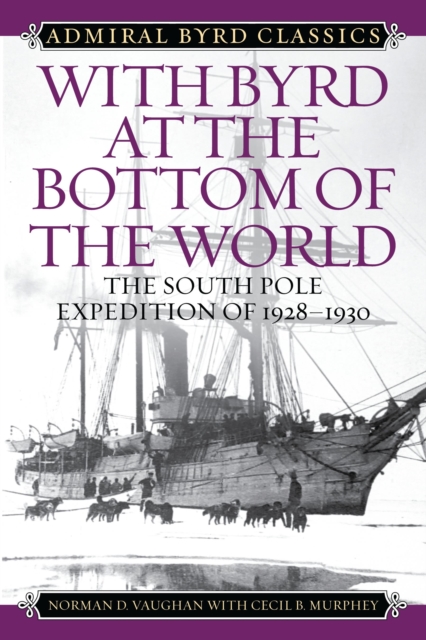
With Byrd at the Bottom of the World
Antarctica, the vast, frozen continent, eerily lit by a sun that never sets in the summer, plunged into months of darkness in the winter -- for Richard E. Byrd, exploring the land that had already taken the lives of many great adventurers was a challenge he could not resist. His 1928-1930 expedition was history in the making, and Norman Vaughan was there to see it happen. Brought on to handle the expedition's sled
eBook
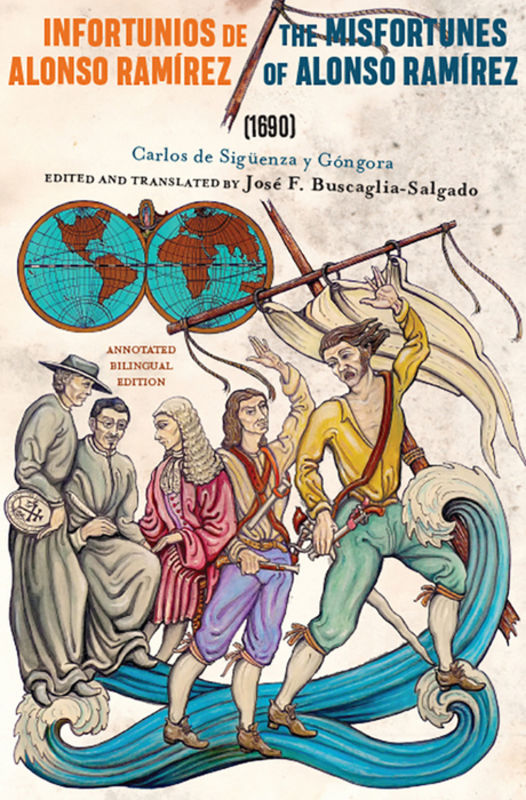
Infortunios de Alonso Ramirez / the Misfortunes of Alonso Ramirez (1690)
Buscaglia is the first scholar to furnish direct and irrefutable proof that the story contained in the Infortunios/Misfortunes was based on the life and times of a man certifiably named Alonso Ramírez. This Rutgers edition is the most complete and authoritative bilingual edition of a work that grants us privileged access to the intricacies of early American subjectivity.
eBook

Ambitions of Jane Franklin
A genius at publicity before the term existed, Jane Franklin was a celebrity in the mid-19th century. This is her remarkable life, including her extensive travels, her years in Tasmania as the governor's wife, and her very public battle to save her husband, the Arctic explorer Sir John Franklin, from accusations of cannibalism.
eBook


The ambitions of Jane Franklin
A genius at publicity before the term existed, Jane Franklin was a celebrity in the mid-19th century-her remarkable life included extensive travels, years as a governor's wife, and a public battle to save her husband from accusations of cannibalismIn a period when most ladies sat at home with their embroidery, Jane Franklin achieved fame throughout the western world, and was probably the best traveled woman of her day. This biography traces her life from her birth in late 18th-century London, to her marriage at the age of 36, to her many trips to far-flung locations, including Russia, the Holy Land, northern Africa, America, and Australia. Once Jane Franklin married Sir John Franklin, her original ambition to live life to the full was joined by an equally ardent desire to make her kind and mild husband a success. Arriving in Tasmania in 1837 when Sir John became governor, she swept like a whirlwind through the colony: attempting to rid the island of snakes; establishing a scientific society and the Hobart regatta; adopting an Aboriginal girl, and sending a kangaroo to Queen Victoria. She became the first white woman to travel overland from Melbourne to Sydney. When her husband disappeared in the Arctic on an expedition to discover the Northwest Passage, she badgered the Admiralty, the public, and even the President of the United States to fund trips to locate him, and then defended his reputation when remains of the expedition were located, and there were claims of cannibalism. Single-handedly she turned him from a failure into one of England's noblest heroes. She continued traveling well into her 70s and died at 84, refusing to take her medicine to the last.
eBook