Catalogue Search | MBRL


Are you sure you want to remove the book from the shelf?

{{itemTitle}}
1,873
result(s) for
"Explorers Biography."
Sort by:


Heroes of empire
During the decades of empire (1870–1914), legendary heroes and their astonishing deeds of conquest gave imperialism a recognizable human face. Henry Morton Stanley, Pierre Savorgnan de Brazza, Charles Gordon, Jean-Baptiste Marchand, and Hubert Lyautey all braved almost unimaginable dangers among “savage” people for their nation’s greater good. This vastly readable book, the first comparative history of colonial heroes in Britain and France, shows via unforgettable portraits the shift from public veneration of the peaceful conqueror to unbridled passion for the vanquishing hero. Edward Berenson argues that these five men transformed the imperial steeplechase of those years into a powerful “heroic moment.” He breaks new ground by linking the era’s “new imperialism” to its “new journalism”—the penny press—which furnished the public with larger-than-life figures who then embodied each nation’s imperial hopes and anxieties.
eBook
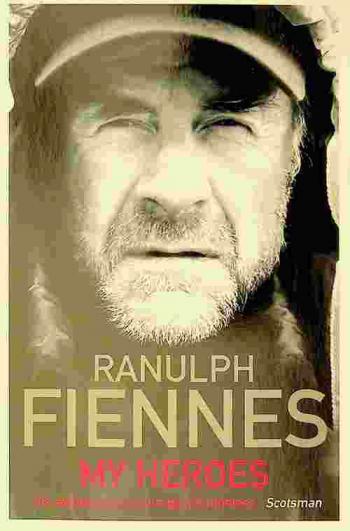
My heroes : extraordinary courage, exceptional people
In 'My Heroes', Ranulph Fiennes writes about the people who have inspired him - from explorers to policemen, soldiers to freedom fighters.

Fernández de Oviedo's chronicle of America : a new history for a New World
No detailed description available for \"Fernández de Oviedo's Chronicle of America\".
eBook

This little explorer : a pioneer primer
\"Little explorers discover great big world\"--Back cover.
Book

Oh Capitano!
The story of Celso Cesare Moreno, one of the most famous of the emigrant Italian elites or \"prominenti.\" Moreno traveled the world lying, scheming, and building an extensive patron/client network to to establish his reputation as a middleman and person of significance. Through his machinations, Moreno became a critical player in the expansion of western trade and imperialism in Asia, the trafficking of migrant workers and children in the Atlantic, and the conflicts of Americans and natives over the fate of Hawaii, and imperial competitions of French, British, Italian and American governments during a critically important era of imperial expansion.
eBook

The Explorers Club : a visual journey through the past, present, and future of exploration
\"Discover the extraordinary history and thrilling frontiers of exploration with this gorgeously illustrated guide from The Explorers Club, the historic and esteemed home of the world's most prominent explorers\"-- Provided by publisher.
Book

Fernández de Oviedo's Chronicle of America
Gonzalo Fernández de Oviedo (1478-1557) wrote the first comprehensive history of Spanish America, the Historia general y natural de las Indias, a sprawling, constantly revised work in which Oviedo attempted nothing less than a complete account of the Spanish discovery, conquest, and colonization of the Americas from 1492 to 1547, along with descriptions of the land's flora, fauna, and indigenous peoples. His Historia, which grew to an astounding fifty volumes, includes numerous interviews with the Spanish and indigenous leaders who were literally making history, the first extensive field drawings of America rendered by a European, reports of exotic creatures, ethnographic descriptions of indigenous groups, and detailed reports about the conquest and colonization process. Fernández de Oviedo's Chronicle of America explores how, in writing his Historia, Oviedo created a new historiographical model that reflected the vastness of the Americas and Spain's enterprise there. Kathleen Myers uses a series of case studies—focusing on Oviedo's self-portraits, drawings of American phenomena, approaches to myth, process of revision, and depictions of Native Americans—to analyze Oviedo's narrative and rhetorical strategies and show how they relate to the politics, history, and discursive practices of his time. Accompanying the case studies are all of Oviedo's extant field drawings and a wide selection of his text in English translation. The first study to examine the entire Historia and its evolving rhetorical and historical context, this book confirms Oviedo's assertion that \"the New World required a different kind of history\" as it helps modern readers understand how the discovery of the Americas became a catalyst for European historiographical change.
eBook