
Catalogue Search | MBRL


Are you sure you want to remove the book from the shelf?

{{itemTitle}}
22,751
result(s) for
"Export marketing"
Sort by:

Emerging issues in global marketing : a shifting paradigm
This book examines emerging theories, frameworks, and applications of global marketing for the 21st century. It highlights how global marketing is changing in a globalized and digital economy that is fast increasing in complexity and uncertainty. The traditional approach to global marketing is no longer sufficient to address the emerging issues in global markets. Global companies need to challenge traditional assumptions in global marketing in an era of shifting political, cultural, economic, and technological changes. They need to take a fresh look at the contemporary threats and opportunities in markets, institutions, and technology and how they affect entry and expansion strategies through careful re-calibration of the marketing-mix. This book offers new insights for global marketing that addresses these issues. This book should be an ideal resource to both academic scholars and reflective practitioners globally such as CEOs and chief marketing officers as well as government officials and policy makers interested in formulating strategies/policies for global marketing activities in the face of a globalized and digitized economy. This well-crafted research volume is an excellent addition to the growing literature on new trends in international marketing. The authors present the latest insight on the impact of phenomena such as cross-border e-commerce and digital markets, and they discuss new tools for political risk assessment, international branding and more broadly the reconfiguring of marketing-mix strategies - A powerful reminder that the new global market remains a rugged landscape. - Alain Verbeke, McCaig Research Chair in Management and Editor-in-Chief Journal of International Business Studies, University of Calgary, Canada. Emerging trends in institutions, markets, and societies, along with new technological advances, are redefining the scope and strategy in global marketing. Professors Agarwal and Wu have assembled a remarkable collection of cutting-edge topics and issues that capture the shifting paradigm and contemporary developments in the global marketing field. This is an informative and timely resource that makes a valuable contribution, useful for both scholars and business practitioners of global marketing. - Constantine S. Katsikeas, Arnold Ziff Endowed Research Chair in Marketing & International Management, Editor-in-Chief Journal of International Marketing, University of Leeds, UK. This book presents new and cutting-edge thinking at a time when the traditional views of international marketing need to be scrapped. Convergence forces are creating new opportunities as well as threats on a daily basis, and marketing practitioners as well as scholars must be forewarned as well as forearmed on how to deal with these changes. The real growth is coming from the emerging nations, and the theories that provided sufficient insights ten years ago have been completely outmoded by the ever-accelerating rate of innovation and technological change as well as the pressures to address the needs of all of the firm's relevant stakeholders. The strategic insights provided here are absolutely invaluable. Don't miss an opportunity to read this book!! - John B. Ford, Professor of Marketing & International Business, Eminent Scholar & Haislip-Rohrer Fellow, Editor-in-Chief, Journal of Advertising Research, Old Dominion University, USA.
Book

The effect of organizational culture on territorial exclusivity in international marketing channels: a study of Japanese manufacturing exporters
PurposeIt is important for an exporting manufacturer to motivate its foreign channel partners to sell and promote its products. An excellent way to motivate such foreign channel partners is to give them exclusive territories. Unfortunately, there is a lack of knowledge regarding the determinants of territorial exclusivity. This study aims to investigate the relationship between organizational culture and territorial exclusivity and the moderating role of firm size in this relationship.Design/methodology/approachSurvey data were collected from manufacturing small and medium-sized enterprises (SMEs) in Japan. To test the hypotheses, a regression analysis was conducted using the ordinary least squares technique.FindingsEmpirical evidence shows that the cultural values of collectivism and uncertainty avoidance influence territorial exclusivity; collectivist exporters are likely to use territorial exclusivity, whereas exporters with high uncertainty avoidance are not likely to use it. Furthermore, the larger the firm size, the smaller the impact of cultural values on territorial exclusivity; this suggests that large SMEs do not rely on their organizational culture to make decisions about exclusive territories.Originality/valueThe export marketing literature emphasizes the advantages of exclusive territories. By contrast, the channel management literature suggests that exclusive territories also have disadvantages. As exclusive territories have both advantages and disadvantages, it is crucial to answer the following question: What kinds of exporting manufacturers grant exclusive territories to their foreign channel partners? By addressing this question, this study contributes to a better understanding of export channel strategy.
Journal Article


Does market oriented environmental sustainability determine the export performance? A study of leather products manufacturing SMEs in India
Market-oriented environmental sustainability (MES), which is part of an organization’s orientation towards the export market and its impact on the export resources and competencies of firms was analyzed in this study. Further, this research also examines the influence of export resources and competencies on export strategy of marketing and export performance of organizations. To accomplish this objective, structural equation modeling (SEM) was used. Data was gathered from 194 manufacturing export enterprises. The results indicate that MES positively impacts resources and competencies connected to green export. Furthermore, only resources indirectly affect eco-friendly export marketing strategy through capabilities, but green export-related competencies directly affect it. The findings also demonstrate how an eco-friendly export marketing approach improves a company’s export success. By analyzing business orientation and its impact on eco-friendly export marketing strategy and export performance, this research contributes the field of sustainability and exporting. This study has significant managerial Implications, it explicitly opens up significant decision-making channels for Indian SMEs engaged in exporting to various markets. First, it advises businesses that their acquisition of resources and eventual development of skills will be influenced by their orientation, i.e. preference for green values, norms, and behaviors. The study’s findings also demonstrate that businesses must put effort into developing capabilities rather than just investing in resources alone.
Journal Article


Effect of exporter's incentives on foreign distributor's role performance
A foreign distributor's motivation to perform local marketing tasks for an exporter is often poor due to agency conflicts and transaction cost constraints characterizing the export channel. While exporters may engage in actions such as offering incentives and overseeing partner activities to improve foreign marketing, such intrusions into partner operations often fail to enhance the distributor's role performance. Drawing on motivation theory, the authors develop a model explaining the efficiency of different incentive types in enhancing the distributor's motivational context to act on behalf of the exporter, thereby improving relationship quality, distributor relationship-specific investments, and, consequently, distributor role performance. The authors use a sample of 278 European exporters to test hypotheses regarding relationship factors that mediate and moderate the incentive-role performance relationship. The results indicate that the impact of low-powered incentives (LPIs) substitutes for the effect of high-powered incentives on relationship quality and specific investments, the key mediators driving distributor role performance. In addition, exporter oversight of distributor activities weakens the effectiveness of LPIs to increase distributor-specific investment. The authors derive implications for designing portfolios of incentives, with inferences based on efficiently matching incentive-induced motivational context with foreign distributor's actions required to accomplish exporter goals.
Journal Article

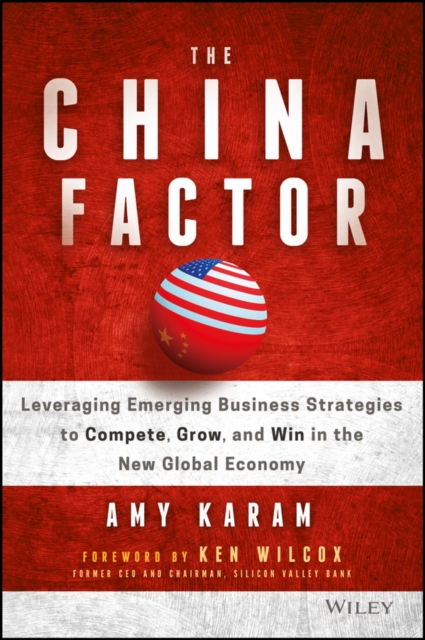
The China Factor
The Innovation of Globalization – proven strategies to succeed and out-compete emerging competition Does your company know how to compete effectively in the evolving global business arena? What tactics must your company use to overcome price discounting wars that cut into your margins? What are the strategies your new rivals incorporate that may prove more valuable to customers than the superior products you offer? The China Factor equips Western businesses with a practical framework for competing successfully in today's ever-changing global markets. Written by an expert in competitive strategy and global market expansion, this book is packed with insights gained through first-hand experience leading competitive programs at a high-tech multinational corporation and extensive research. When it comes to globalization, the rules have changed—what was once nice-to-know is now need-to-know, and this book lays it out in a clear, no-nonsense style. Based on cases with over 50 countries, you will learn why a premium product, though domestically successful, may not be well received in foreign markets. You'll also discover the critical factors that contribute to success in both emerging and established markets. Disruptive competitors are transformed from threats to examples as you learn to recognize opportunities for re-evaluation, and shift your strategy to stay ahead of the curve. The economic rise of China and other new entrants is challenging Western companies in new ways. This book explains why, and provides actionable strategies for success in any market. * Grow and maintain an Innovation Advantage using 5 models * Learn from disruptors how to win your emerging markets customers * Understand the power of politics in business * Develop a deeper Culture IQ to expand your customer base * Use a 5-part Strategic Framework to formulate new sales tactics You're already well-aware of the global threat to Western business, and endless analysis only goes so far toward a solution. You need to know how to respond, survive, and thrive, and just how to regain the competitive edge. The truth is that Western companies must change they way they do business, and push innovation beyond the product and into every aspect of every operation – they need to be innovative in how they do business abroad. The China Factor provides a clear action plan, and case studies from global leaders like Cisco, Xiaomi, and Apple with insightful strategies for changing and winning the game.
eBook


Accidental and Intentional Exporters
Regardless of the size of the domestic economy, there are ample reasons for firms to extend their markets beyond home shores. These include increasing sales, improving profits, diversifying risks, reaping economies of scale, matching the moves of competitors, enhancing competitiveness or accessing government incentives. Both Indonesia and Malaysia seek to enhance the competitiveness of their micro, small and medium enterprises (MSMEs) by including internationalization goals in their respective national development plans for these enterprises. Findings from fourteen case studies in the two countries indicate that exporting may be a serendipitous discovery, as few of these cases were born global in intent. Shifting to intentional exporting will require entrepreneurs to tap into government and/or private networks and thus connect with international buyers. Indonesian MSMEs are more inclined to depend more on government than private networks as they perceive the former to be more credible. Malaysian cases indicate some firms prefer private to government networks. This is attributed to the differences in the political economy of the two countries. Going forward, both countries need to consolidate their government-run programmes and reduce the fiscal burden. MSMEs should tap more into private networks to bridge the information gap that hinders their access to external markets. ASEAN can facilitate the entry of MSMEs into the ASEAN market by implementing resolutely current plans to reduce technical barriers to trade.
eBook