
Catalogue Search | MBRL


Are you sure you want to remove the book from the shelf?

{{itemTitle}}
16
result(s) for
"Extinct cities Fiction."
Sort by:

The city where we once lived : a novel
\"In a near future where climate change has severely affected weather and agriculture, the North End of an unnamed city has long been abandoned in favor of the neighboring South End. Aside from the scavengers steadily stripping the empty city to its bones, only a few thousand people remain, content to live quietly among the crumbling metropolis. Many, like the narrator, are there to try to escape the demons of their past. He spends his time observing and recording the decay around him, attempting to bury memories of what he has lost. But it eventually becomes clear that things are unraveling elsewhere as well, as strangers, violent and desperate alike, begin to appear in the North End, spreading word of social and political deterioration in the South End and beyond. Faced with a growing disruption to his isolated life, the narrator discovers within himself a surprising need to resist losing the home he has created in this empty place. He and the rest of the citizens of the North End must choose whether to face outsiders as invaders or welcome them as neighbors\"-- Provided by publisher.
Book
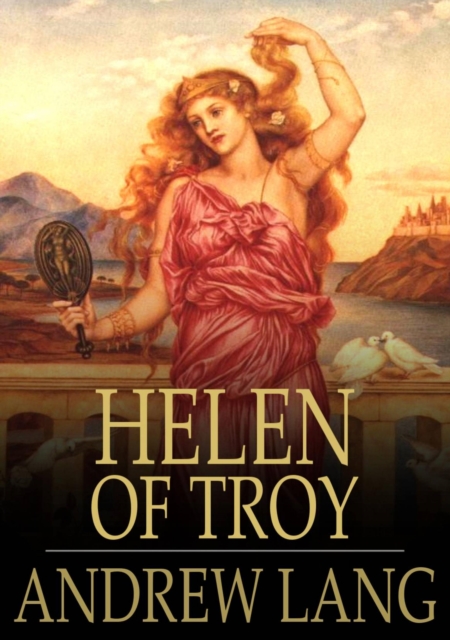
Helen of Troy
The famed beauty Helen of Troy inspired wars, suicides, and some of the world's best-loved poetry. In this book-length epic poem, Scottish writer and folklorist Andrew Lang presents his own take on Helen's story. A fascinating read for fans of
eBook

The lost civilization of Suolucidir
A series of archeological expeditions unfolds through time--each one looking for the ruins of a fabled underground city-state that once flourished in a remote province near the border of present-day Iran, Pakistan, and Afghanistan--against a background of actual events, in a part of the world with a particular historical relationship to Russia and the West.
Book


At the Mountains of Madness
This classic mind-shattering tale, which \"ranks high among the horror stories of the English language,\" plunges into the darkness of the Cthulhu mythos ( Time ).In the uncharted wastes of Antarctica, an exploration party from Miskatonic University encounters a gory sight when they discover their advance team's camp has been destroyed and its.
eBook
Lot in Sodom
35mm 1:20:1 black & white sound; direction by Melville Webber, Alec Wilder, Remsen Wood; script by J.S. Watson Jr., Melville Webber adapted from Genesis 19:8; camera-printed effects by J.S. Watson Jr.; costumes-sets by Melville Webber; sets-miniatures by Steve Kraskiewicz; sound recording by Bernard O'Brien; music by Louis Siegel; musicians Mitch Miller, Aileen Malone; with Friederich Haak, Hildegarde Watson, Dorthea Haus, Lewis Whitbeck, Winslow Wilson, Remsen Woods, Alec Wilder, child of Neddy Royce. In Lot, distortion is often used to keep reality, or rather its appearance, from disturbing the film's mood. And in the final scene distortion makes Lot's daughter seem not only different but formidable as she grasps the wine cup.
Streaming Video
Unseen cinema. 4, Inverted narratives. Lot in Sodom
INVERTED NARRATIVES is part of the retrospective UNSEEN CINEMA that explores long-forgotten American experimental cinema. The second most well known collaborative experimental art film production helmed by the avant-gardist duo J.S. Watson, Jr. and Melville Webber produces an exemplary work of experimental cinema. Artfully illustrating “Genesis 19:8”, the filmmakers over-sex the screen with lusciously lit bodies and dynamic camera-printer effects. Approaching visual music, the hybrid of sound and image concludes with the fiery demise of Sodom. The biblical illusions are so well crafted that the explicit scenes avoided censor and continue to resonate a meaningful poetry for modern audiences. —BRUCE POSNER James Sibley [J.S.] Watson, Jr. was regarded as a Renaissance man in each of his chosen fields: medical doctor and researcher, man of letters, preservationist, philanthropist, and filmmaker. After graduating medical school, Watson bought and published “The Dial” between 1920-29, a literary journal founded by Ralph Waldo Emerson in 1840. By the mid-1920s, he became fascinated with motion pictures and produced a striking series of films, “The Fall of the House of Usher” (1927), “Tomatos Another Day” (1930), and “The Eyes of Science” (1931) among others. —JAN-CHRISTOPHER HORAK / BRUCE POSNER. Melville Webber pursued parallel careers in art history, archeology, poetry, art, and motion pictures. He is primarily known for collaborating on films with Watson, but he also assisted Mary Ellen Bute with “Rhythm in Light” (1934). Soon after, his fortunes shifted, and he suffered a nervous breakdown from which he never fully recovered. —BRUCE POSNER.
Streaming Video