
Catalogue Search | MBRL


Are you sure you want to remove the book from the shelf?

{{itemTitle}}
95,499
result(s) for
"Extinction"
Sort by:
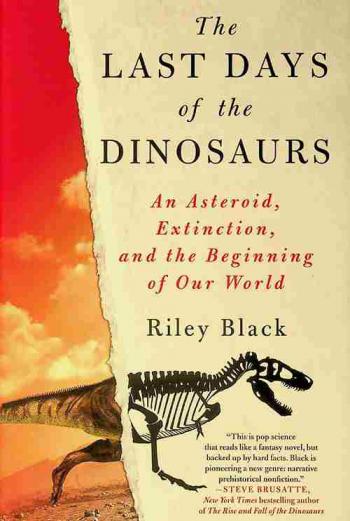
The last days of the dinosaurs : an asteroid, extinction, and the beginning of our world
\"The Last Days of the Dinosaurs by Riley Black tells the story of the extinction of these prehistoric creatures and the beginning of our world ...\"-- Provided by publisher.
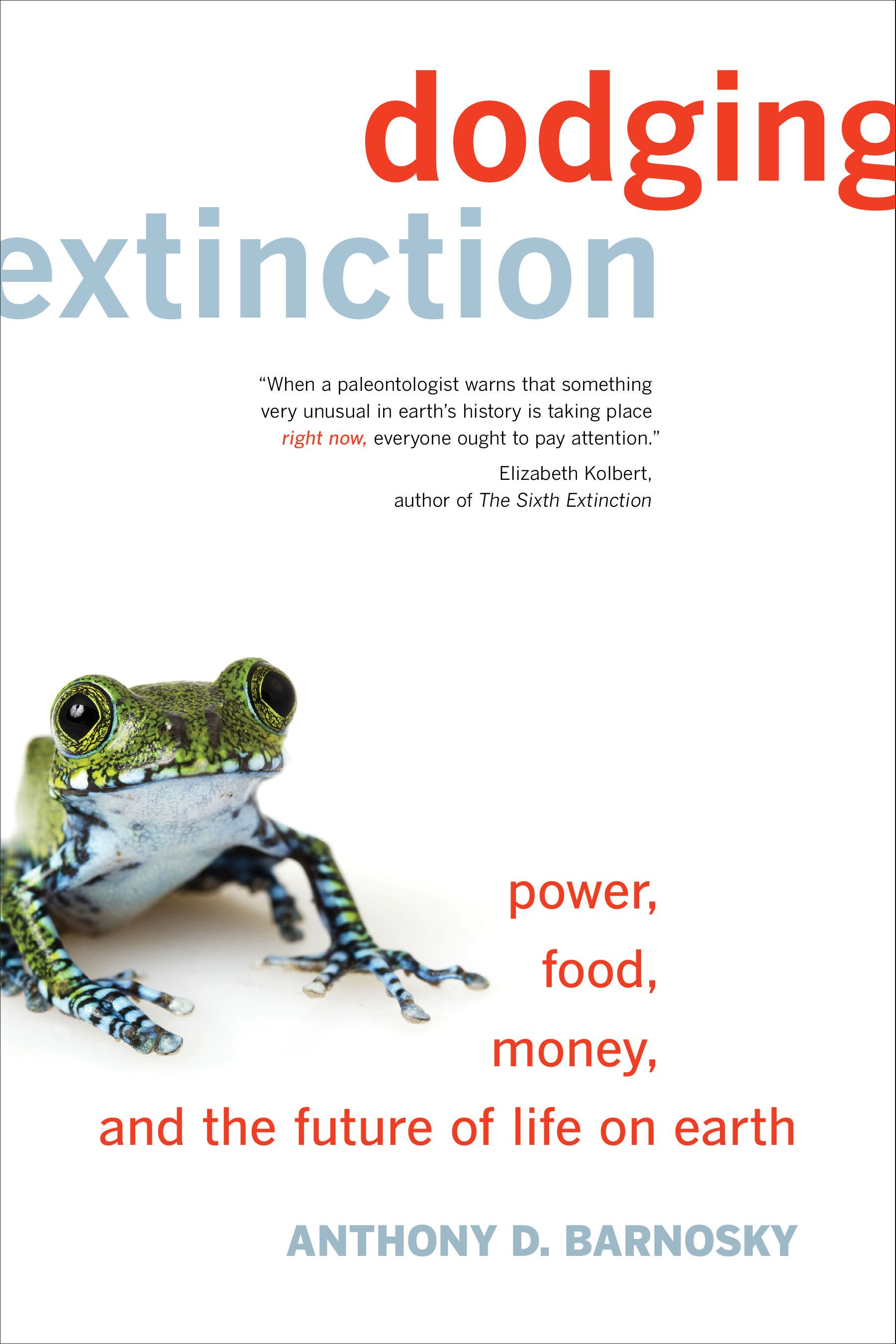
Dodging extinction
Paleobiologist Anthony D. Barnosky weaves together evidence from the deep past and the present to alert us to the looming Sixth Mass Extinction and to offer a practical, hopeful plan for avoiding it. Writing from the front lines of extinction research, Barnosky tells the overarching story of geologic and evolutionary history and how it informs the way humans inhabit, exploit, and impact Earth today. He presents compelling evidence that unless we rethink how we generate the power we use to run our global ecosystem, where we get our food, and how we make our money, we will trigger what would be the sixth great extinction on Earth, with dire consequences. Optimistic that we can change this ominous forecast if we act now, Barnosky provides clear-cut strategies to guide the planet away from global catastrophe. In many instances the necessary technology and know-how already exist and are being applied to crucial issues around human-caused climate change, feeding the world's growing population, and exploiting natural resources. Deeply informed yet accessibly written, Dodging Extinction is nothing short of a guidebook for saving the planet.
eBook

Last days of the dinosaurs
Around 66 million years ago, a giant asteroid crashed into Earth. Fires burned, smoke and ash covered the Sun, and the dinosaurs were doomed!
Book

Biological annihilation via the ongoing sixth mass extinction signaled by vertebrate population losses and declines
The population extinction pulse we describe here shows, from a quantitative viewpoint, that Earth’s sixth mass extinction is more severe than perceived when looking exclusively at species extinctions. Therefore, humanity needs to address anthropogenic population extirpation and decimation immediately. That conclusion is based on analyses of the numbers and degrees of range contraction (indicative of population shrinkage and/or population extinctions according to the International Union for Conservation of Nature) using a sample of 27,600 vertebrate species, and on a more detailed analysis documenting the population extinctions between 1900 and 2015 in 177 mammal species. We find that the rate of population loss in terrestrial vertebrates is extremely high—even in “species of low concern.” In our sample, comprising nearly half of known vertebrate species, 32% (8,851/27,600) are decreasing; that is, they have decreased in population size and range. In the 177 mammals for which we have detailed data, all have lost 30% or more of their geographic ranges and more than 40% of the species have experienced severe population declines (>80% range shrinkage). Our data indicate that beyond global species extinctions Earth is experiencing a huge episode of population declines and extirpations, which will have negative cascading consequences on ecosystem functioning and services vital to sustaining civilization. We describe this as a “biological annihilation” to highlight the current magnitude of Earth’s ongoing sixth major extinction event.
Journal Article

Before they vanish : saving nature's populations--and ourselves
\"This work is a new, hopeful analysis from the world's top natural scientists that shows us the way to save the endangered species of the world\"-- Provided by publisher.
BOOK
Vertebrates on the brink as indicators of biological annihilation and the sixth mass extinction
The ongoing sixth mass species extinction is the result of the destruction of component populations leading to eventual extirpation of entire species. Populations and species extinctions have severe implications for society through the degradation of ecosystem services. Here we assess the extinction crisis from a different perspective. We examine 29,400 species of terrestrial vertebrates, and determine which are on the brink of extinction because they have fewer than 1,000 individuals. There are 515 species on the brink (1.7% of the evaluated vertebrates). Around 94% of the populations of 77 mammal and bird species on the brink have been lost in the last century. Assuming all species on the brink have similar trends, more than 237,000 populations of those species have vanished since 1900. We conclude the human-caused sixth mass extinction is likely accelerating for several reasons. First, many of the species that have been driven to the brink will likely become extinct soon. Second, the distribution of those species highly coincides with hundreds of other endangered species, surviving in regions with high human impacts, suggesting ongoing regional biodiversity collapses. Third, close ecological interactions of species on the brink tend to move other species toward annihilation when they disappear—extinction breeds extinctions. Finally, human pressures on the biosphere are growing rapidly, and a recent example is the current coronavirus disease 2019 (Covid-19) pandemic, linked to wildlife trade. Our results reemphasize the extreme urgency of taking much-expanded worldwide actions to save wild species and humanity’s crucial life-support systems from this existential threat.
Journal Article

Flight ways : life and loss at the edge of extinction
\"A leading figure in the emerging field of extinction studies, Thom van Dooren puts philosophy into conversation with the natural sciences and his own ethnographic encounters to vivify the cultural and ethical significance of modern-day extinctions. Unlike other meditations on the subject, Flight Ways incorporates the particularities of real animals and their worlds, drawing philosophers, natural scientists, and general readers into the experience of living among and losing biodiversity. Each chapter of Flight Ways focuses on a different species or group of birds: North Pacific albatrosses, Indian vultures, an endangered colony of penguins in Australia, Hawaiian crows, and the iconic whooping cranes of North America. Written in eloquent and moving prose, the book takes stock of what is lost when a life form disappears from the world -- the wide-ranging ramifications that ripple out to implicate a number of human and more-than-human others. Van Dooren intimately explores what life is like for those who must live on the edge of extinction, balanced between life and oblivion, taking care of their young and grieving their dead. He bolsters his studies with real-life accounts from scientists and local communities at the forefront of these developments. No longer abstract entities with Latin names, these species become fully realized characters enmeshed in complex and precarious ways of life, sparking our sense of curiosity, concern, and accountability toward others in a rapidly changing world\"-- Publisher's description.
Book

High-precision timeline for Earth’s most severe extinction
The end-Permian mass extinction was the most severe loss of marine and terrestrial biota in the last 542 My. Understanding its cause and the controls on extinction/recovery dynamics depends on an accurate and precise age model. U-Pb zircon dates for five volcanic ash beds from the Global Stratotype Section and Point for the Permian-Triassic boundary at Meishan, China, define an age model for the extinction and allow exploration of the links between global environmental perturbation, carbon cycle disruption, mass extinction, and recovery at millennial timescales. The extinction occurred between 251.941 ± 0.037 and 251.880 ± 0.031 Mya, an interval of 60 ± 48 ka. Onset of a major reorganization of the carbon cycle immediately precedes the initiation of extinction and is punctuated by a sharp (3‰), short-lived negative spike in the isotopic composition of carbonate carbon. Carbon cycle volatility persists for ∼500 ka before a return to near preextinction values. Decamillenial to millennial level resolution of the mass extinction and its aftermath will permit a refined evaluation of the relative roles of rate-dependent processes contributing to the extinction, allowing insight into postextinction ecosystem expansion, and establish an accurate time point for evaluating the plausibility of trigger and kill mechanisms.
Journal Article


Mindfulness training and exercise differentially impact fear extinction neurocircuitry
The ability to extinguish a maladaptive conditioned fear response is crucial for healthy emotional processing and resiliency to aversive experiences. Therefore, enhancing fear extinction learning has immense potential emotional and health benefits. Mindfulness training enhances both fear conditioning and recall of extinguished fear; however, its effects on fear extinction learning are unknown. Here we investigated the impact of mindfulness training on brain mechanisms associated with fear-extinction learning, compared to an exercise-based program.
We investigated BOLD activations in response to a previously learned fear-inducing cue during an extinction paradigm, before and after an 8-week mindfulness-based stress reduction program (MBSR,
= 49) or exercise-based stress management education program (
= 27).
The groups exhibited similar reductions in stress, but the MBSR group was uniquely associated with enhanced activation of salience network nodes and increased hippocampal engagement.
Our results suggest that mindfulness training increases attention to anticipatory aversive stimuli, which in turn facilitates decreased aversive subjective responses and enhanced reappraisal of the memory.
Journal Article