
Catalogue Search | MBRL


Are you sure you want to remove the book from the shelf?

{{itemTitle}}
2,848
result(s) for
"Extraterrestrial environments"
Sort by:

No thick carbon dioxide atmosphere on the rocky exoplanet TRAPPIST-1 c
Seven rocky planets orbit the nearby dwarf star TRAPPIST-1, providing a unique opportunity to search for atmospheres on small planets outside the Solar System
1
. Thanks to the recent launch of the James Webb Space Telescope (JWST), possible atmospheric constituents such as carbon dioxide (CO
2
) are now detectable
2
,
3
. Recent JWST observations of the innermost planet TRAPPIST-1 b showed that it is most probably a bare rock without any CO
2
in its atmosphere
4
. Here we report the detection of thermal emission from the dayside of TRAPPIST-1 c with the Mid-Infrared Instrument (MIRI) on JWST at 15 µm. We measure a planet-to-star flux ratio of
f
p
/
f
⁎
= 421 ± 94 parts per million (ppm), which corresponds to an inferred dayside brightness temperature of 380 ± 31 K. This high dayside temperature disfavours a thick, CO
2
-rich atmosphere on the planet. The data rule out cloud-free O
2
/CO
2
mixtures with surface pressures ranging from 10 bar (with 10 ppm CO
2
) to 0.1 bar (pure CO
2
). A Venus-analogue atmosphere with sulfuric acid clouds is also disfavoured at 2.6
σ
confidence. Thinner atmospheres or bare-rock surfaces are consistent with our measured planet-to-star flux ratio. The absence of a thick, CO
2
-rich atmosphere on TRAPPIST-1 c suggests a relatively volatile-poor formation history, with less than
9.5
−
2.3
+
7.5
Earth oceans of water. If all planets in the system formed in the same way, this would indicate a limited reservoir of volatiles for the potentially habitable planets in the system.
The detection of thermal emission from the rocky exoplanet TRAPPIST-1 c using the Mid-Infrared Instrument on the James Webb Space Telescope reveals a dayside brightness temperature that disfavours a thick, CO
2
-rich atmosphere.
Journal Article
The unexpected surface of asteroid (101955) Bennu
NASA’S Origins, Spectral Interpretation, Resource Identification and Security-Regolith Explorer (OSIRIS-REx) spacecraft recently arrived at the near-Earth asteroid (101955) Bennu, a primitive body that represents the objects that may have brought prebiotic molecules and volatiles such as water to Earth1. Bennu is a low-albedo B-type asteroid2 that has been linked to organic-rich hydrated carbonaceous chondrites3. Such meteorites are altered by ejection from their parent body and contaminated by atmospheric entry and terrestrial microbes. Therefore, the primary mission objective is to return a sample of Bennu to Earth that is pristine—that is, not affected by these processes4. The OSIRIS-REx spacecraft carries a sophisticated suite of instruments to characterize Bennu’s global properties, support the selection of a sampling site and document that site at a sub-centimetre scale5,6,7,8,9,10,11. Here we consider early OSIRIS-REx observations of Bennu to understand how the asteroid’s properties compare to pre-encounter expectations and to assess the prospects for sample return. The bulk composition of Bennu appears to be hydrated and volatile-rich, as expected. However, in contrast to pre-encounter modelling of Bennu’s thermal inertia12 and radar polarization ratios13—which indicated a generally smooth surface covered by centimetre-scale particles—resolved imaging reveals an unexpected surficial diversity. The albedo, texture, particle size and roughness are beyond the spacecraft design specifications. On the basis of our pre-encounter knowledge, we developed a sampling strategy to target 50-metre-diameter patches of loose regolith with grain sizes smaller than two centimetres4. We observe only a small number of apparently hazard-free regions, of the order of 5 to 20 metres in extent, the sampling of which poses a substantial challenge to mission success.
Journal Article

Developing an alternative medium for in-space biomanufacturing
In-space biomanufacturing provides a sustainable solution to facilitate long-term, self-sufficient human habitation in extraterrestrial environments. However, its dependence on Earth-supplied feedstocks renders in-space biomanufacturing economically nonviable. Here, we develop a process termed alternative feedstock-driven in-situ biomanufacturing (AF-ISM) to alleviate dependence on Earth-based resupply of feedstocks. Specifically, we investigate three alternative feedstocks (AF)—Martian and Lunar regolith, post-consumer polyethylene terephthalate, and fecal waste—to develop an alternative medium for lycopene production using
Rhodococcus jostii
PET strain S6 (RPET S6). Our results show that RPET S6 could directly utilize regolith simulant particles as mineral replacements, while the addition of anaerobically pretreated fecal waste synergistically supported its cell growth. Additionally, lycopene production using AF under microgravity conditions achieved levels comparable to those on Earth. Furthermore, an economic analysis shows significant lycopene production cost reductions using AF-ISM versus conventional methods. Overall, this work highlights the viability of AF-ISM for in-space biomanufacturing.
Reducing reliance on Earth-supplied feedstocks is crucial for advancing in-space biomanufacturing. Here, the authors explored three alternative feedstocks – Martian and Lunar regolith, post-consumer polyethylene terephthalate, and fecal waste – to develop an alternative medium for cost-effective in-space lycopene biomanufacturing.
Journal Article

Where the microbes aren't
Abstract
Although a large fraction of Earth’s volume and most places beyond the planet lack life because physical and chemical conditions are too extreme, intriguing scientific questions are raised in many environments within or at the edges of life’s niche space in which active life is absent. This review explores the environments in which active microorganisms do not occur. Within the known niche space for life, uninhabited, but habitable physical spaces potentially offer opportunities for hypothesis testing, such as using them as negative control environments to investigate the influence of life on planetary processes. At the physico-chemical limits of life, questions such as whether spaces devoid of actively metabolizing or reproducing life constitute uninhabitable space or space containing vacant niches that could be occupied with appropriate adaptation are raised. We do not know the extent to which evolution has allowed life to occupy all niche space within its biochemical potential. The case of habitable extraterrestrial environments and the scientific and ethical questions that they raise is discussed.
Physical spaces where microorganisms are absent but could, in theory, persist are discussed. The mechanisms for the formation of these uninhabited but habitable spaces at macro and micro scales are discussed with examples. The use of these physical spaces in hypothesis testing is explored, especially as negative control environments to investigate geochemical and geological processes in the presence of life. The prevalence of habitable spaces on Earth and other planetary bodies is discussed.
Journal Article
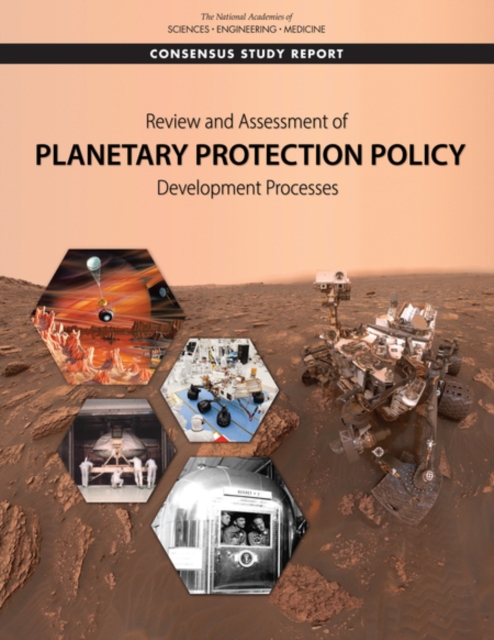
Review and Assessment of Planetary Protection Policy Development Processes
Protecting Earth's environment and other solar system bodies from harmful contamination has been an important principle throughout the history of space exploration. For decades, the scientific, political, and economic conditions of space exploration converged in ways that contributed to effective development and implementation of planetary protection policies at national and international levels. However, the future of space exploration faces serious challenges to the development and implementation of planetary protection policy. The most disruptive changes are associated with (1) sample return from, and human missions to, Mars; and (2) missions to those bodies in the outer solar system possessing water oceans beneath their icy surfaces.
Review and Assessment of Planetary Protection Policy Development Processes addresses the implications of changes in the complexion of solar system exploration as they apply to the process of developing planetary protection policy. Specifically, this report examines the history of planetary protection policy, assesses the current policy development process, and recommends actions to improve the policy development process in the future.
eBook

Bridging the gap between microbial limits and extremes in space: space microbial biotechnology in the next 15 years
Summary The establishment of a permanent human settlement in space is one of humanity’s ambitions. To achieve this, microorganisms will be used to carry out many functions such as recycling, food and pharmaceutical production, mining and other processes. However, the physical and chemical extremes in all locations beyond Earth exceed known growth limits of microbial life. Making microbes more tolerant of a greater range of extraterrestrial extremes will not produce organisms that can grow in unmodified extraterrestrial environments since in many of them not even liquid water can exist. However, by narrowing the gap, the engineering demands on bioindustrial processes can be reduced and greater robustness can be incorporated into the biological component. I identify and describe these required microbial biotechnological modifications and speculate on long‐term possibilities such as microbial biotechnology on Saturn’s moon Titan to support a human presence in the outer Solar System and bioprocessing of asteroids. A challenge for space microbial biotechnology in the coming decades is to narrow the microbial gap by systemically identifying the genes required to do this and incorporating them into microbial systems that can be used to carry out bioindustrial processes of interest. A challenge for space microbial biotechnology in the coming decades is to narrow the microbial gap between the growth limits of known life and conditions to be found in extraterrestrial environments.
Journal Article

Evidence of an oceanic impact and megatsunami sedimentation in Chryse Planitia, Mars
In 1976, NASA's Viking 1 Lander (V1L) was the first spacecraft to operate successfully on the Martian surface. The V1L landed near the terminus of an enormous catastrophic flood channel, Maja Valles. However, instead of the expected megaflood record, its cameras imaged a boulder-strewn surface of elusive origin. We identified a 110-km-diameter impact crater (Pohl) ~ 900 km northeast of the landing site, stratigraphically positioned (a) above catastrophic flood-eroded surfaces formed ~ 3.4 Ga during a period of northern plains oceanic inundation and (b) below the younger of two previously hypothesized megatsunami deposits. These stratigraphic relationships suggest that a marine impact likely formed the crater. Our simulated impact-generated megatsunami run-ups closely match the mapped older megatsunami deposit's margins and predict fronts reaching the V1L site. The site's location along a highland-facing lobe aligned to erosional grooves supports a megatsunami origin. Our mapping also shows that Pohl's knobby rim regionally represents a broader history of megatsunami modification involving circum-oceanic glaciation and sedimentary extrusions extending beyond the recorded megatsunami emplacement in Chryse Planitia. Our findings allow that rocks and soil salts at the landing site are of marine origin, inviting the scientific reconsideration of information gathered from the first in-situ measurements on Mars.
Journal Article

The gymnastics of epigenomics in rice
Epigenomics is represented by the high-throughput investigations of genome-wide epigenetic alterations, which ultimately dictate genomic, transcriptomic, proteomic and metabolomic dynamism. Rice has been accepted as the global staple crop. As a result, this model crop deserves significant importance in the rapidly emerging field of plant epigenomics. A large number of recently available data reveal the immense flexibility and potential of variable epigenomic landscapes. Such epigenomic impacts and variability are determined by a number of epigenetic regulators and several crucial inheritable epialleles, respectively. This article highlights the correlation of the epigenomic landscape with growth, flowering, reproduction, non-coding RNA-mediated post-transcriptional regulation, transposon mobility and even heterosis in rice. We have also discussed the drastic epigenetic alterations which are reported in rice plants grown from seeds exposed to the extraterrestrial environment. Such abiotic conditions impose stress on the plants leading to epigenomic modifications in a genotype-specific manner. Some significant bioinformatic databases and in silico approaches have also been explained in this article. These softwares provide important interfaces for comparative epigenomics. The discussion concludes with a unified goal of developing epigenome editing to promote biological hacking of the rice epigenome. Such a cutting-edge technology if properly standardized, can integrate genomics and epigenomics together with the generation of high-yielding trait in several cultivars of rice.
Journal Article

Mars 2020 Mission Overview
The Mars 2020 mission will seek the signs of ancient life on Mars and will identify, prepare, document, and cache a set of samples for possible return to Earth by a follow-on mission. Mars 2020 and its
Perseverance
rover thus link and further two long-held goals in planetary science: a deep search for evidence of life in a habitable extraterrestrial environment, and the return of martian samples to Earth for analysis in terrestrial laboratories.
The Mars 2020 spacecraft is based on the design of the highly successful Mars Science Laboratory and its
Curiosity
rover, but outfitted with a sophisticated suite of new science instruments. Ground-penetrating radar will illuminate geologic structures in the shallow subsurface, while a multi-faceted weather station will document martian environmental conditions. Several instruments can be used individually or in tandem to map the color, texture, chemistry, and mineralogy of rocks and regolith at the meter scale and at the submillimeter scale. The science instruments will be used to interpret the geology of the landing site, to identify habitable paleoenvironments, to seek ancient textural, elemental, mineralogical and organic biosignatures, and to locate and characterize the most promising samples for Earth return. Once selected, ∼35 samples of rock and regolith weighing about 15 grams each will be drilled directly into ultraclean and sterile sample tubes.
Perseverance
will also collect blank sample tubes to monitor the evolving rover contamination environment.
In addition to its scientific instruments,
Perseverance
hosts technology demonstrations designed to facilitate future Mars exploration. These include a device to generate oxygen gas by electrolytic decomposition of atmospheric carbon dioxide, and a small helicopter to assess performance of a rotorcraft in the thin martian atmosphere.
Mars 2020 entry, descent, and landing (EDL) will use the same approach that successfully delivered
Curiosity
to the martian surface, but with several new features that enable the spacecraft to land at previously inaccessible landing sites. A suite of cameras and a microphone will for the first time capture the sights and sounds of EDL.
Mars 2020’s landing site was chosen to maximize scientific return of the mission for astrobiology and sample return. Several billion years ago Jezero crater held a 40 km diameter, few hundred-meter-deep lake, with both an inflow and an outflow channel. A prominent delta, fine-grained lacustrine sediments, and carbonate-bearing rocks offer attractive targets for habitability and for biosignature preservation potential. In addition, a possible volcanic unit in the crater and impact megabreccia in the crater rim, along with fluvially-deposited clasts derived from the large and lithologically diverse headwaters terrain, contribute substantially to the science value of the sample cache for investigations of the history of Mars and the Solar System. Even greater diversity, including very ancient aqueously altered rocks, is accessible in a notional rover traverse that ascends out of Jezero crater and explores the surrounding Nili Planum.
Mars 2020 is conceived as the first element of a multi-mission Mars Sample Return campaign. After Mars 2020 has cached the samples, a follow-on mission consisting of a fetch rover and a rocket could retrieve and package them, and then launch the package into orbit. A third mission could capture the orbiting package and return it to Earth. To facilitate the sample handoff,
Perseverance
could deposit its collection of filled sample tubes in one or more locations, called depots, on the planet’s surface. Alternatively, if
Perseverance
remains functional, it could carry some or all the samples directly to the retrieval spacecraft.
The Mars 2020 mission and its
Perseverance
rover launched from the Eastern Range at Cape Canaveral Air Force Station, Florida, on July 30, 2020. Landing at Jezero Crater will occur on Feb 18, 2021 at about 12:30 PM Pacific Time.
Journal Article
Enhanced atmospheric loss on protoplanets at the giant impact phase in the presence of oceans
Earth and Venus part company
The Mariner and Venera probes sent to Venus in the 1960s and 1970s revealed many differences between the venusian atmosphere and that on Earth. One of the hardest to account for is the preponderance of noble gases on Venus, in particular an argon-36 level 50 times higher than on Earth. A new theory tracks the cause of this difference to around 4.5 billion years ago, when Earth and Venus are thought to have grown as a result of collisions between several Mars-sized planets. Numerical simulations show that when a giant impact occurs, the presence of an ocean drastically increases the rate at which atmosphere is lost. On Earth, almost all the proto-atmosphere accrued during planet formation would have been stripped away during collisions. Venus, nearer the Sun, is unlikely to have had a major ocean, and its proto-atmosphere would have survived.
The atmospheric compositions of Venus and Earth differ significantly, with the venusian atmosphere containing about 50 times as much
36
Ar as the atmosphere on Earth
1
. The different effects of the solar wind on planet-forming materials for Earth and Venus have been proposed to account for some of this difference in atmospheric composition
2
,
3
, but the cause of the compositional difference has not yet been fully resolved. Here we propose that the absence or presence of an ocean at the surface of a protoplanet during the giant impact phase could have determined its subsequent atmospheric amount and composition. Using numerical simulations, we demonstrate that the presence of an ocean significantly enhances the loss of atmosphere during a giant impact owing to two effects: evaporation of the ocean, and lower shock impedance of the ocean compared to the ground. Protoplanets near Earth's orbit are expected to have had oceans, whereas those near Venus’ orbit are not, and we therefore suggest that remnants of the noble-gas rich proto-atmosphere survived on Venus, but not on Earth. Our proposed mechanism explains differences in the atmospheric contents of argon, krypton and xenon on Venus and Earth, but most of the neon must have escaped from both planets’ atmospheres later to yield the observed ratio of neon to argon.
Journal Article