
Catalogue Search | MBRL


Are you sure you want to remove the book from the shelf?

{{itemTitle}}
60
result(s) for
"FARINE DE POISSON"
Sort by:
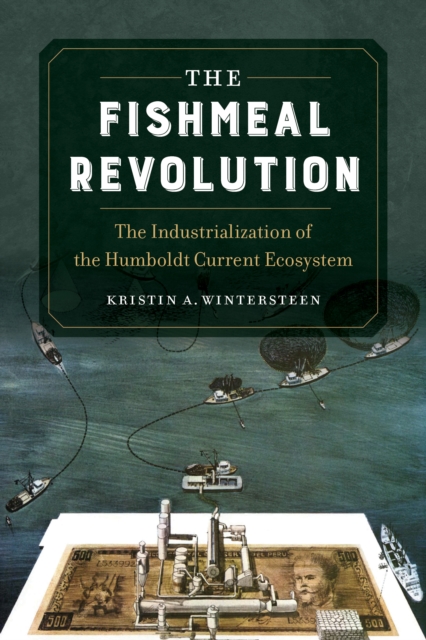
The Fishmeal Revolution
Off the Pacific coast of South America, nutrients mingle with cool
waters rising from the ocean's depths, creating one of the world's
most productive marine ecosystems: the Humboldt Current. When the
region's teeming populations of fish were converted into a key
ingredient in animal feed-fishmeal-it fueled the revolution in
chicken, hog, and fish farming that swept the United States and
northern Europe after World War II. The Fishmeal
Revolution explores industrialization along the Peru-Chile
coast as fishmeal producers pulverized and exported unprecedented
volumes of marine proteins to satisfy the growing taste for meat
among affluent consumers in the Global North. A relentless drive to
maximize profits from the sea occurred at the same time that Peru
and Chile grappled with the challenge of environmental uncertainty
and its potentially devastating impact. In this exciting new book,
Kristin A. Wintersteen offers an important history and critique of
the science and policy that shaped the global food industry.
eBook

Necessity of dietary taurine supplementation for preventing green liver symptom and improving growth performance in yearling red sea bream Pagrus major fed nonfishmeal diets based on soy protein concentrate
The necessity of dietary taurine supplementation for preventing green liver symptom and improving growth performance of red sea bream Pagrus major fed nonfishmeal (non-FM) diets was investigated. Yearling red sea bream (initial body weight, 580 g) were fed for 36 weeks on non-FM diets based on soy protein concentrate (SPC) supplemented with taurine at levels of 0%, 0.5%, 1.0%, 1.5%, and 2.0%. Specific growth rate (SGR) and feed conversion ratio (FCR) of fish fed the taurine-unsupplemented SPC diet were markedly inferior. In these fish, incidence of green liver was markedly higher and was accompanied by a decrease of tissue taurine concentration and an increase of hepatopancreatic bile pigment content. The green liver symptom was mainly caused by an increase of hemolysis since the erythrocytes became osmotically fragile due to taurine deficiency. Physiological abnormality and growth performance (SGR and FCR) were markedly improved by taurine supplementation to the SPC diets. These results indicate that dietary taurine supplementation is necessary for yearling red sea bream fed non-FM diet based on SPC to maintain normal physiological condition and growth performance.
Journal Article
Efficacy of taurine supplementation for preventing green liver syndrome and improving growth performance in yearling red sea bream Pagrus major fed low-fishmeal diet
: This study was performed to evaluate the efficacy of taurine supplementation for preventing green liver syndrome and improving growth performance in red sea bream Pagrus major fed a low‐fishmeal (FM) diet. Yearling red sea bream were fed for 34 weeks on low‐FM diets either supplemented with taurine, or without taurine, and the tissue taurine and bile pigment concentrations were measured. Compared to the fish fed the FM diet, fish fed the low‐FM diet without taurine supplementation resulted in inferior feed performances and higher incidence of green liver related to the morphological transformation of the erythrocytes. In these fish, the hepatopancreatic taurine concentration was significantly lower and hepatopancreatic biliverdin concentration was high compared to the fish fed the FM diet. These parameters were markedly improved by taurine supplementation of the low‐FM diet and were similar in levels to the fish fed the FM diet. These results indicate that green liver appearance and inferior feed performances of red sea bream fed the low‐FM diet without taurine supplementation were caused by dietary taurine deficiency, and indicate the requirement of taurine supplementation to low‐FM diets for red sea bream.
Journal Article

Discrimination of different processed animal proteins (PAPs) by FT-IR spectroscopy based on their fat characteristics
This study was undertaken to explore the potential of FT-IR technique for discriminating different species of processed animal proteins (PAPs) based on their fat characteristics. A total of 47 source-reliable PAPs samples containing fish meal, porcine, bovine, ovine and poultry meat and bone meal (MBM) were involved in the present study. The results obtained showed that the FT-IR differentiated quite well between the fat derived from different species of PAPs, especially at the bands of 3,006 cm^sup -1^ and 722 cm^sup -1^. Results provided evidence that FT-IR differentiated the fat derived from fish meal, terrestrial non-ruminant and ruminant MBM quite well. Fish meal and ruminant MBM samples could be discriminated effectively by both the sensitivity and specificity values which were 1.00 and 1.00, respectively. For non-ruminant MBM samples, the sensitivity and specificity were 1.00 and 0.96, respectively. However, it was hard to distinguish bovine MBM from ovine ones as well as porcine MBM from poultry ones. The result makes it possible to allow FT-IR analytical methodology as a preliminary study for the exploitation of a rapid and reliable way for the identification of the animal origin of PAPs used in feeding stuffs.
Journal Article
Hemolytic suppression roles of taurine in yellowtail Seriola quinqueradiata fed non-fishmeal diet based on soybean Glycine max protein
: To elucidate the hemolytic suppression roles of taurine and the necessity of dietary taurine supplementation in yellowtail Seriola quinqueradiata fed a diet without fishmeal, juvenile fish with an initial body weight of 250 g were fed for 40 weeks in floating net cages on soybean protein diets supplemented with 0, 3.0, 4.5 and 6.0% taurine. Taurine concentration of the experimental diets were 0.03, 33.9, 52.8 and 71.6 mg/g, respectively. On the 21st week, fish fed the taurine unsupplemented diet had inferior growth and feed performances, higher death, and there were incidences of green liver and hemolytic anemia. In this group, hepatic and plasma taurine concentrations, serum osmolality and osmotic tolerance of erythrocytes (EC50 value) were significantly lower, and plasma hydroperoxide concentration was markedly higher than in the taurine supplemented groups. These conditions markedly improved corresponding with the increase of dietary taurine concentration. These results indicate that taurine plays a role in hemolytic suppression through osmoregulation and biomembrane stabilization in fish. In addition, it is suggested that yellowtail requires dietary taurine as an essential nutrition for maintaining physiological condition normally.
Journal Article
Disease resistance and hypocholesterolemia in yellowtail Seriola quinqueradiata fed a non-fishmeal diet
: The physiology of yellowtail fed a non‐fishmeal diet was examined, with a specific interest in the role of taurine in disease resistance and cholesterol metabolism. Decrease of disease resistance in fish fed a non‐fishmeal diet was confirmed by mortality due to natural infection with pseudotuberculosis and artificial infection with Lactococcus garvieae. It is suggested that the most important symptoms related to decrease of disease resistance in fish fed a non‐fishmeal diet is anemia. Anemia was improved by supplementation with taurine. Significant elevation of relative expression of HMG‐CoA reductase mRNA in fish fed a non‐fishmeal diet suggests that cholesterol synthesis would be activated and not dysfunctional. Plasma cholesterol of these fish was elevated to the levels of control fish by supplementation of both cholesterol and taurine. These results suggest that hypocholesterolemia observed in fish fed a non‐fishmeal diet compared with a fishmeal diet would be caused by insufficient dietary cholesterol and decrease of endogenous cholesterol due to the lack of dietary taurine.
Journal Article
Supplemental effect of cholyltaurine and soybean Glycine max lecithin to a soybean meal-based fish meal-free diet on hepatic and intestinal morphology of rainbow trout Oncorhynchus mykiss
The supplemental effects of cholyltaurine and soybean lecithin to a defatted soybean meal (SBM)-based fish meal-free diet on the hepatic and intestinal morphology of rainbow trout Oncorhynchus mykiss were investigated. A fish meal-based diet (FM), three fish meal-free diets supplemented either with soybean lecithin (SL), bovine gall powder (BG) or cholyltaurine (C-tau) and an unsupplemented fish meal-free diet (NFM), were given to fish (~11 g) for 10 weeks. The growth was the lowest in fish fed diet NFM, intermediate in fish fed diet SL and the highest in fish fed diet FM, BG and C-tau. Hepatocytes of fish fed diet NFM were atrophied, and the distal intestine of these fish showed abnormal features: disintegrated microvilli and fatty degeneration in epithelial cells and increased amount of connective tissue in the submucosa. Hepatic and intestinal histological features in fish fed diets SL, BG and C-tau were similar to those in fish fed diet FM. These results indicate that soybean lecithin, bovine bile salts and cholyltaurine have similar effects on normalizing the hepatic and intestinal morphologies of rainbow trout fed the SBM-based diet, although growth promotion effect was limited in the soybean lecithin.
Journal Article
Evaluation of cottonseed Gossypium sp and soybean Glycine max meal as partial replacement for fishmeal in diets for juvenile Japanese flounder Paralichthys olivaceus
This study was conducted to investigate the effect of dietary supplementation of cottonseed and soybean meal (CS) on growth performance, feed utilization, and gossypol accumulation in juvenile (mean body weight 11 g) Japanese flounder Paralichthys olivaceus. Five isonitrogenous and isocaloric experimental diets (designated CS0, CS10, CS20, CS30, and CS40) containing 0, 10, 20, 30, and 40% CS mixture (1:1 w/w) were formulated. After 9 weeks of feeding trial, fish fed all diets did not show significant differences in growth performances, feed utilization, and whole body compositions. Hemoglobin content gradually decreased (P < 0.05) with increments of CS inclusion levels. There was a positive linear relationship between dietary gossypol and total liver gossypol contents. Free radical scavenging activity in the experimental diets gradually increased with increment of dietary CS inclusion. This finding indicates that the mixture of cottonseed and soybean meal with methionine and lysine supplementation could replace up to 40% of fishmeal protein in diets. However, 20% fishmeal protein replacement by dietary inclusion of cottonseed (9.4%) and soybean (8.7%) meal might be the optimum and safe level for the commercial use of CS in juvenile Japanese flounder.
Journal Article
Evaluation of recycled food waste as a partial replacement of fishmeal in diets for the initial feeding of Nile tilapia Oreochromis niloticus
A 70-day feeding trial was conducted to evaluate the suitability of recycled food wastes [food industry waste (FIW) and soy sauce waste (SSW)] as protein sources in the diet of Oreochromis niloticus fry. Diets were formulated that contained 0 and 20-22%, respectively, recycled food wastes, namely D1 (0% recycled food waste), D2 (20% FIW), D3 (10% FIW and SSW, respectively), D4 (20% FIW and tryptophan), and D5 (22% SSW). Although feed efficiency, net protein retention, and protein efficiency were not significantly different among fish on the different diets (p0.05), those on D3 had a better growth performance than the controls (D1). Fish fed diet D4 (tryptophan supplement) had a higher final weight gain than those fed D2, in addition to the other growth parameters, but these differences were not significant (p0.05), with the exception of total feed intake. D1 produced fish with higher carcass protein, while fish fed on D3 had the highest lipid content. There was no significant difference between groups in terms of carcass moisture and ash contents. These findings show that the proper combination of recycled food waste is suitable for use in the production of fish feed and may ultimately result in reductions in the level of fishmeal in aquafeeds.
Journal Article
Golden fish, African fish
The Casamance Region, in southern Senegal, is one of the last refuge hubs for non-industrial fishing in West Africa, employing around 15,000 people, fishermen, fish processors and migrant workers. \"Golden Fish, African Fish\" documents the way of life that depends on this artisanal fishing, which guarantees food security in numerous African countries. Meanwhile, increasing foreign competition from China puts this hub at risk: the factories that process the fish turn it into animal or plant feed instead of human food. So far, these women and men have been resisting. But for how much longer?
Streaming Video