
Catalogue Search | MBRL


Are you sure you want to remove the book from the shelf?

{{itemTitle}}
1,306,673
result(s) for
"FARMS"
Sort by:


Molecular Diagnosis and Prevalence of Trypanosoma vivax
Trypanosoma vivax Ziemann is a parasite that affects both wild and domestic ungulates and is transmitted mechanically via tabanids and other blood-sucking insects in the Americas. A total of 621 blood samples from water buffaloes (Bubalus bubalis (Linnaeus) (Artiodactyla: Bovidae), and 184 ectoparasite samples (Amblyomma cajennense (Fabricius) sensu stricto and Rhipicephalus (Boophilus) microplus (Canestrini) (Acari: Ixodidae), and Haematopinus tuberculatus (Burmeister) (Phthiraptera: Haematopinidae)) were obtained from 60 farms in the State of Para, Brazilian Amazon. Twelve buffalo blood samples (1.89%) and 11 ectoparasites (6%) were positive for T. vivax based on the cathepsin L-like gene. All sequences were 99% similar to T. vivax from northeastern Brazil (EU753788) in amplified PCR assays on each of the hosts tested.
Journal Article

Food and farming then and now
Compares the farming routines and foods grown or raised in the past to those of today.
CHILDBOOK

Correction: Towards a deeper understanding of parenting on farms: A qualitative study
[This corrects the article DOI: 10.1371/journal.pone.0198796.].
Journal Article

Local farms and sustainable foods
Discusses the advantages of using organic farming methods on small local farms whose produce will be sold in the community
Book

Revisiting the Farm Size-Productivity Relationship Based on a Relatively Wide Range of Farm Sizes
This paper revisits the inverse farm size-productivity relationship in Kenya. The study makes two contributions. First, the relationship is examined over a much wider range of farm sizes than most studies, which is particularly relevant in Africa given the recent rise of medium-and large-scale farms. Second, we test the inverse relationship hypothesis using three different measures of productivity including profits per hectare and total factor productivity, which are arguably more meaningful than standard measures of productivity such as yield or gross output per hectare. We find a U-shaped relationship between farm size and all three measures of farm productivity. The inverse relationship hypothesis holds on farms between zero and 3 hectares. The relationship between farm size and productivity is relatively flat between 3 and 5 hectares. A strong positive relationship between farm size and productivity emerges within the 5 to 70 hectare range of farm sizes. Across virtually all measures of productivity, farms between 20 and 70 hectares are found to be substantially more productive than farms under 5 hectares. When the analysis is confined to fields cultivated to maize (Kenya’s main food crop) the productivity advantage of relatively large farms stems at least partially from differences in technical choice related to mechanization, which substantially reduces labor input per hectare, and from input use intensity.
Journal Article

Ageing threatens sustainability of smallholder farming in China
Rapid demographic ageing substantially affects socioeconomic development
1
–
4
and presents considerable challenges for food security and agricultural sustainability
5
–
8
, which have so far not been well understood. Here, by using data from more than 15,000 rural households with crops but no livestock across China, we show that rural population ageing reduced farm size by 4% through transferring cropland ownership and land abandonment (approximately 4 million hectares) in 2019, taking the population age structure in 1990 as a benchmark. These changes led to a reduction of agricultural inputs, including chemical fertilizers, manure and machinery, which decreased agricultural output and labour productivity by 5% and 4%, respectively, further lowering farmers’ income by 15%. Meanwhile, fertilizer loss increased by 3%, resulting in higher pollutant emissions to the environment. In new farming models, such as cooperative farming, farms tend to be larger and operated by younger farmers, who have a higher average education level, hence improving agricultural management. By encouraging the transition to new farming models, the negative consequences of ageing can be reversed. Agricultural input, farm size and farmer’s income would grow by approximately 14%, 20% and 26%, respectively, and fertilizer loss would reduce by 4% in 2100 compared with that in 2020. This suggests that management of rural ageing will contribute to a comprehensive transformation of smallholder farming to sustainable agriculture in China.
Rural population ageing reduces the sustainability of smallholder farming in China, but the transition to a new farming model could reverse the negative effects of rural population ageing.
Journal Article
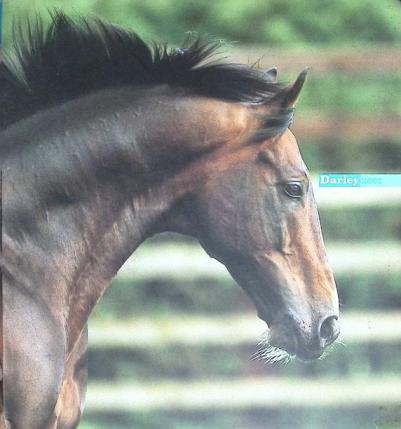
Darley 2001
\"Darley 2001\" is a high-profile equestrian retrospective that documents the global operations, bloodlines, and racing achievements of Darley, the international Thoroughbred breeding arm of the Maktoum family. Centered on the year 2001—a pivotal era for the integration of Middle Eastern equestrian passion with the traditional racing circuits of Europe and North America—the volume serves as both a corporate record and a tribute to the \"Darley Arabian\" heritage. It captures the peak performance of legendary stallions and the strategic expansion of stud farms across the United Kingdom, Ireland, the United States, and Australia.
BOOK

“A farm is viable if it can keep its head above water”: defining and measuring farm viability for small and mid-sized farms
The way farm viability is defined and conceptualized has become increasingly incongruent with the way that small-scale farmers make a living, as their livelihood strategies have evolved and changed in response to broad structural changes over the past several decades. Farm viability is typically defined as meeting the income needs of the farm family as well as supporting the farm’s operating costs. However, our study shows that New England farmers define farm viability as their ability to stay in business and to keep the land in agriculture. In this paper, we bring together the agricultural economics and rural sociological research literature on farm viability and persistence as well as food justice scholarship to advance the development of a more relevant and integrated approach to evaluating the viability of small and mid-sized farms. We present farmers’ own conceptions of farm viability, drawn from 37 interviews with the operators of small farms in New England. While most of the farmers we interviewed conceptualize farm viability as their ability to stay in business, many of them shared broader views of farm viability that integrated the social and environmental sustainability of their enterprises in the face of financial pressures and increased weather extremes from climate change. These were described as their ability to continue farming year after year and keep their land in agriculture, and their ability to maintain their own health and wellbeing as integral to a viable farm enterprise. Farmers emphasized their (in)ability to continue farming from a social sustainability standpoint as directly impacting the viability of their farms. We argue for a shift away from narrow measures of farm viability that are solely based on farm owners’ household income to a broader, multidimensional approach to defining and measuring farm viability that could enable analyses that are relevant to critical sustainability concerns for US agriculture.
Journal Article