
Catalogue Search | MBRL


Are you sure you want to remove the book from the shelf?

{{itemTitle}}
109
result(s) for
"FICTION / Alternative History."
Sort by:
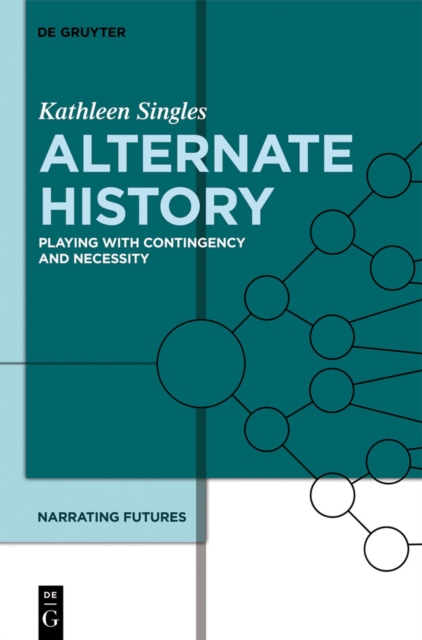
Alternate History: Playing with Contingency and Necessity
While, strictly speaking, Alternate Histories are not Future Narratives, their analysis can shed a clear light on why Future Narratives are so different from past narratives. Trying to have it both ways, most Alternate Histories subscribe to a conflicting set of beliefs concerning determinism and freedom of choice, contingency and necessity. For the very first time, Alternate Histories are here discussed against the backdrop of their Other, Future Narratives. The volume contains in-depth analyses of the classics of the genre.
eBook
In the Mirror of the Past
These days, we are ever more often confronted by overwhelming events. Searching for a way to understand them, we turn to mythic archetypes still present in our culture. The authors of these essays pose questions about the reliability of the archetypes found in tradition, history, and scattered mythologemes. The essays in this collection deal with the presence of mythic time in modern speculative fiction, such as fantasy and alternate histories, and discuss major mythologemes and their functi.
eBook

Relativism, Alternate History, and the Forgetful Reader
The writer of alternate history asks \"what if?\" What if one historical event were different, what would the world look like today?In a similar way, the postmodern philosopher of history suggests that history is literature, or that if we read certain historical details differently we would get a distinctly different interpretation of past events.
eBook
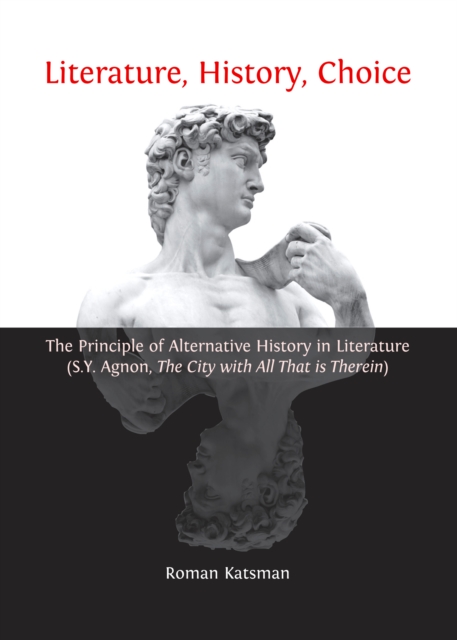
Literature, history, choice : the principle of alternative history in literature (S.Y. Agnon, The city with all that is therein)
Starting with a discussion on the elements of the genre of alternative (counterfactual) history and on its place between the poles of historical determinism and relativism, this book develops a literary theory of the historical alternativeness principle and applies it to the reading of The City with All That is Therein (Ir u-mloa) - one of the most important and less-studied books of the greatest Israeli writer, Nobel Prize winner S.Y. Agnon (1887-1970). The investigation reveals that this pr.
eBook

Survival in America: The Literary Nexus between Philip Roth's Holocaust Fiction and the Holocaust Memoirs of Primo Levi and Anne Frank
This paper examines Philip Roth's most Holocaust-haunted novel: The Plot Against America . Through a comparative intertextual study of Primo Levi's Se questo è un uomo (published in the United States as Survival in Auschwitz ), Anne Frank's Diary of a Young Girl , and Roth's Plot —and through an analysis of the other references to Frank and Levi in Roth's writing—this article argues that The Plot Against America should be read considering the profound impact of these works on Roth. It further argues that Plot is not merely Roth's counterfactual novel about what America would have looked like in the early 1940s had a president who sympathized with the Third Reich assumed control of the United States government. It is Roth's imagined Holocaust memoir, the one which the contingencies of history spared him from having to write as an actual witness, but which he nonetheless chose to write after having been profoundly impacted by his friendship with (and profound esteem and empathy for the works of) Primo Levi.
Journal Article

Alternative histories of the anthropocene: Andrew McGahan's 'the rich man's house'
Andrew McGahan's final novel, The Rich Man's House (2019), collates many of the preoccupations of his literary career: power, the environment, and the precarious foundations of colonisation in Australia. This paper posits that the novel's commentary on human overreach is an alternative history that encapsulates the Anthropocene and explores the problematic, gendered dimensions of conquest and its representation. Situated within a broad and growing literary scholarship that explores the innovative application of ecological frameworks, the paper interrogates the novel's critique of intersecting erasures of coloniality, masculinist domination and historical certitude. It suggests that the disaster visited upon the characters of The Rich Man's House is a demonstration of a specific phenomenon: ecologist Barry Commoner's fourth rule of ecology - nature always bats last. This paper also contributes to scholarship on McGahan's oeuvre, noting that his final work is prescient in its awareness of increasing climate disaster.
Journal Article

Alternative Histories—Alternative Identities? Jewishness and the (Al)lure of “What if . . . ?”
In this article, I explore negotiations of alternative Jewish identities as a response to the Holocaust in two alternative histories by the Jewish American writers Michael Chabon and Simone Zelitch. Both engage in very different ways with the destruction of a physical Yiddishland in central and eastern Europe and explore notions of Jewish guilt and the projection of Jewish identities into the future. In The Yiddish Policemen’s Union (2007), Chabon explores the imaginary persistence of Yiddish language and culture in a Yiddishland that, after a mitigated Holocaust, has been transferred to Alaska. The Yiddishland in Zelitch’s Judenstaat (2016) is divested of its Yiddishness. Jewish statehood after the Holocaust is conceived in her novel in retributive guilt and relies upon a potent imaginary of Jewish Germanness which, extends to culture, language, and territory in an illusory continuation of a mythical Ashkenaz and eventually ends in the dissolution of Jewish sovereignty.
Journal Article

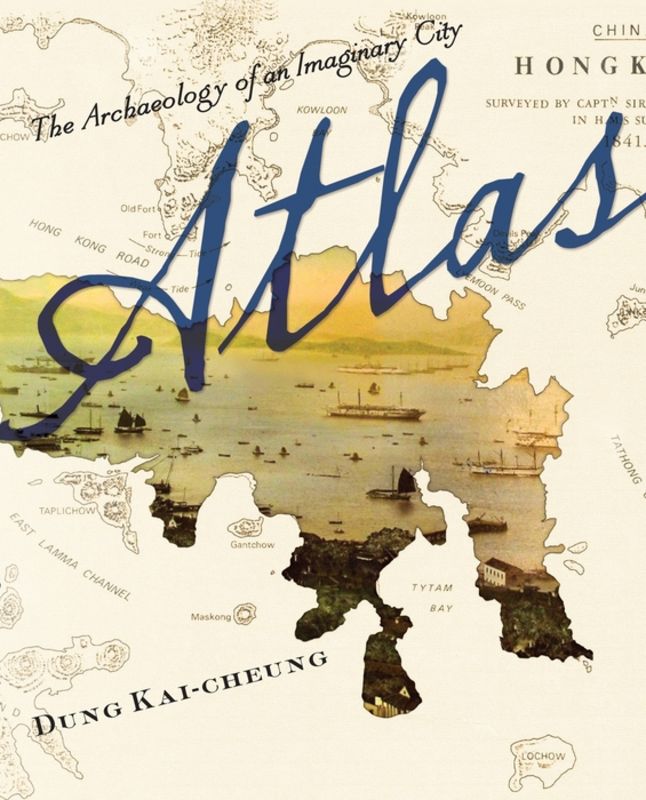
Atlas
Set in the long-lost City of Victoria (a fictional world similar to Hong Kong), Atlas is written from the unified perspective of future archaeologists struggling to rebuild a thrilling metropolis. Divided into four sections—\"Theory,\" \"The City,\" \"Streets,\" and \"Signs\"—the novel reimagines Victoria through maps and other historical documents and artifacts, mixing real-world scenarios with purely imaginary people and events while incorporating anecdotes and actual and fictional social commentary and critique. Much like the quasi-fictional adventures in map-reading and remapping explored by Paul Auster, Jorge Luis Borges, and Italo Calvino, Dung Kai-cheung's novel challenges the representation of place and history and the limits of technical and scientific media in reconstructing a history. It best exemplifies the author's versatility and experimentation, along with China's rapidly evolving literary culture, by blending fiction, nonfiction, and poetry in a story about succeeding and failing to recapture the things we lose. Playing with a variety of styles and subjects, Dung Kai-cheung inventively engages with the fate of Hong Kong since its British \"handover\" in 1997, which officially marked the end of colonial rule and the beginning of an uncharted future.
eBook