
Catalogue Search | MBRL


Are you sure you want to remove the book from the shelf?

{{itemTitle}}
2,115
result(s) for
"FICTION / Science Fiction / General."
Sort by:

Last scene underground : an ethnographic novel of Iran
Leili could not have imagined that arriving late to Islamic morals class would change the course of her life. But her arrival catches the eye of a young man, and a chance meeting soon draws Leili into a new circle of friends and artists. Gathering in the cafes of Tehran, these young college students come together to create an underground play that will wake up their generation. They play with fire, literally and figuratively, igniting a drama both personal and political to perform their play—just once.
From the wealthy suburbs and chic coffee shops of Tehran to subterranean spaces teeming with drugs and prostitution to spiritual lodges and saints' tombs in the mountains high above the city, Last Scene Underground presents an Iran rarely seen. Young Tehranis navigate their way through politics, art, and the meaning of home and in the process learn hard lessons about censorship, creativity, and love. Their dangerous discoveries ultimately lead to finding themselves.
Written in the hopeful wake of Iran's Green Movement and against the long shadow of the Iran-Iraq war, this unique novel deepens our understanding of an elusive country that is full of misunderstood contradictions and wonder.
eBook
Octavia's brood : science fiction stories from social justice movements
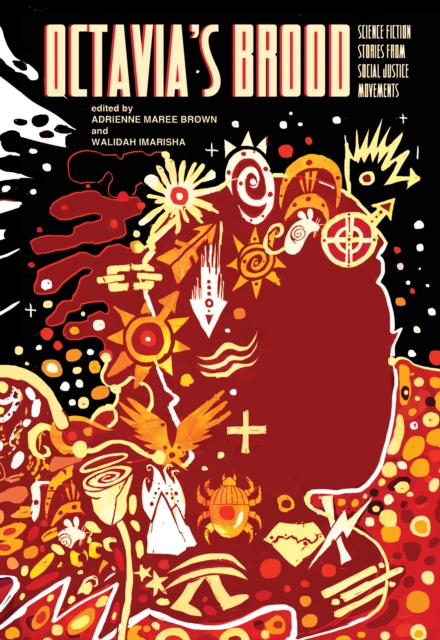
Whenever we envision a world without war, without prisons, without capitalism, we are producing speculative fiction. Organizers and activists envision, and try to create, such worlds all the time. Walidah Imarisha and adrienne maree brown have brought twenty of them together in the first anthology of short stories to explore the connections between radical speculative fiction and movements for social change. The visionary tales of Octavia's Brood span genres—sci-fi, fantasy, horror, magical realism—but all are united by an attempt to inject a healthy dose of imagination and innovation into our political practice and to try on new ways of understanding ourselves, the world around us, and all the selves and worlds that could be. The collection is rounded off with essays by Tananarive Due and Mumia Abu-Jamal, and a preface by Sheree Renée Thomas.
PRAISE FOR OCTAVIA'S BROOD:
\"Those concerned with justice and liberation must always persuade the mass of people that a better world is possible. Our job begins with speculative fictions that fire society's imagination and its desire for change. In adrienne maree brown and Walidah Imarisha's visionary conception, and by its activist-artists' often stunning acts of creative inception, Octavia's Brood makes for great thinking and damn good reading. The rest will be up to us.\" —Jeff Chang, author of Who We Be: The Colorization of America
\"Conventional exclamatory phrases don't come close to capturing the essence of what we have here in Octavia's Brood. One part sacred text, one part social movement manual, one part diary of our future selves telling us, 'It's going to be okay, keep working, keep loving.' Our radical imaginations are under siege and this text is the rescue mission. It is the new cornerstone of every class I teach on inequality, justice, and social change...This is the text we've been waiting for.\" —Ruha Benjamin, professor of African American Studies at Princeton University and author of People's Science: Bodies and Rights on the Stem Cell Frontier
\"Octavia once told me that two things worried her about the future of humanity: The tendency to think hierarchically, and the tendency to place ourselves higher on the hierarchy than others. I think she would be humbled beyond words that the fine, thoughtful writers in this volume have honored her with their hearts and minds. And that in calling for us to consider that hierarchical structure, they are not walking in her shadow, nor standing on her shoulders, but marching at her side.\" —Steven Barnes, author of Lion's Blood
\"Never has one book so thoroughly realized the dream of its namesake. Octavia's Brood is the progeny of two lovers of Octavia Butler and their belief in her dream that science fiction is for everybody... Butler could not wish for better evidence of her touch changing our literary and living landscapes. Play with these children, read these works, and find the children in you waiting to take root under the stars!\" —Moya Bailey and Ayana Jamieson, Octavia E. Butler Legacy
\"Like [Octavia] Butler's fiction, this collection is cartography, a map to freedom.\" —dream hampton, filmmaker and Visiting Artist at Stanford University's Institute for Diversity in the Arts
Walidah Imarisha is a writer, organizer, educator, and spoken word artist. She is the author of the poetry collectionScars/Stars and facilitates writing workshops at schools, community centers, youth detention facilities, and women's prisons.
adrienne maree brown is a 2013 Kresge Literary Arts Fellow writing science fiction in Detroit, Michigan. She received a 2013 Detroit Knight Arts Challenge Award to run a series of Octavia Butler–based writing workshops.
eBook

Atlas
Set in the long-lost City of Victoria (a fictional world similar to Hong Kong), Atlas is written from the unified perspective of future archaeologists struggling to rebuild a thrilling metropolis. Divided into four sections—\"Theory,\" \"The City,\" \"Streets,\" and \"Signs\"—the novel reimagines Victoria through maps and other historical documents and artifacts, mixing real-world scenarios with purely imaginary people and events while incorporating anecdotes and actual and fictional social commentary and critique. Much like the quasi-fictional adventures in map-reading and remapping explored by Paul Auster, Jorge Luis Borges, and Italo Calvino, Dung Kai-cheung's novel challenges the representation of place and history and the limits of technical and scientific media in reconstructing a history. It best exemplifies the author's versatility and experimentation, along with China's rapidly evolving literary culture, by blending fiction, nonfiction, and poetry in a story about succeeding and failing to recapture the things we lose. Playing with a variety of styles and subjects, Dung Kai-cheung inventively engages with the fate of Hong Kong since its British \"handover\" in 1997, which officially marked the end of colonial rule and the beginning of an uncharted future.
eBook

John Brunner
Under his own name and numerous pseudonyms, John Brunner (1934-1995) was one of the most prolific and influential science fiction authors of the late twentieth century. During his exemplary career, the British author wrote with a stamina matched by only a few other great science fiction writers and with a literary quality of even fewer, importing modernist techniques into his novels and stories and probing every major theme of his generation: robotics, racism, drugs, space exploration, technological warfare, and ecology._x000B__x000B_In this first intensive review of Brunner's life and works, Jad Smith carefully demonstrates how Brunner's much-neglected early fiction laid the foundation for his classic Stand on Zanzibar and other major works such as The Jagged Orbit, The Sheep Look Up, and The Shockwave Rider. Making extensive use of Brunner's letters, columns, speeches, and interviews published in fanzines, Smith approaches Brunner in the context of markets and trends that affected many writers of the time, including Brunner's uneasy association with the \"New Wave\" of science fiction in the 1960s and '70s. This landmark study shows how Brunner's attempts to cross-fertilize the American pulp tradition with British scientific romance complicated the distinctions between genre and mainstream fiction and between hard and soft science fiction and helped carve out space for emerging modes such as cyberpunk, slipstream, and biopunk. _x000B_
eBook
The city trilogy
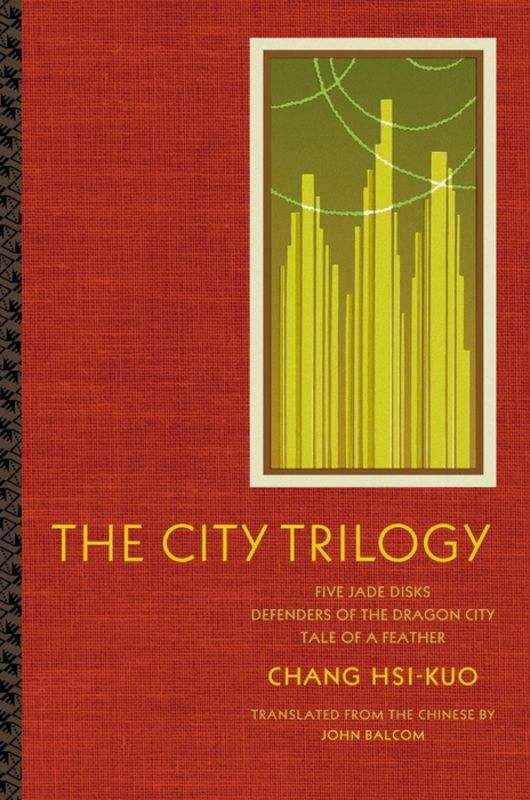
Taiwan's most innovative science fiction writer presents three tales of intrigue, espionage, betrayal, political strife, time travel, and Chinese history and mysticism. After thousands of years of civil unrest and countless wars, the weary Huhui people of Sunlon City have once again succumbed to a ruthless and overpowering enemy. In Five Jade Disks, the first book in the trilogy, the imperialistic Shan have enslaved the inhabitants of Sunlon City and imposed a harsh martial order. As the Shan fight to retain control of the restless Huhui natives, an unstable rebel alliance prepares to win back its homeland. Amidst the confusion of revolt, Miss Qi, a determined young girl, emerges as an unlikely leader. With the help of her friends and the loyal Green Snake Brotherhood, Miss Qi discovers that an ancient cult and its insidious and unusually powerful leader may hold the key to the rebels' victory—or may yet be the cause of their undoing. As she rushes to put the pieces together, the rebels, divided by internal factions, strive to band together in a heroic attempt to overthrow the Shan. The story continues in Defenders of the Dragon City. The Shan have been defeated, but the victory celebrations of the Huhui are quickly brought to an end. After deserting Sunlon City, the Shan regroup and return for one final and bitter attempt to destroy the weakened rebel forces. During their exile, the Shan turn their aggressions against the indigenous races of the Huhui planet, a colorful mix of peaceful tribes resembling serpents, eagles, and leopards. Forced into the war to save their remaining territory, the indigenous peoples join the Huhui in their continuing struggle against the Shan. The third novel, Tale of a Feather, opens with images of chaos and devastation. The conflict with the Shan has left the city in flames, and refugees are fleeing in droves through the main gates. Taking advantage of the turmoil, a ruthless dictator assumes control of the weak interim government and begins a treacherous campaign to eliminate his adversaries. In this volatile atmosphere, Miss Qi continues her desperate search to discover the origin of the mysterious Bronze Statue Cult and come to terms with the dark power it wields over her people. The trilogy, first published in Taiwan in the late 1980s and early 1990s and widely considered to be a modern classic, is now presented for the first time in English and in a single volume. In these allegorical tales, Chang confronts some of the most serious and divisive issues of our time, including the burden of history and the ravages of oppression, racism, and ethnic displacement.
eBook


Alien Constructions
\"An incisive critical work\" that looks at Octavia Butler's writing, the movies of the Matrix and Alien series—and more—through a feminist lens ( Femspec ). Feminist thinkers and writers are increasingly recognizing science fiction's potential to shatter patriarchal and heterosexual norms, while the creators of science fiction are bringing new depth and complexity to the genre by engaging with feminist thewories and politics. This book maps the intersection of feminism and science fiction through close readings of science fiction literature by Octavia E. Butler, Richard Calder, and Melissa Scott and the movies The Matrix and the Alien series. Patricia Melzer analyzes how these authors and films represent debates and concepts in three areas of feminist thought: identity and difference, feminist critiques of science and technology, and the relationship among gender identity, body, and desire, including the new gender politics of queer desires, transgender, and intersexed bodies and identities. She demonstrates that key political elements shape these debates, including global capitalism and exploitative class relations within a growing international system; the impact of computer, industrial, and medical technologies on women's lives and reproductive rights; and posthuman embodiment as expressed through biotechnologies, the body/machine interface, and the commodification of desire. Melzer's investigation makes it clear that feminist writings and readings of science fiction are part of a feminist critique of existing power relations—and that the alien constructions (cyborgs, clones, androids, aliens, and hybrids) that populate postmodern science fiction are as potentially empowering as they are threatening.
eBook

The Cambridge Companion to Science Fiction
Science fiction is at the intersection of numerous fields. It is a literature which draws on popular culture, and which engages in speculation about science, history, and all types of social relations. This volume brings together essays by scholars and practitioners of science fiction, which look at the genre from these different angles. After an introduction to the nature of science fiction, historical chapters trace science fiction from Thomas More to more recent years, including a chapter on film and television. The second section introduces four important critical approaches to science fiction drawing their theoretical inspiration from Marxism, postmodernism, feminism and queer theory. The final and largest section of the book looks at various themes and sub-genres of science fiction. A number of well-known science fiction writers contribute to this volume, including Gwyneth Jones, Ken MacLeod, Brian Stableford Andy Duncan, James Gunn, Joan Slonczewski, and Damien Broderick.
eBook

Science Fiction
From its beginnings in the works of H.G. Wells and Jules Verne to the virtual worlds of William Gibson's Neuromancer and The Matrix, Science Fiction: A Guide to the Perplexed helps students navigate the often perplexing worlds of a perennially popular genre. Drawing on literature as well as example from film and television, the book explores the different answers that criticism has offered to the vexed question, what is science fiction?' Each chapter of the book includes case studies of key texts, annotated guides to further reading and suggestions for class discussion to help students master the full range of contemporary critical approaches to the field, including the scientific, technological and political contexts in which the genre has flourished. Ranging from an understanding of the genre through the stereotypes of 1930s pulps through more recent claims that we are living in a science fictional moment, this volume will provide a comprehensive overview of this diverse and fascinating genre.
eBook

The Emergence of Latin American Science Fiction
Early science fiction has often been associated almost exclusively with Northern industrialized nations. In this groundbreaking exploration of the science fiction written in Latin America prior to 1920, Rachel Haywood Ferreira argues that science fiction has always been a global genre. She traces how and why the genre quickly reached Latin America and analyzes how writers in Argentina, Brazil, and Mexico adapted science fiction to reflect their own realities. Among the texts discussed are one of the first defenses of Darwinism in Latin America, a tale of a time-traveling history book, and a Latin American Frankenstein. Latin American science fiction writers have long been active participants in the sf literary tradition, expanding the limits of the genre and deepening our perception of the role of science and technology in the Latin American imagination. The book includes a chronological bibliography of science fiction published from 1775 to 1920 in all Latin American countries.
eBook