
Catalogue Search | MBRL


Are you sure you want to remove the book from the shelf?

{{itemTitle}}
1,910
result(s) for
"FICTION Psychological."
Sort by:

The perfect family
Maddie Castle is broken. Ever since the tragedy that struck on her twins' tenth birthday, she's been trying to fit the pieces together, to get back to the life she led before. Maddie, her husband, Dom, and their children, Aidan and Annabel, lived in a comfortable home on a quiet street in a London suburb. Life was busy and satisfying. They were happy. Weren't they? Now, a disoriented and grieving Maddie floats like a ghost through each day, hardly sleeping, eating, or speaking. It's easier to stay locked in her own head than to torment herself by reliving what happened. And yet, the harder Maddie tries to pin down her memories, the more they slip out of reach. Is her guilt and remorse justified? Is it Maddie's fault that everything was ripped apart? Or could it be that the real terror is still to come?
Book

Empathy and the Novel
This book presents an account of the relationships among novel reading, empathy, and altruism. Though readers' and authors' empathy certainly contribute to the emotional resonance of fiction and its success in the marketplace, this book finds the case for altruistic consequences of novel reading inconclusive. It offers instead a detailed theory of narrative empathy, with proposals about its deployment by novelists and its results in readers. The book engages with neuroscience and contemporary psychological research on empathy, bringing affect to the center of cognitive literary studies' scrutiny of narrative fiction. Drawing on narrative theory, literary history, philosophy, and contemporary scholarship in discourse processing, the book brings together resources and challenges for the literary study of empathy and the psychological study of fiction reading. Empathy robustly enters into affective responses to fiction, but its proper role in shaping the behavior of emotional readers has been debated for three centuries. The book surveys these debates and offers a series of hypotheses about literary empathy, including narrative techniques inviting empathetic response. It argues that above all readers' perception of a text's fictiveness increases the likelihood of readers' empathy, by releasing readers from their guarded responses to the demands of real others. The book confirms the centrality of narrative empathy as a strategy, as well as a subject, of contemporary novelists. Despite the disrepute of putative human universals, novelists from around the world endorse the notion of shared human emotions when they overtly call upon their readers' empathy. Consequently, the book suggests, if narrative empathy is to be better understood, women's reading and popular fiction must be accorded the respect of experimental inquiry.
eBook


Why do we care about literary characters?
Blakey Vermeule wonders how readers become involved in the lives of fictional characters, people they know do not exist.
Vermeule examines the ways in which readers' experiences of literature are affected by the emotional attachments they form to fictional characters and how those experiences then influence their social relationships in real life. She focuses on a range of topics, from intimate articulations of sexual desire, gender identity, ambition, and rivalry to larger issues brought on by rapid historical and economic change. Vermeule discusses the phenomenon of emotional attachment to literary characters primarily in terms of 18th-century British fiction but also considers the postmodern work of Thomas Mann, J. M. Coetzee, Ian McEwan, and Chinua Achebe.
From the perspective of cognitive science, Vermeule finds that caring about literary characters is not all that different from caring about other people, especially strangers. The tools used by literary authors to sharpen and focus reader interest tap into evolved neural mechanisms that trigger a caring response.
This book contributes to the emerging field of evolutionary literary criticism. Vermeule draws upon recent research in cognitive science to understand the mental processes underlying human social interactions without sacrificing solid literary criticism. People interested in literary theory, in cognitive analyses of the arts, and in Darwinian approaches to human culture will find much to ponder in Why Do We Care about Literary Characters?
eBook

The humbling
Everything is over for Simon Axler. One of the leading American stage actors of his generation, now in his 60s, Axler has lost his magic, his talent, and his assurance.
Book

Conrad's Short Fiction
This title is part of UC Press's Voices Revived program, which commemorates University of California Press's mission to seek out and cultivate the brightest minds and give them voice, reach, and impact. Drawing on a backlist dating to 1893, Voices Revived makes high-quality, peer-reviewed scholarship accessible once again using print-on-demand technology. This title was originally published in 1969.
eBook
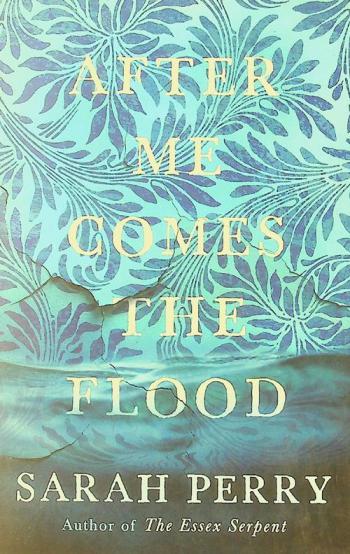
After me comes the flood
One hot summer's day, John Cole decides to leave his life behind. He shuts up the bookshop no one ever comes to and drives out of London. When his car breaks down and he becomes lost on an isolated road, he goes looking for help, and stumbles into the grounds of a grand but dilapidated house. Its residents welcome him with open arms - but there's more to this strange community than meets the eye. They all know him by name, they've prepared a room for him, and claim to have been waiting for him all along. As nights and days pass John finds himself drawn into a baffling menagerie. There is Hester, their matriarchal, controlling host; Alex and Claire, siblings full of child-like wonder and delusions; the mercurial Eve; Elijah - a faithless former preacher haunted by the Bible; and chain-smoking Walker, wreathed in smoke and hostility. Who are these people? And what do they intend for John? Elegant, gently sinister and psychologically complex, After Me Comes The Flood is a haunting and hypnotic debut novel by a brilliant new voice.

Useful Fictions
\"We tell ourselves stories in order to live,\" Joan Didion observed inThe White Album. Why is this? Michael Austin asks, inUseful Fictions. Why, in particular, are human beings, whose very survival depends on obtaining true information, so drawn to fictional narratives? After all, virtually every human culture reveres some form of storytelling. Might there be an evolutionary reason behind our species' need for stories?
Drawing on evolutionary biology, anthropology, narrative theory, cognitive psychology, game theory, and evolutionary aesthetics, Austin develops the concept of a \"useful fiction,\" a simple narrative that serves an adaptive function unrelated to its factual one. In his work we see how these useful fictions play a key role in neutralizing the overwhelming anxiety that humans can experience as their minds gather and process information. Rudimentary narratives constructed for this purpose, Austin suggests, provided a cognitive scaffold that might have become the basis for our well-documented love of fictional stories. Written in clear, jargon-free prose and employing abundant literary examples-from the Bible toOne Thousand and One Arabian NightsandDon QuixotetoNo Exit-Austin's work offers a new way of understanding the relationship between fiction and evolutionary processes-and, perhaps, the very origins of literature.
eBook

The Deptford trilogy
Fifth Business: \"Ramsay is a man twice born, a man who has returned from the hell of the battle-grave at Passchendaele in World War I decorated with the Victoria Cross and destined to be caught in a no man's land where memory, history, and myth collide. As Ramsay tells his story, it begins to seem that from boyhood, he has exerted a perhaps mystical, perhaps pernicious, influence on those around him\"--Publisher website (May 2007).
BOOK

The Cruft of Fiction
What is the strange appeal of big books? The mega-novel, a genre of erudite tomes with encyclopedic scope, has attracted wildly varied responses, from fanatical devotion to trenchant criticism. Looking at intimidating mega-novel masterpieces fromThe Making of Americansto2666, David Letzler explores reader responses to all the seemingly random, irrelevant, pointless, and derailing elements that comprise these mega-novels, elements that he labels \"cruft\" after the computer science term for junk code. InThe Cruft of Fiction, Letzler suggests that these books are useful tools to help us understand the relationship between reading and attention.
While mega-novel text is often intricately meaningful or experimental, sometimes it is just excessive and pointless. On the other hand, mega-novels also contain text that, though appearing to be cruft, turns out to be quite important. Letzler posits that this cruft requires readers to develop a sophisticated method of attentional modulation, allowing one to subtly distinguish between text requiring focused attention and text that must be skimmed or even skipped to avoid processing failures.The Cruft of Fictionshows how the attentional maturation prompted by reading mega-novels can help manage the information overload that increasingly characterizes contemporary life.
eBook