
Catalogue Search | MBRL


Are you sure you want to remove the book from the shelf?

{{itemTitle}}
141
result(s) for
"FICTION Sagas."
Sort by:

The gown : a novel of the royal wedding
\"London, 1947: Besieged by the harshest winter in living memory, burdened by onerous shortages and rationing, the people of postwar Britain are enduring lives of quiet desperation in spite of their nation's recent victory. Among them are Ann Hughes and Miriam Dassin, embroiderers in the famed Mayfair fashion house of Norman Hartnell. Together they forge an unlikely friendship, but their bond, along with their nascent hopes for a brighter future, are tested when they are chosen for a once-in-a-lifetime honor: taking part in the creation of Princess Elizabeth's wedding gown. Toronto, 2011: More than half a century later, Heather Mackenzie seeks to unravel the mystery of a set of embroidered flowers, a legacy from her late grandmother. How did her beloved Nan, a woman who never spoke of her old life in Britain, come to possess the priceless embroideries, so similar to the exquisite motifs that embellished the stunning gown worn by Queen Elizabeth II at her wedding more than sixty years before? And what was her Nan's connection to the celebrated textile artist Miriam Dassin? The Gown takes us inside the workrooms where one of the most famous wedding gowns in history was created, balancing behind-the-scenes details with a sweeping portrait of a society left reeling by the calamitous costs of victory. Its heroines, whose points of view alternate and intersect throughout its pages, are connected by threads of loss and love, suffering and survival, regret and redemption\"-- Provided by publisher.
Book

Caprice
This fictional account of one woman's journey to recover her family and heritage won the 1990 David Unaipon Award for Aboriginal and Torres Strait Islander writers.Set in the towns, pastoral stations and repressive institutions of Western Australia, it is a moving story of three generations of Yamatji women.
eBook

Christopher's diary : echoes of Dollanganger
\"Kristin Masterwood and her boyfriend, Kane Hill, up the ante by going into her attic to re-enact scenes described in Christopher Dollanganger's diary\"--Provided by publisher.
Book

Jurassic World: Fallen Kingdom as a 21st-Century Gothic Tale
This paper considers Juan Antonio Bayona’s 2018 film Jurassic World: Fallen Kingdom as a Gothic film which disrupts the archetypal conventions of monster films, especially in relation to the antispeciesist conception of monsters —in this case, the genetically-engineered dinosaurs which feature in the Jurassic Park and Jurassic World sagas. Through an analysis of its cinematography, character construction, scenarios and plot development in the light of Gothic Studies, I will argue that this film is not just Gothic in appearance, but also in the sense that itbreaks with contemporary anthropocentric conventions of normalcy, unity and species boundaries, and that it confirms the trend in filmic narratives that takes into account the monsters’ perspectives in order to challenge human exceptionalism.
Journal Article

The incarnations
\"Hailed as \"China's Midnight's Children,\" a gripping new novel about a Beijing taxi driver whose past incarnations haunt him through searing letters sent by his mysterious soulmate\"-- Provided by publisher.
Book
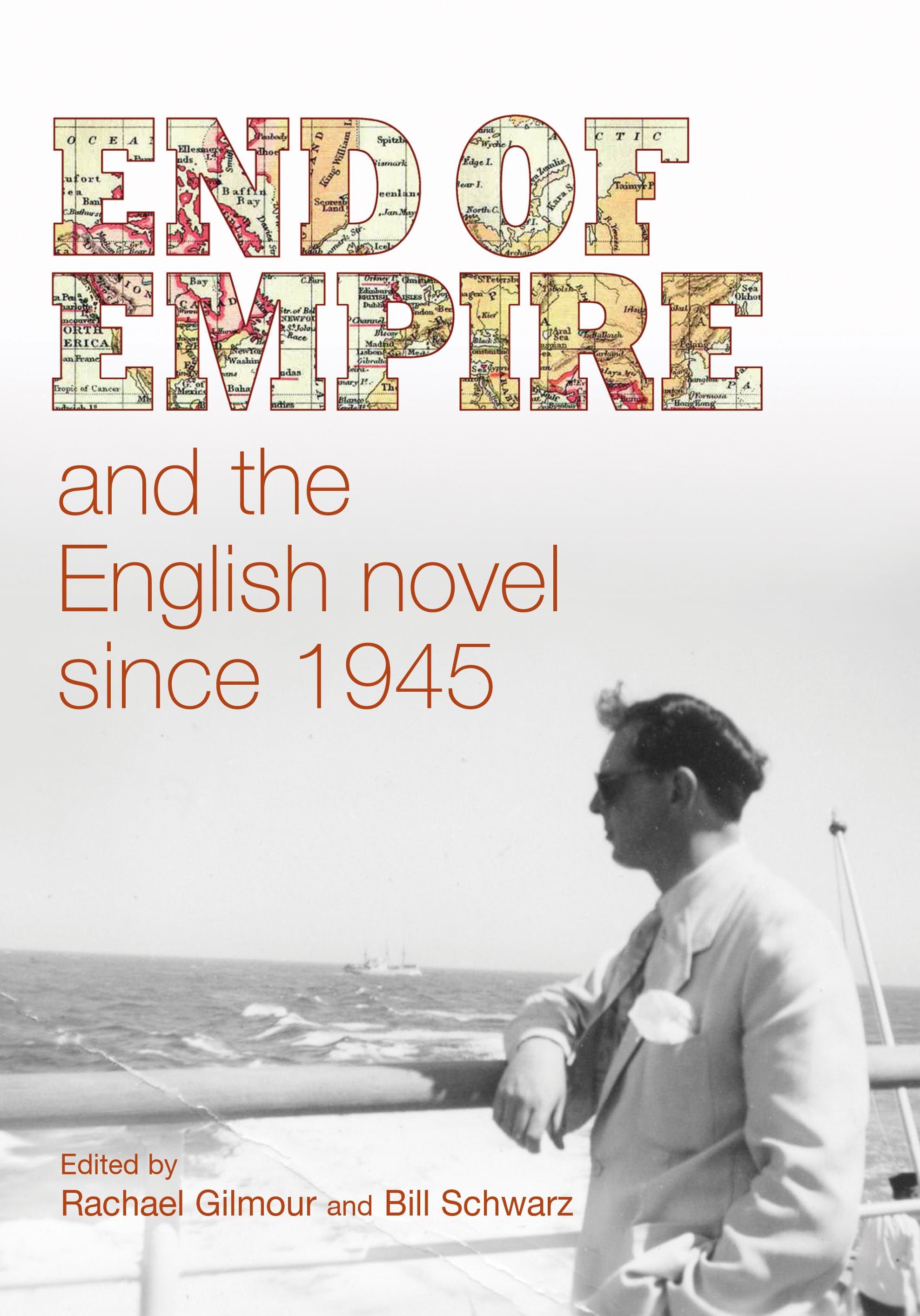
End of empire and the English novel since 1945
Available in paperback for the first time, this first book-length study explores the history of postwar England during the end of empire through a reading of novels which appeared at the time, moving from George Orwell and William Golding to Penelope Lively, Alan Hollinghurst and Ian McEwan. Particular genres are also discussed, including the family saga, travel writing, detective fiction and popular romances.All included reflect on the predicament of an England which no longer lies at the centre of imperial power, arriving at a fascinating diversity of conclusions about the meaning and consequences of the end of empire and the privileged location of the novel for discussing what decolonization meant for the domestic English population of the metropole. The book is written in an easy style, unburdened by large sections of abstract reflection. It endeavours to bring alive in a new way the traditions of the English novel.
eBook

The history of bees
\"In the spirit of Station Eleven and Never Let Me Go, this ... literary debut follows three generations of beekeepers from the past, present, and future, weaving a ... story of their relationship to the bees--and to their children and one another--against the backdrop of an urgent, global crisis\"-- Provided by publisher.
Book

Out of date: genetics, history and the British novel of the 1990s
This article examines the representation of human genomics in the British historical novel of the 1990s. A form which meditates on the past and its relationship to the present, the historical novel readily lends itself to the exploration of genealogy, heredity and inheritance. Forwarding an understanding of human history, and particularly of family history, as a direct and causal function of the genes, the neo-Darwinian explanation of the genome popular in the 1990s similarly advanced its own teleological relationship between past and present. Reading Jenny Diski’s Monkey’s Uncle (1994), A S Byatt’s Babel Tower (1996) and Zadie Smith’s White Teeth (2000), this essay argues that the historical novel provides a unique form with which to critique the deterministic view of heredity promoted by neo-Darwinism. Focusing on moments of textual anachronism, asynchronicity and repetition in these family sagas, it shows how—at its most transgressive—the historical novel imagines temporal disruptions that bring the present into contact with the past in ways that defamiliarise conventions of linearity, order and progress. Refusing the idea of human history as a single, legible line that underpins neo-Darwinian ideas of genetic inheritance, Diski, Byatt and Smith’s novels are able to interrogate both the temporal logics and cultural capital of 1990s genetic science. While the decade was shaped and defined by popular science speculation and large-scale genetic research projects, such as the Human Genome Project (1990–2003), the novels addressed in this essay ultimately suggest the lively and seductive genocentrism of the 1990s to be inadequate to the task of explaining the complexity and meaning of the lived genome. As Diski, Byatt and Smith’s novels anticipate, the question of the uses, meanings and value of the human genome sequence continue to be of relevance within our current, postgenomic era.
Journal Article

Fall from grace : a novel
\"From #1 New York Times bestselling author Danielle Steel comes the gripping story of a woman who loses everything--her husband, her home, her sense of self and safety, and her freedom. Sydney Wells's perfect life with her wealthy, devoted husband vanishes when he dies suddenly in an accident. Widowed at forty-nine, she discovers he has failed to include her in his will. With Andrew's vicious daughters in control of his estate, and no home or money, Sydney finds a job in fashion, despite her own designer daughters' warnings. Naïve, out of her element, and alone in a world of shady international deals and dishonest people, she is set up by her boss and finds herself faced with criminal prosecution. What happens when you lose everything? Husband, safety, protection, money, and reputation gone, faced with prison, Sydney must rebuild her life from the bottom to the top again, with honor, resourcefulness, and dignity. Sydney finds herself, as well as courage and resilience. Taking life by the horns, she revives her own career as a talented designer, from New York to Hong Kong, risking all in an exotic, unfamiliar world. She is determined to forge a new life she can be proud of\"-- Provided by publisher.
Book

Feminismo y geopolítica en el Universo Cinematográfico de Marvel: la ideología y la historia vestidas de fantasía de Viuda Negra, Wandavision y Dr. Strange
Esta investigación plantea, a través de un análisis narrativo y visual, una interpretación del discurso feminista y geopolítico subyacente en algunas obras del Universo Cinematográfico de Marvel, una de las sagas más exitosas y populares del siglo XXI. El aspecto más interesante reside en que, bajo la iconografía y los tropos del fantástico y la ciencia ficción, estas narraciones superheroicas tratan temas de actualidad referentes a la acción geopolítica y de expansión económicocultural que lleva a cabo Estados Unidos y a movimientos sociales como el feminismo y el #MeToo. Aun siendo una constante en otras entregas de la saga, en los recientes filmes Viuda Negra y Doctor Strange y en la serie Wandavision se aprecian claramente correspondencias y alusiones a hechos y personajes relevantes involucrados en episodios decisivos del país norteamericano. El análisis fílmico permitirá identificar esas ideas subyacentes en las formas, la iconografía y las estrategias narrativo-persuasivas.
Journal Article