
Catalogue Search | MBRL


Are you sure you want to remove the book from the shelf?

{{itemTitle}}
2,274
result(s) for
"FICTION Science Fiction General."
Sort by:

The empty box and zeroth Maria
\"Kazuki Hoshino leads the easy-going life of a typical high school student--until the appearance of a new girl in his class turns his world upside down! Introducing herself with a promise to \"break\" Kazuki is abnormal enough to make an impression, sure, but why does she seem so familiar...?\"-- Provided by publisher.
Book

Last scene underground : an ethnographic novel of Iran
Leili could not have imagined that arriving late to Islamic morals class would change the course of her life. But her arrival catches the eye of a young man, and a chance meeting soon draws Leili into a new circle of friends and artists. Gathering in the cafes of Tehran, these young college students come together to create an underground play that will wake up their generation. They play with fire, literally and figuratively, igniting a drama both personal and political to perform their play—just once.
From the wealthy suburbs and chic coffee shops of Tehran to subterranean spaces teeming with drugs and prostitution to spiritual lodges and saints' tombs in the mountains high above the city, Last Scene Underground presents an Iran rarely seen. Young Tehranis navigate their way through politics, art, and the meaning of home and in the process learn hard lessons about censorship, creativity, and love. Their dangerous discoveries ultimately lead to finding themselves.
Written in the hopeful wake of Iran's Green Movement and against the long shadow of the Iran-Iraq war, this unique novel deepens our understanding of an elusive country that is full of misunderstood contradictions and wonder.
eBook

Hope reformed
\"The Reformer and The Tyrant in one volume. The Empire of Man has fallen and a new Dark Ages is upon the stars. With planets cut off and reduced to subsistence and ignorance, humanity has nearly forgotten its past greatness. But one battle computer has survived the Collapse. He is Center. And Center is determined to find and aid leaders who can return a star-faring republic to the galaxy. The first of these leaders is Raj Whitehall, a man born to be a general, and molded to retake civilization itself from the jaws of barbarism\"-- Provided by publisher.
Book
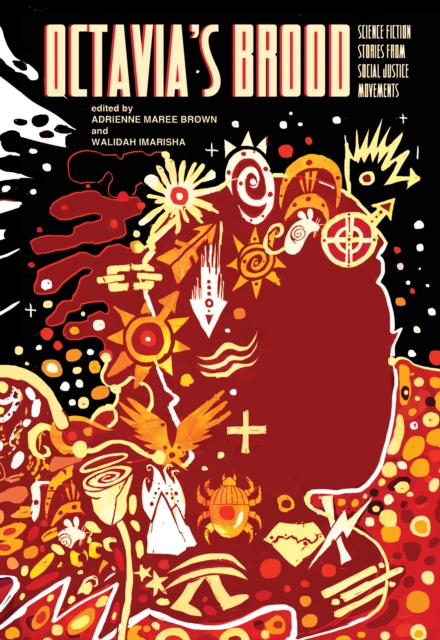
Octavia's brood : science fiction stories from social justice movements
Whenever we envision a world without war, without prisons, without capitalism, we are producing speculative fiction. Organizers and activists envision, and try to create, such worlds all the time. Walidah Imarisha and adrienne maree brown have brought twenty of them together in the first anthology of short stories to explore the connections between radical speculative fiction and movements for social change. The visionary tales of Octavia's Brood span genres—sci-fi, fantasy, horror, magical realism—but all are united by an attempt to inject a healthy dose of imagination and innovation into our political practice and to try on new ways of understanding ourselves, the world around us, and all the selves and worlds that could be. The collection is rounded off with essays by Tananarive Due and Mumia Abu-Jamal, and a preface by Sheree Renée Thomas.
PRAISE FOR OCTAVIA'S BROOD:
\"Those concerned with justice and liberation must always persuade the mass of people that a better world is possible. Our job begins with speculative fictions that fire society's imagination and its desire for change. In adrienne maree brown and Walidah Imarisha's visionary conception, and by its activist-artists' often stunning acts of creative inception, Octavia's Brood makes for great thinking and damn good reading. The rest will be up to us.\" —Jeff Chang, author of Who We Be: The Colorization of America
\"Conventional exclamatory phrases don't come close to capturing the essence of what we have here in Octavia's Brood. One part sacred text, one part social movement manual, one part diary of our future selves telling us, 'It's going to be okay, keep working, keep loving.' Our radical imaginations are under siege and this text is the rescue mission. It is the new cornerstone of every class I teach on inequality, justice, and social change...This is the text we've been waiting for.\" —Ruha Benjamin, professor of African American Studies at Princeton University and author of People's Science: Bodies and Rights on the Stem Cell Frontier
\"Octavia once told me that two things worried her about the future of humanity: The tendency to think hierarchically, and the tendency to place ourselves higher on the hierarchy than others. I think she would be humbled beyond words that the fine, thoughtful writers in this volume have honored her with their hearts and minds. And that in calling for us to consider that hierarchical structure, they are not walking in her shadow, nor standing on her shoulders, but marching at her side.\" —Steven Barnes, author of Lion's Blood
\"Never has one book so thoroughly realized the dream of its namesake. Octavia's Brood is the progeny of two lovers of Octavia Butler and their belief in her dream that science fiction is for everybody... Butler could not wish for better evidence of her touch changing our literary and living landscapes. Play with these children, read these works, and find the children in you waiting to take root under the stars!\" —Moya Bailey and Ayana Jamieson, Octavia E. Butler Legacy
\"Like [Octavia] Butler's fiction, this collection is cartography, a map to freedom.\" —dream hampton, filmmaker and Visiting Artist at Stanford University's Institute for Diversity in the Arts
Walidah Imarisha is a writer, organizer, educator, and spoken word artist. She is the author of the poetry collectionScars/Stars and facilitates writing workshops at schools, community centers, youth detention facilities, and women's prisons.
adrienne maree brown is a 2013 Kresge Literary Arts Fellow writing science fiction in Detroit, Michigan. She received a 2013 Detroit Knight Arts Challenge Award to run a series of Octavia Butler–based writing workshops.
eBook

Challenges of the deeps
\"SEQUEL TO GRAND CENTRAL ARENA AND SPHERES OF INFLUENCE. The climax of the Arenaverse adventure SF series! The Arena: a vast alien otherspace that all species were forced to enter when they discovered faster-than-light travel. The Arena: where the lives of entire species might hang in the balance in a single Challenge. The Arena: filled with mysteries, alliances, betrayals, opportunities, and hideous dangers for individual and empire alike. And the only thing you couldn't do. was refuse to play the Arena's game. Ariane Austin and her crew had learned these lessons the hard way, and--with luck, skill, and sheer will, had managed to survive so far. But now a debt of honor to Humanity's oldest, if sometimes self-serving, ally Orphan has come due. The threat of war looms with the xenophobic Molothos, one of the five Great Factions; the dark and omnipresent legacy of the Hyperion Experiment lingers. As Leader of the Faction of Humanity, Captain Ariane Austin had to deal with all of these problems, and deal with them soon. For within her was also the alien power that the Shadeweavers and the Faith had sealed away--with a seal that would not last forever. She needed to find a way to control that power before it broke free--or more than just Humanity would pay the price. Now Ariane must travel with Orphan into the legendary Deeps of the Arena, far from any known Spheres--to a destination only the enigmatic alien knows, leaving behind one of her most trusted friends and advisors to confront whatever new trials the Arena may throw at Humanity in her absence. But before Ariane can depart, she must deal with a minor matter of a Challenge against one of the Great Factions--a Challenge with an entire species' citizenship in the Arena at stake! About Spheres of Influence: \"Fast and entertaining action and a world that has the feel of Asimov's Foundation series.\"--Sarah A. Hoyt, author of the Darkship saga About Ryk E. Spoor's Grand Central Arena: \"
Book
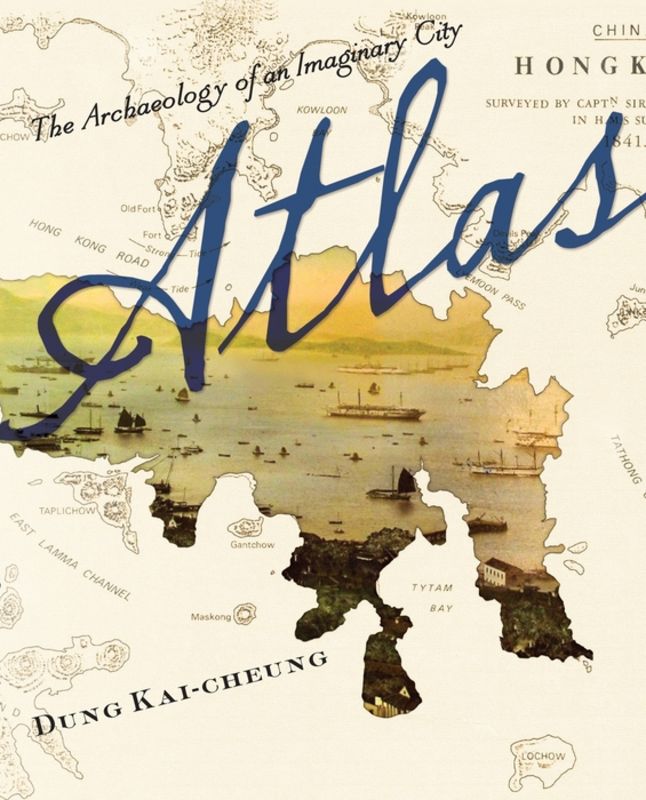
Atlas
Set in the long-lost City of Victoria (a fictional world similar to Hong Kong), Atlas is written from the unified perspective of future archaeologists struggling to rebuild a thrilling metropolis. Divided into four sections—\"Theory,\" \"The City,\" \"Streets,\" and \"Signs\"—the novel reimagines Victoria through maps and other historical documents and artifacts, mixing real-world scenarios with purely imaginary people and events while incorporating anecdotes and actual and fictional social commentary and critique. Much like the quasi-fictional adventures in map-reading and remapping explored by Paul Auster, Jorge Luis Borges, and Italo Calvino, Dung Kai-cheung's novel challenges the representation of place and history and the limits of technical and scientific media in reconstructing a history. It best exemplifies the author's versatility and experimentation, along with China's rapidly evolving literary culture, by blending fiction, nonfiction, and poetry in a story about succeeding and failing to recapture the things we lose. Playing with a variety of styles and subjects, Dung Kai-cheung inventively engages with the fate of Hong Kong since its British \"handover\" in 1997, which officially marked the end of colonial rule and the beginning of an uncharted future.
eBook

The sacred era : a novel
\"The magnum opus of a Japanese master of speculative fiction, and a book that established Yoshio Aramaki as a leading representative of the genre, The Sacred Era is part post-apocalyptic world, part faux-religious tract, and part dream narrative. In a distant future ruled by a new Papal Court serving the Holy Empire of Igitur, a young student known only as K arrives at the capital to take The Sacred Examination, a text that will qualify him for metaphysical research service with the court. His performance earns him an assignment in the secret Planet Bosch Research Department; this in turn puts him on the trail of a heretic executed many years earlier, whose headless ghost is still said to haunt the Papal Court, which carries him on an interplanetary pilgrimage across the Space Taklamakan Desert to the Planet Loulan, where time stands still, and finally to the mysterious, supposedly mythical Planet Bosch, a giant, floating plant-world that once orbited Earth but has somehow wandered 1,000 light years away. K's journey to this strange world, seemingly sprung from Hieronymus Bosch's Garden of Earthly Delights, is a journey into inner and outer space, as the novel traffics in mystic and metaphysical questions only to transform them into technical and astrophysical problems, translating the substance of religious and mythic texts into the language of science fiction\"-- Provided by publisher.
Book

John Brunner
Under his own name and numerous pseudonyms, John Brunner (1934-1995) was one of the most prolific and influential science fiction authors of the late twentieth century. During his exemplary career, the British author wrote with a stamina matched by only a few other great science fiction writers and with a literary quality of even fewer, importing modernist techniques into his novels and stories and probing every major theme of his generation: robotics, racism, drugs, space exploration, technological warfare, and ecology._x000B__x000B_In this first intensive review of Brunner's life and works, Jad Smith carefully demonstrates how Brunner's much-neglected early fiction laid the foundation for his classic Stand on Zanzibar and other major works such as The Jagged Orbit, The Sheep Look Up, and The Shockwave Rider. Making extensive use of Brunner's letters, columns, speeches, and interviews published in fanzines, Smith approaches Brunner in the context of markets and trends that affected many writers of the time, including Brunner's uneasy association with the \"New Wave\" of science fiction in the 1960s and '70s. This landmark study shows how Brunner's attempts to cross-fertilize the American pulp tradition with British scientific romance complicated the distinctions between genre and mainstream fiction and between hard and soft science fiction and helped carve out space for emerging modes such as cyberpunk, slipstream, and biopunk. _x000B_
eBook

Fleet inquisitor
\"An Exchange of Hostages, Prisoner of Conscience and Angel of Destruction in one volume. Under Jurisdiction torture isn't about the truth. It's about terror. The Jurisdiction's Bench has come to rely on the institutionalized atrocities of the Protocols to maintain its control of an increasingly unstable political environment. When Andrej Koscuisko, a talented young doctor, reports to orientation as a Ship's Inquisitor he will discover in himself something far worse than a talent for torturing the Bench's enemies. He will confront a passion for the exercise of the Writ to Inquire, whose intensity threatens to consume him utterly\"-- Provided by publisher.
Book
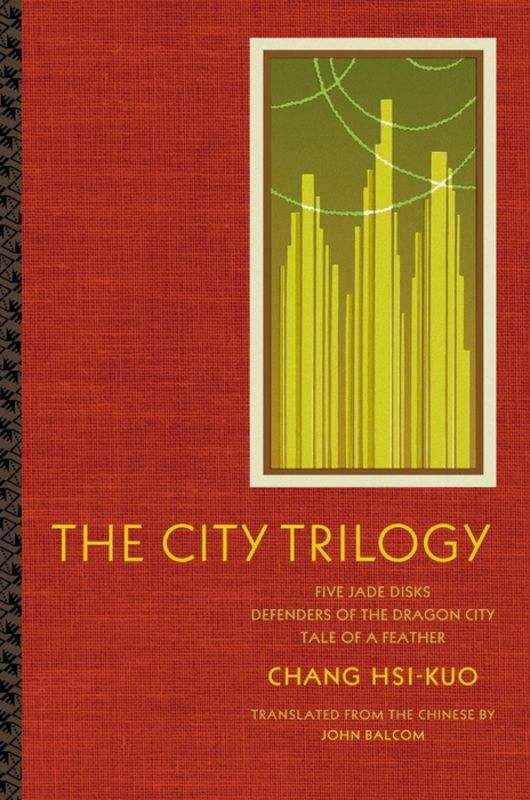
The city trilogy
Taiwan's most innovative science fiction writer presents three tales of intrigue, espionage, betrayal, political strife, time travel, and Chinese history and mysticism. After thousands of years of civil unrest and countless wars, the weary Huhui people of Sunlon City have once again succumbed to a ruthless and overpowering enemy. In Five Jade Disks, the first book in the trilogy, the imperialistic Shan have enslaved the inhabitants of Sunlon City and imposed a harsh martial order. As the Shan fight to retain control of the restless Huhui natives, an unstable rebel alliance prepares to win back its homeland. Amidst the confusion of revolt, Miss Qi, a determined young girl, emerges as an unlikely leader. With the help of her friends and the loyal Green Snake Brotherhood, Miss Qi discovers that an ancient cult and its insidious and unusually powerful leader may hold the key to the rebels' victory—or may yet be the cause of their undoing. As she rushes to put the pieces together, the rebels, divided by internal factions, strive to band together in a heroic attempt to overthrow the Shan. The story continues in Defenders of the Dragon City. The Shan have been defeated, but the victory celebrations of the Huhui are quickly brought to an end. After deserting Sunlon City, the Shan regroup and return for one final and bitter attempt to destroy the weakened rebel forces. During their exile, the Shan turn their aggressions against the indigenous races of the Huhui planet, a colorful mix of peaceful tribes resembling serpents, eagles, and leopards. Forced into the war to save their remaining territory, the indigenous peoples join the Huhui in their continuing struggle against the Shan. The third novel, Tale of a Feather, opens with images of chaos and devastation. The conflict with the Shan has left the city in flames, and refugees are fleeing in droves through the main gates. Taking advantage of the turmoil, a ruthless dictator assumes control of the weak interim government and begins a treacherous campaign to eliminate his adversaries. In this volatile atmosphere, Miss Qi continues her desperate search to discover the origin of the mysterious Bronze Statue Cult and come to terms with the dark power it wields over her people. The trilogy, first published in Taiwan in the late 1980s and early 1990s and widely considered to be a modern classic, is now presented for the first time in English and in a single volume. In these allegorical tales, Chang confronts some of the most serious and divisive issues of our time, including the burden of history and the ravages of oppression, racism, and ethnic displacement.
eBook