
Catalogue Search | MBRL


Are you sure you want to remove the book from the shelf?

{{itemTitle}}
35,272
result(s) for
"FINANCIAL CRIME"
Sort by:


Criminal psychology: focus on financial crime
Based on the foundations of criminal psychology, this pioneering book serves as a powerful tool in the fight against financial crimes. The author explores the integration of the lure of money or undue favour with clinical dishonesty, revealing the strong interplay between narcissism and ego-states driving situational or extended financial crime and the complex psychological elements of obfuscation used to deny it. This motivated the design and inclusion of a new ground-breaking financial crime assessment model: the N.E.B.U.L.A. model, supplementing a dedicated specialist chapter on forensic interviewing. The interlinking chapters form a lively engagement with hierarchical and political influences around corruption, underpinned by an enlightening assessment of definitions. Profiling in financial crimes is also examined, along with victim-support, and the psychological impacts of fraud, theft, corruption, and money laundering, and why these impacts are viewed differently. Also, for investigators, to bolster problem-solving skills and evidence analysis, but importantly also, to avoid pitfalls of bias and Groupthink and identify where information ends, and evidence begins. Innovation is a running theme throughout. Overall, the book presents a new direction in psychological science by combining constituents of criminal psychology with a range of metrics of financial crimes. Combining the comprehensive content with finite analysis, the book benefits both the scholar and the practitioner.
eBook
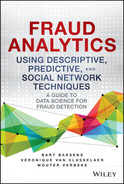
Fraud analytics using descriptive, predictive, and social network techniques
Early detection is a key factor in mitigating fraud damage, but it involves more specialized techniques than detecting fraud at the more advanced stages. This invaluable guide details both the theory and technical aspects of these techniques, and provides expert insight into streamlining implementation. --
eBook

Complexities in defining and investigating financial crime
Despite being globally recognised as highly damaging, financial crime lacks a unified definition and often presents an investigative challenge, leading to limited success in prosecutions. One contributing factor is its perceived connection to white-collar crime and the (in) formal power of its perpetrators. To examine whether these connections have empirical backing and to explore the underlying reasons for the complexity of financial crime investigations, 18 interviews were conducted with financial crime experts in Slovenia. The findings confirm that perpetrators of financial crime rely on elite personal and professional networks to conduct questionable financial behaviours. Additionally, the modus operandi of financial crimes is highly global, dynamic, and complex, requiring specialised investigative skills and access to data from multiple sources.
Journal Article

Impact of COVID-19 on financial institutions: navigating the global emerging patterns of financial crime
Purpose
The current COVID-19 pandemic has already proven to be one of the world’s deadliest crises in modern history with far-reaching impacts on different sectors of the global economy. The financial sector is among the most widely affected by the economic crisis occasioned by the COVID-19 pandemic. One of the most notable effects is related to financial crime. It is against this backdrop that the present study aimed to examine the impact of COVID-19 on financial institutions with the main focus being on financial crime
Design/methodology/approach
Its twofold objectives were to critically examine the global emerging patterns of financial crime and their association with the COVID-19 pandemic; and to investigate how financial institutions across the world have been responding to, managing, and dealing with the emerging patterns of financial crime brought about by (or linked to) the COVID-19 pandemic.
Findings
It was found out that as the pandemic ravages the world and pushes people and businesses to the very limits of their endurance, many financial sector stakeholders and players are responding in ways that put the entire financial sector and all its stakeholders at great risk. Specifically, COVID-19 pandemic has led to the emergence of new patterns of financial crime that were either unheard of or were not as rampant in the past.
Originality/value
Both the descriptive and correlation analyses produced by this study provide new insights into the impact of COVID-19 on financial institutions with a main focus on financial crime.
Journal Article
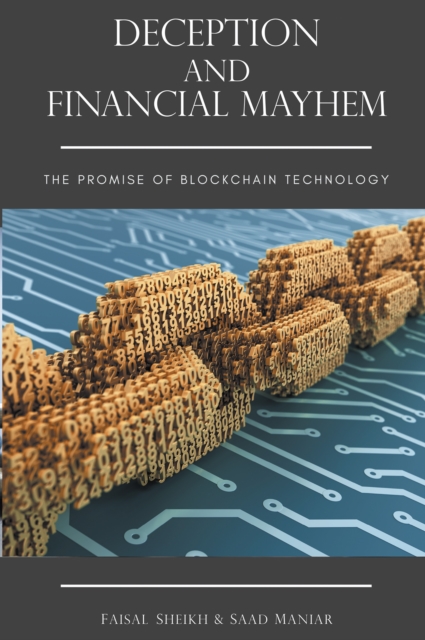
Deception and Financial Mayhem
Deception and Financial Mayhem explores whether the corporate psychopath accountant can be identified, modeled, and ultimately constrained.This book extensively discusses accounting fraud, including recent accounting scandals, and its relationship with Corporate Governance.
eBook

RECENT TRENDS IN THE FINANCIAL CRIME OF THE WORLD
The paper emphasizes that the digitalization of the modern world, the development of information technology, the spread of the Internet, computer networks, and the use of cyberspace have facilitated the daily life of society. However, these factors have entailed a threat to the security and confidentiality of information, personal data, and the financial system. The authors state that financial fraud is becoming an increasingly severe global problem since criminals use the financial ecosystem for money laundering and illegal financial transactions. The study's primary purpose is to identify the latest trends in the financial crime of the world. The methodological tools of the research consisted of theoretical research methods (grouping, abstraction), empirical research methods (observation, description), and the resource base of the information platform, bibliometric analysis, and modeling. The following scientific categories were chosen as the objects of study: regulatory and legal aspects of financial crimes, online crimes and cybercrimes, methods and systems of regulation, control, prevention, counteraction, combating financial crime, and modeling of financial crime processes. The paper analyzes the literature sources regarding the shift of the interest of modern financial market scientists to the study of the features of financial crime. The relevance of identifying the latest trends in financial crime lies in the fact that the study of financial crime trends will allow the improving of the awareness of financial fraud, creating common databases, building coalitions, and identifying effective and efficient ways to improve the ability to combat financial crime at a more effective national and global level. At the initial stage of the work, a bibliometric analysis of scientific publications dedicated to the study of the latest trends in financial crime was carried out. As a result, literary works for the study of the specified issue were systematized; a map of relationships between key terms and other scientific concepts was created; a content-contextual and intercluster analysis of the obtained blocks of bibliometric analysis was carried out; a map of the relationships of the studied key concepts with other scientific categories in dynamics was constructed and the contextual-time block was analyzed. The research in this paper is carried out in three parts, which provide for the definition of several research vectors. As a result of research - the authors discuss potential sources and tools of financial fraud with their negative, harmful aspects for identification, in-depth consideration, and study; they identify tools for countering financial crimes; practical models for evaluating, analyzing, identifying, comparing, and visualizing the features of financial crime are described. The conclusion of the study assumes that the results of the study can be practically applied by financial organizations, institutions, and business entities for the future safe functioning of the financial sector but taking into account the need for constant development of IT support for financial transactions as a response to the rapidly changing needs of our time.
Journal Article
Ethics, Governance and Corporate Crime: Challenges and Consequences
The public downfall of giant companies and an increase in corporate scandals and corporate crimes worldwide has drawn the attention of many in the business world. Growing economic activities that focus on increasing profits at the expense of social and environmental matters have led to self-centred, narrow-focused business planning and decisions. At a time of increasing globalisation and inter-connected economic systems, such a phenomenon is a concern for business practitioners in every country in the world. Consequently, shareholders and other stakeholders have encouraged firms to place issues of accountability at the centre of their activities, recognising the vital importance of an ethical firm culture, transparent governance issues and the adoption of more socially responsible business practices. This book is comprised of academic work on key current issues pertaining to the areas of ethics, governance and corporate crimes. Showcasing some of the current effort being made in addressing these crucial issues, the book provides a platform for researchers to publish their work, articulate their concerns and offer critical perspectives on what they see happening around them.
eBook
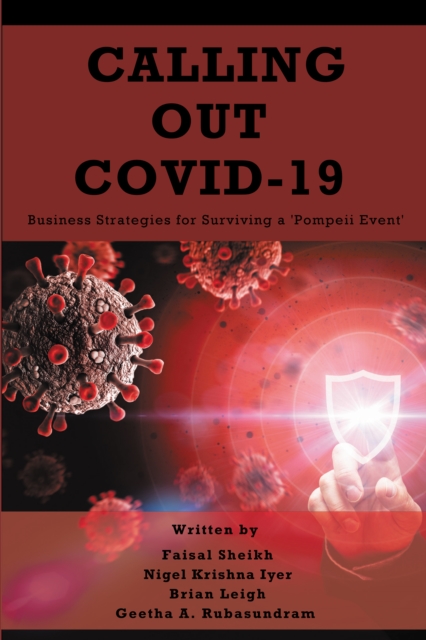
Calling Out COVID-19
This book is written for business owners, entrepreneurs, leadership, or management teams in public or third sector and professionals who are currently dealing with the COVID-19 epidemic. We are currently experiencing the second wave of an unprecedented global pandemic–the COVID-19 crisis, which is destroying established industries such as tourism and attributing to the death of millions of people worldwide. The authors believe that the pandemic is analogous to the ancient Roman tragedy of Pompeii when the citadel was buried under four to six meters (13 to 20 feet) of volcanic ash and pumice in the eruption of Mount Vesuvius in AD 79. This book is written for business owners, entrepreneurs, leadership, or management teams in public or third sector and professionals who are currently dealing with the COVID-19 epidemic. It offers tools and techniques located in the economics of innovation, other frameworks such as the Fraud Triangle, and the authors extensive experience including rigorous cash management, practical fraud prevention, and detection and advice on implementing and refining corporate governance structures. The book will also be of interest to postgraduate including MBA students and business researchers. The book concludes by summarizing the key theories that can be used to understand the impact of this Pompeii Event and pragmatic solutions to fight COVID-19. The authors argue that organizations rooted in foresight will survive and emerge as future trail blazers. An extensive appendix is also included which outlines the implications for financial reporting.
eBook
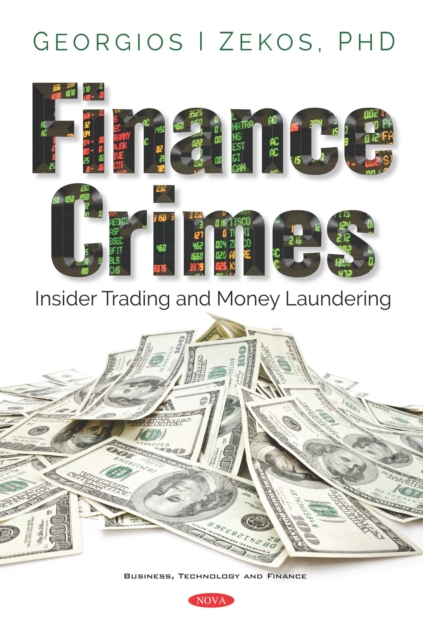
Finance crimes
The globalisation of trade in goods and services has opened up new and more and more vast markets and so financial markets have triggered sharp growth in investment portfolios and large movements of short-term capital, with borrowers and investors interacting through a more and more unified market. Cyberspace is a global network of computers linked by high-speed data lines and wireless systems and so cyberspace can strengthen national and global governance. Financial crimes are types of economic crimes which implicate using instruments and institutions of the financial market for getting financial profits at the expense of other market actors. Insider trading is basically when a corporate insider or another party in possession of proprietary non-public information trades upon it. The insider trading policy is an aspect of a company's internal governance making certain corporate transparency is preserved upholding investor confidence. Insider trading is far from generic propagated through various means and brought about by various market participants. Money laundering is the course whereby criminals mask the true origin and ownership of the earnings of their criminal activities permitting them to keep control over these profits and, in due course, to stipulate a legitimate cover for their source of income and the financing of their criminal actions. Crypto-currencies have been portrayed as an instrument making possible illegal activity, as they advance a setting for individuals to create, transfer, launder and steal unlawful funds with anonymity. Terrorism produces governments to be more vigilant with private financial transactions to avert funding of terrorist activities from abroad. Financial crimes contribute to terrorist financing.
eBook