
Catalogue Search | MBRL


Are you sure you want to remove the book from the shelf?

{{itemTitle}}
64,814
result(s) for
"FISH SPECIES"
Sort by:

Export volume trends and the conservation status of commonly targeted ornamental fishes from Malawi
The export of ornamental fishes from Malawi has received limited attention regarding its sustainability or the conservation status of any threatened species involved in this trade. To identify any species that require specific management actions, we used a negative binomial regression model to examine the relationship between the number of exported fish and year of export, adjusted for fish prices and the number of fish exporters. We also examined the correlation between export volume trends and the conservation status of fish species. We identified three groups of fish species based on their export volume trends: species with no trends, with decreasing trends and with increasing trends. There was no significant correlation between export volume trends and the conservation status of fish species. The export volume trends of individual species appear to be related to the number of exporters, price and, potentially, anthropogenic factors affecting fish populations. Based on our findings we recommend the inclusion of ornamental fishery management issues in a revised Fisheries and Aquaculture Policy. This should include strategies to control overexploitation of species with declining export volume trends, and conservation of threatened species and a ban on their export. We recommend further research to establish the population status of the exploited fish species and to identify any other factors linked to the volume trends of ornamental fish exports.
Journal Article

Changes in the Proportion of Fish Species Caught by Artisanal Fishers in the Croatian Section of the Sava River
The number of artisanal fishers, and consequently their catch, in the Sava River has declined significantly over the past two decades. The average weight of some species has also changed significantly. Therefore, the aim of this paper is to investigate possible changes in the biomass proportion in the catch of the most important taxa during this period. Most of the investigated species showed considerable variation in catch from year to year, but without a clear trend (P > 0.05). The largest fluctuations, with a coefficient of variation (CV) over 90%, were found in Acipenser ruthenus, Cyprinus carpio, Leuciscus aspius and allochthonous species. Esox lucius, Leuciscus idus, Silurus glanis and Sander lucioperca had CVs between 41% and 73%. The smallest variations in the proportion of catch were recorded for Abramis brama and other autochthonous species (the most abundant being Rutilus virgo), with CVs of 37.77% and 33.43%, respectively. These two taxa also showed significant opposite trends (R² = 0.34; P < 0.01) and had a combined average biomass proportion of 67.03%.
Journal Article

Landscape‐scale determinants of native and non‐native Great Plains fish distributions
AIM: Landscape‐scale factors may have differential effects on the distribution of native and non‐native fishes and may help explain invasion success and species declines. LOCATION: Great Plains, Wyoming, USA METHODS: We used hierarchical Bayesian mixture models and constrained ordination techniques to evaluate associations between landscape‐scale factors on native and non‐native fish species richness, reproductive guilds and individual species distributions. RESULTS: Predicted responses between landscape‐scale factors and native and non‐native fish species richness were similar, except non‐native fish species richness that was positively associated with density of oil and gas wells. Non‐native fish species richness was also positively associated with native fish species richness. Spawning guild composition differed between native and non‐native fishes. Canonical correspondence analysis revealed that the most abundant non‐native and only a few native species were positively associated with oil and gas wells. MAIN CONCLUSIONS: The similar relationships between native and non‐native fish species richness are likely evidence that they share similar ecological rules, which supports that non‐native species become naturalized and they may be affected by the same environmental factors that determine distribution of native species.
Journal Article

FishRNFuseNET: development of heuristic-derived recurrent neural network with feature fusion strategy for fish species classification
The classification of fish species has become an essential task for marine ecologists and biologists for the estimation of large quantities of fish variants in their own environment and also to supervise their population changes. Different conventional classification is expensive, time-consuming, and laborious. Scattering and absorption of light in deep sea atmosphere achieves a very low-resolution image and becomes highly challenging for the recognition and classification of fish variants. Then, the performance rate of existing computer vision methods starts to reduce underwater because of highly indistinct features and background clutter of marine species. The attained classification issues can be resolved using deep structured models, which are highly recommended to enhance the performance rate in fish species classification. But, only a limited amount of fish datasets is available, which makes the system more complex, and also, they need enormous amounts of datasets to perform training. So, it is essential to develop an automated and optimized system to detect, categorize, track, and minimize manual interference in fish species classification. Thus, this paper aims to suggest a new fish species classification model by the optimized recurrent neural network (RNN) and feature fusion. Initially, standard underwater images are acquired from a standard database. Then, the gathered images are pre-processed for cleaning and enhancing the quality of images using “contrast limited adaptive histogram equalization (CLAHE) and histogram equalization”. Then, the deep feature extractions are obtained using DenseNet, MobileNet, ResNet, and VGG16, where the gathered features are given to the new phase optimal feature selection. They are performed with a new heuristic algorithm called “modified mating probability-based water strider algorithm (MMP-WSA)” that attains the optimal features. Further, the optimally selected features are further fed to the feature fusion process, where the feature fusion is carried out using the adaptive fusion concept. Here, the weights are tuned using the designed MMP-WSA. In addition, the fused features are sent to the classification phase, where the classification is performed using developed FishRNFuseNET, in which the parameters of the RNN are tuned by developed MMP-WSA for getting accurate classified outcomes. The proposed method is an effective substitute for time-consuming and strenuous approaches in human identification by professionals, and it turned as a benefit to monitor the biodiversity of fish in their place.
Journal Article

A comprehensive review of the biodiversity of freshwater fish species in Valleys worldwide and in the Kingdom of Saudi Arabia
An overview of freshwater fish variety worldwide and the variables influencing trends in variation between and within river basins are given in this review. Continental freshwater ecosystems are highly diverse and species-rich, housing nearly 18,000 species of fish (>50% of all fish species) in <0.5% of the total land area and providing a negligible (<0.01%) share of the planet’s water supply. Large lowland tropical river basins such as the Amazon, Congo, and Mekong basins are home to the greatest freshwater fish diversity. Freshwater species of fish depth variation at the global mag¬nitude is correlated with the total amount and variation of aquatic habitats and the environment’s equilibrium overtime during the evolution of scales. The river continuum concept states that there is a predictable shift in fish species depth, diversity of species, and functional characteristics along gradients of environment from headwater to estuary. The ongoing trade of minerals and organic matter related to nearby floodplains is a strong factor in the number and variety of riverine fishes in most parts of the world (the flood pulse concept). Without coordinated conservation efforts, freshwater fishes will suffer significant losses in abundance and diversity due to the numerous threats they currently face worldwide. However, further development, adaptation, training, and guidance are needed. New technologies based on water conservation, suitable species, and local traditions are needed. Waste materials and local feed additives can also be used. Farmers should be provided with the necessary training and information.
Journal Article

A Review of Current Knowledge on Parasites of Non-Indigenous Fish Species in the Inland Waters of Turkey
The parasite fauna of alien fish species living in the new habitats has rarely been investigated and there is still poor information about this topic.
This research not only provides a thorough list of parasite taxa found in non-indigenous fish species in Turkey, but it highlights the risk of infection for both native and alien ichthyofauna.
With respect of native range, exotic fishes imported into Turkey have been found to be hosts for parasities from Eurasian, Asian, and North American origins, respectively.
Journal Article

Importance of Minerals and Their Bioavailability in Boosting Aquaculture: A Systematic Review
Fish like other terrestrial animals, have specific requirements for individual minerals that support the growth and maintenance of normal fish health and other biological functions among different cultured fish species. These minerals can be either macro or micro minerals that are supplied to the fish body through diets or absorbed from their surrounding environment via skins, gills or alimentary tract. However, the bioavailability of these minerals to the fish body is influenced by several factors, including the intake level of the nutrient, interactions with other minerals or nutrients and cultured fish species. To enhance effective bioavailability to the farmed fish, sustainable, healthy and well‐mineral‐balanced diets must be adopted to achieve better fish growth performance, and a high survival rate for high production and productivity while ensuring the resilience of the cultured environment. In this review, the quantitative mineral composition of different mineral sources was reviewed and reported. In addition, mineral requirements in several cultured fish both freshwater and marine water fish species for five macro minerals (calcium, phosphorus, sodium, potassium and magnesium) and seven micro minerals (zinc, iron, copper, manganese, iodine, chromium and selenium) were compiled and reported. Nile tilapia is dominating freshwater cultured species in Tanzania, followed by catfish and rainbow trout, while milkfish is dominating cultured marine species practiced along the coastline from the Northern Tanga region to the Southern Mtwara region. Moreover, this review also covers information on the relationship between minerals and farmed fish, the mechanism of mineral absorption in fish and implications associated with bioavailability of minerals in both aquatic animal body and their surrounding environment, as well as mineral research in future perspectives in the aquaculture industry development. Therefore, the review comprises all this information on the importance of minerals and their bioavailability in farmed fish for sustainable aquaculture production and productivity.
Journal Article

A Rapid Method for the Identification of Fresh and Processed Pagellus erythrinus Species against Frauds
The commercialization of porgies or seabreams of the family Sparidae has greatly increased in the last decade, and some valuable species have become subject to seafood substitution. DNA regions currently used for fish species identification in fresh and processed products belong to the mitochondrial (mt) genes cytochrome b (Cytb), cytochrome c oxidase I (COI), 16S and 12S. However, these markers amplify for fragments with lower divergence within and between some species, failing to provide informative barcodes. We adopted comparative mitogenomics, through the analysis of complete mtDNA sequences, as a compatible approach toward studying new barcoding markers. The intent is to develop a specific and rapid assay for the identification of the common pandora Pagellus erythrinus, a sparid species frequently subject to fraudulent replacement. The genetic diversity analysis (Hamming distance, p-genetic distance, gene-by-gene sequence variability) between 16 sparid mtDNA genomes highlighted the discriminating potential of a 291 bp NAD2 gene fragment. A pair of species-specific primers were successfully designed and tested by end-point and real-time PCR, achieving amplification only in P. erythrinus among several fish species. The use of the NAD2 barcoding marker provides a rapid presence/absence method for the identification of P. erythrinus.
Journal Article

Fish Diversity along the Mekong River and Delta Inferred by Environmental-DNA in a Period of Dam Building and Downstream Salinization
The Mekong River is one of the largest rivers in the world and hosts the second greatest fish diversity in the world after the Amazon. However, despite the importance of this diversity and its associated biomass for human food security and the economy, different anthropogenic pressures threaten the sustainability of the Mekong River and fish diversity, including the intense damming of the main river. Both the increase in salt-water penetration into the Mekong Delta and the disrupted connectivity of the river may have serious impacts on the numerous freshwater and migratory species. To evaluate the potential of an eDNA approach for monitoring fish diversity, water was sampled at 15 sites along the salinity gradient in the Mekong Delta and along 1500 km of the main stream, from Vietnam to Thailand and Laos. A total of 287 OTUs were recovered, of which 158 were identified to the species level using both reference sequences available in GenBank and references obtained locally. Agglomerative hierarchical clustering and PCA identified up to three main species assemblages in our samples. If the transition from brackish to freshwater conditions represents the main barrier between two of these assemblages, more surprisingly, the two other assemblages were observed in the freshwater Mekong, with a spatial disjunction that did not match any biogeographic ecoregion or the Khone falls, the latter thought to be an important fish dispersion barrier. Between 60% and 95% of the freshwater species were potamodromous. This pioneer eDNA study in the Mekong River at this geographical and ecological scale clearly confirmed the potential of this approach for ecological and diversity monitoring. It also demonstrated the need to rapidly build an exhaustive Mekong fish barcode library to enable more accurate species’ assignment. More eDNA surveys can now be expected to better describe the ecological niche of different species, which is crucial for any models aimed at predicting the impact of future damming of the Mekong.
Journal Article
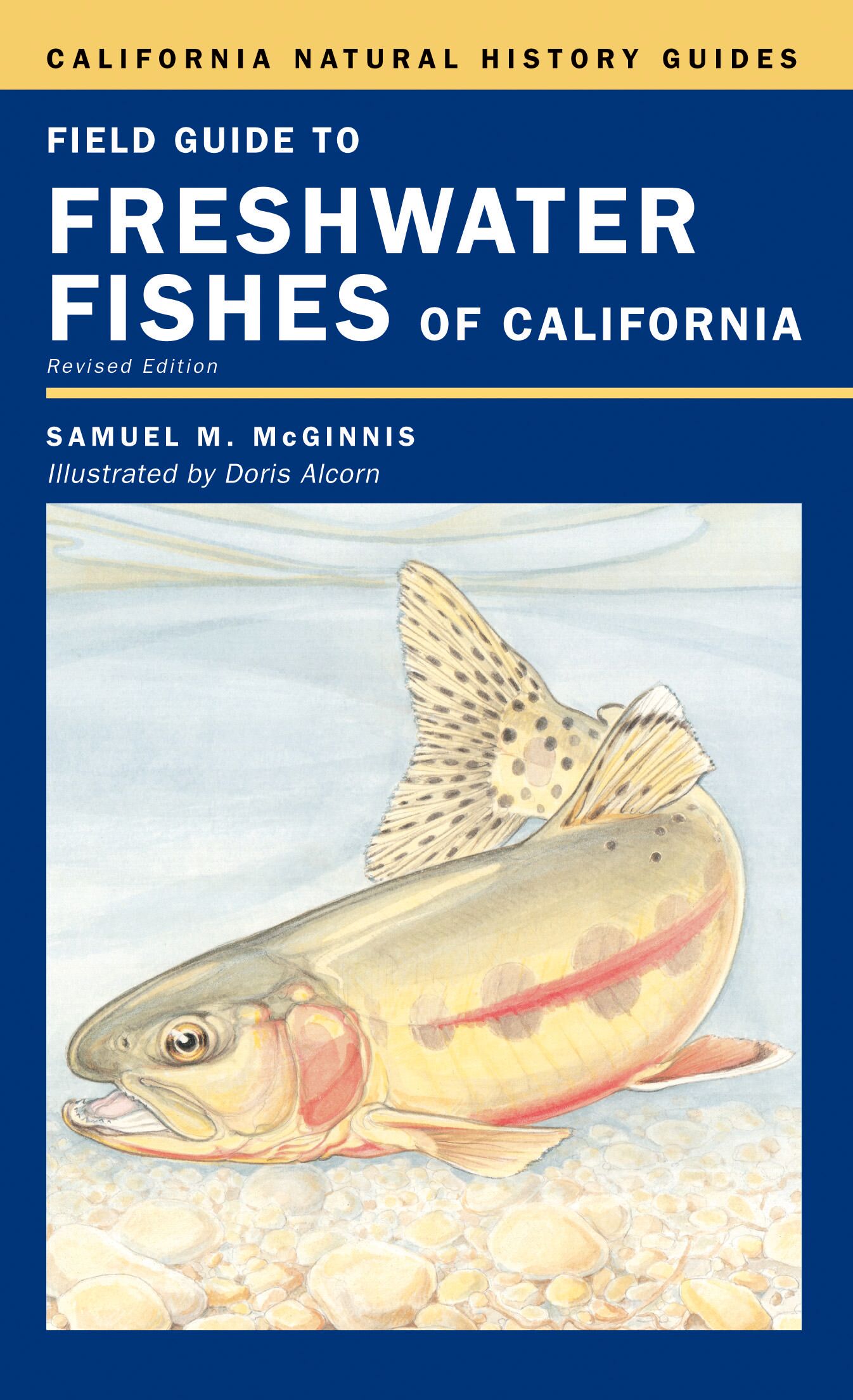
Field Guide to Freshwater Fishes of California
This popular book is the only field guide to all of California's 130 freshwater fish species, both native and introduced. Revised and updated throughout, the guide now features the only complete collection of color illustrations of California freshwater fishes available anywhere. These color illustrations, coupled with a set of highly detailed black-and-white drawings, provide a quick and easy method for identifying fish in the field. Detailed natural history accounts for each species give a wealth of information, including the current endangered or threatened status of many native species. * Includes angling tips for each sport fish species * Features an expanded section on cooking freshwater fish
eBook