
Catalogue Search | MBRL


Are you sure you want to remove the book from the shelf?

{{itemTitle}}
7,077,299
result(s) for
"FOODS"
Sort by:

Eat your vitamins : your guide to using natural foods to get the vitamins, minerals, and nutrients your body needs
\"Vitamins and minerals are the building blocks of good health. But the heavily processed foods that are so common in today's modern diet are stripped of these nutrients, leaving many people nutrient deficient despite meeting (or exceeding) their daily calorie needs. The accepted solution is to take supplements created in a lab, but the dosage and interactions can be confusing, and supplements are loosely regulated and not always foolproof, especially since our bodies are designed to receive nutrients from natural, whole foods. Eat Your Vitamins features fifty key vitamins, minerals, and other nutrients essential to your health. You will find clear definitions of each nutrient along with the role it plays in the body, how it is best consumed and absorbed, recommended daily doses, and detailed lists of foods and natural sources that contain the vitamin along with a recipe for a nutrient-rich meal. Ditch the synthetic supplements and make the right choice about how to properly feed and fuel your body\"-- Provided by publisher.
Book

Food politics
We all witness, in advertising and on supermarket shelves, the fierce competition for our food dollars. In this engrossing exposé, Marion Nestle goes behind the scenes to reveal how the competition really works and how it affects our health. The abundance of food in the United States--enough calories to meet the needs of every man, woman, and child twice over--has a downside. Our over-efficient food industry must do everything possible to persuade people to eat more--more food, more often, and in larger portions--no matter what it does to waistlines or well-being. Like manufacturing cigarettes or building weapons, making food is big business. Food companies in 2000 generated nearly
eBook

Super clean super foods
Featuring 350 easy ways to enjoy 90 nutrient-filled whole foods, Super Clean Super Foods shows you how to incorporate each one into your everyday diet, along with illustrations that teach you how to prepare unfamiliar ingredients. From quinoa and chia seeds to spinach and pomegranate, this guide uses unprocessed and minimally processed foods that avoid added sugar, salt, and unwanted fats. Explore the health properties of phytonutrients, dietary fiber, whole grains, and seasonally and locally grown fruits and vegetables that will better your body and the environment, and work toward specific goals with food plans for better sleep, gut health, brain health, and more.
Book
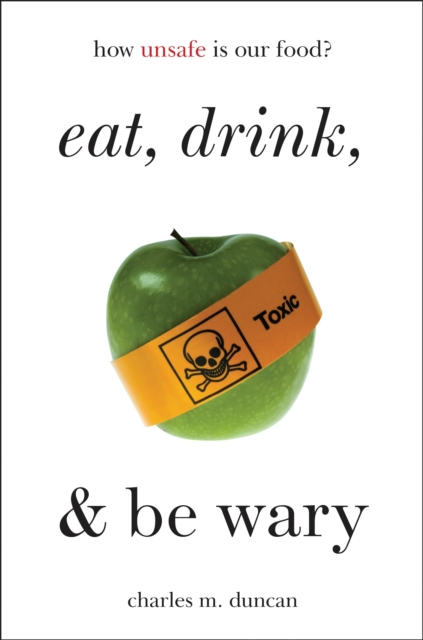
Eat, drink, and be wary
Food safety has fast become one of the nation's top issues. Three thousand people die each year in the U.S. from foodborne illnesses. Another 48 million are sickened annually and our government fails to protect us. Many foods and additives that we eat every day have been banned for years in other countries. Our government food safety agencies move in reverse--cutting back on inspections, allowing food producers to inspect themselves, and permitting the vast majority of potentially adulterated foods to enter this country without benefit of any testing or inspection. How, in a country so advanced in most areas, could we have descended to this alarming state of food safety? One answer: Budget cuts and bureaucrats. Eat, Drink, and Be Wary examines the multitude of dangers in food production, transportation, storing, and preparation that result in this shocking number of preventable illnesses and deaths. It takes a broad and detailed look, in all food groups, at the problems and potential solutions in food safety practices, inspections, and enforcements. This book answers the questions and concerns of millions of Americans who have reached new levels of serious doubts about the safety of our food. Charles Duncan points readers to the dangers to look for in deli foods, raw milk, seafood, poultry, eggs, beef, and others. For consumers who care about the food they eat, this book details the dangers, offers direction for choosing safe foods, and provides a critique of our current system that suggests ways it can be fixed, or at least improved.
eBook


Handbook of Food Powders - Processes and Properties
Many food ingredients are supplied in powdered form, as reducing water content increases shelf life and aids ease of storage, handling and transport. Powder technology is therefore of great importance to the food industry. This book explores a variety of processes that are involved in the production of food powders, the further processing of these powders and their functional properties. Part one introduces processing and handling technologies for food powders and includes chapters on spray, freeze and drum drying, powder mixing in the production of food powders and safety issues around food powder production processes. Part two focusses on powder properties including surface composition, rehydration and techniques to analyse the particle size of food powders. Finally, part three highlights speciality food powders and includes chapters on dairy powders, fruit and vegetable powders and coating foods with powders. This book is a standard reference for professionals in the food powder production and handling industries, development and quality control professionals in the food industry using powders in foods, and researchers, scientists and academics interested in the field.
eBook


Barons
Best Books of 2024: "Frerick's prose throughout is both direct and masterfully controlled, with every point supported by extensive references and notes. This is no alarmist screed but rather a careful, systematic, and utterly damning demolition job—an exquisitely informed exposé... A genuinely revelatory look at mass food production in the United States" — Kirkus Reviews, starred
“In this eye-opening debut study, Frerick, an agricultural policy fellow at Yale University, reveals the ill-gained stranglehold that a handful of companies have on America’s food economy…It’s a disquieting critique of private monopolization of public necessities.” - Publishers Weekly, starred
Barons is the story of seven corporate titans, their rise to power, and the consequences for everyone else. Take Mike McCloskey, Chairman of Fair Oaks Farms. In a few short decades, he went from managing a modest dairy herd to running the Disneyland of agriculture, where school children ride trams through mechanized warehouses filled with tens of thousands of cows that never see the light of day. What was the key to his success? Hard work and exceptional business savvy? Maybe. But more than anything else, Mike benefitted from deregulation of the American food industry, a phenomenon that has consolidated wealth in the hands of select tycoons, and along the way, hollowed out the nation’s rural towns and local businesses.
Along with Mike McCloskey, readers will meet a secretive German family that took over the global coffee industry in less than a decade, relying on wealth traced back to the Nazis to gobble up countless independent roasters. They will discover how a small grain business transformed itself into an empire bigger than Koch Industries, with ample help from taxpayer dollars. And they will learn that in the food business, crime really does pay—especially when you can bribe and then double-cross the president of Brazil.
These, and the other stories in this book, are simply examples of the monopolies and ubiquitous corruption that today define American food. The tycoons profiled in these pages are hardly unique: many other companies have manipulated our lax laws and failed policies for their own benefit, to the detriment of our neighborhoods, livelihoods, and our democracy itself. Barons paints a stark portrait of the consequences of corporate consolidation, but it also shows we can choose a different path. A fair, healthy, and prosperous food industry is possible—if we take back power from the barons who have robbed us of it.
eBook


The food environment in Latin America: a systematic review with a focus on environments relevant to obesity and related chronic diseases
Food environments may be contributing to the rapid increase in obesity occurring in most Latin American (LA) countries. The present study reviews literature from LA that (i) describes the food environment and policies targeting the food environment (FEP); and (ii) analytic studies that investigate associations between the FEP and dietary behaviours, overweight/obesity and obesity related chronic diseases. We focus on six dimensions of the FEP: food retail, provision, labelling, marketing, price and composition.
Systematic literature review. Three databases (Web of Science, SciELO, LILACS) were searched, from 1 January 1999 up to July 2017. Two authors independently selected the studies. A narrative synthesis was used to summarize, integrate and interpret findings.
Studies conducted in LA countries.
The search yielded 2695 articles of which eighty-four met inclusion criteria.
Most studies were descriptive and came from Brazil (61 %), followed by Mexico (18 %) and Guatemala (6 %). Studies were focused primarily on retail/provision (n 27), marketing (n 16) and labelling (n 15). Consistent associations between availability of fruit and vegetable markets and higher consumption of fruits and vegetables were found in cross-sectional studies. Health claims in food packaging were prevalent and mostly misleading. There was widespread use of marketing strategies for unhealthy foods aimed at children. Food prices were lower for processed relative to fresh foods. Some studies documented high sodium in industrially processed foods.
Gaps in knowledge remain regarding policy evaluations, longitudinal food retail studies, impacts of food price on diet and effects of digital marketing on diet/health.
Journal Article