
Catalogue Search | MBRL


Are you sure you want to remove the book from the shelf?

{{itemTitle}}
1,364,374
result(s) for
"FUELS"
Sort by:

Fossil fuels
\"Explains what fossil fuels are, how they are extracted and used, and the problems they cause. It also discusses the steps people can take to limit the negative effects of fossil fuels and to move toward renewable forms of energy\"--P. [4] of cover.
Book

PEM Fuel Cell Modeling and Simulation Using MATLAB
Although, the basic concept of a fuel cell is quite simple, creating new designs and optimizing their performance takes serious work and a mastery of several technical areas. PEM Fuel Cell Modeling and Simulation Using Matlab, provides design engineers and researchers with a valuable tool for understanding and overcoming barriers to designing and building the next generation of PEM Fuel Cells. With this book, engineers can test components and verify designs in the development phase, saving both time and money. Easy to read and understand, this book provides design and modelling tips for fuel cell components such as: modelling proton exchange structure, catalyst layers, gas diffusion, fuel distribution structures, fuel cell stacks and fuel cell plant. This book includes design advice and MATLAB and FEMLAB codes for Fuel Cell types such as: polymer electrolyte, direct methanol and solid oxide fuel cells. This book also includes types for one, two and three dimensional modeling and two-phase flow phenomena and microfluidics.
eBook


An Overview of Major Synthetic Fuels
Artificial fuels have been researched for more than a decade now in an attempt to find alternative sources of energy. With global climatic conditions rapidly approaching the end of their safe line, an emphasis on escalating the change has been seen in recent times. Synthetic fuels are a diverse group of compounds that can be used as replacements for traditional fuels, such as gasoline and diesel. This paper provides a comprehensive review of synthetic fuels, with a focus on their classification and production processes. The article begins with an in-depth introduction, followed by virtually classifying the major synthetic fuels that are currently produced on an industrial scale. The article further discusses their feedstocks and production processes, along with detailed equations and diagrams to help readers understand the basic science behind synthetic fuels. The environmental impact of these fuels is also explored, along with their respective key players in the industry. By highlighting the benefits and drawbacks of synthetic fuels, this study also aims to facilitate an informed discussion about the future of energy and the role that synthetic fuels may play in reducing our reliance on fossil fuels.
Journal Article
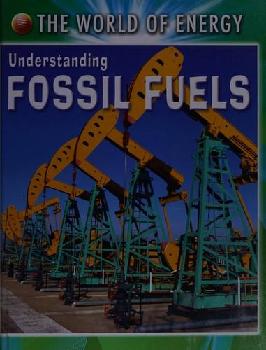
Understanding fossil fuels
\"...readers will discover how fossil fuels were formed, how they are extracted, and they are used in everyday life.\"--P. [4] of cover.
Book
Techno-economic and resource analysis of hydroprocessed renewable jet fuel
Background:Biomass‑derived jet fuel is an alternative jet fuel (AJF) showing promise of reducing the dependence on fossil fuel and greenhouse gas emissions. Hydroprocessed esters and fatty acids (HEFA) concept is also known as one of the pathways for producing bio jet fuel. HEFA fuel was approved by the American Society for Testing and Materials in 2011, and can be blended up to 50% with conventional jet fuel. Since then, several HEFA economic and life‑cycle assessments have been published in literature. However, there have been limited analyses on feedstock availability,composition, and their impact on hydrocarbon yield (particularly jet blendstock yield) and overall process economics.Results:This study examines over 20 oil feedstocks, their geographic distribution and production levels, oil yield, prices, and chemical composition. The results of our compositional analysis indicate that most oils contain mainly C16 and C18 fatty acids except pennycress, yellow grease, and mustard, which contain higher values and thus would require hydrocracking to improve jet fuel production. Coconut oil has a large content of shorter carbon fatty acids, making it a good feedstock candidate for renewable gasoline instead of jet substitutes’ production. Techno‑economic analysis (TEA) was performed for five selected oil feedstocks—camelina, pennycress, jatropha, castor bean, and yellow grease—using the HEFA process concept.Conclusion:The resource analysis indicates that oil crops currently grown in the United States (namely soybean) have relatively low oil yield when compared to oil crops grown in other parts of the world, such as palm, coconut, and jatropha. Also, non‑terrestrial oil sources, such as animal fats and greases, have relatively lower prices than terrestrial oil crops. The minimum jet fuel selling price for these five resources ranges between$3.8 and $ 11.0 per gallon. The results of our TEA and resource studies indicate the key cost drivers for a biorefinery converting oil to jet hydrocarbons are as follows: oil price, conversion plant capacity, fatty acid profile, addition of hydrocracker, and type of hydroprocessing catalysts.
Journal Article

Burning up : a global history of fossil fuel consumption
Coal, gas and oil have powered our societies for hundreds of years. But the pace at which we use them changed dramatically in the 20th century: of all the fossil fuels ever consumed, more than half were burnt up in the past 50 years alone, the vast majority of that within a single generation. Most worrying of all, this dramatic acceleration has occurred against the backdrop of an increasingly unanimous scientific consensus: that their environmental impact is devastating and potentially irreversible. In 'Burning Up', Simon Pirani recounts the history of the relentless rise of fossil fuels in the past half century, and lays out the ways in which the expansion of the global capitalist economy has driven it forward.
Book
Life-cycle analysis of greenhouse gas emissions from renewable jet fuel production
Background The introduction of renewable jet fuel (RJF) is considered an important emission mitigation measure for the aviation industry. This study compares the well-to-wake (WtWa) greenhouse gas (GHG) emission performance of multiple RJF conversion pathways and explores the impact of different co-product allocation methods. The insights obtained in this study are of particular importance if RJF is included as an emission mitigation instrument in the global Carbon Offsetting and Reduction Scheme for International Aviation (CORSIA). Results Fischer-Tropsch pathways yield the highest GHG emission reduction compared to fossil jet fuel (86-104%) of the pathways in scope, followed by Hydrothermal Liquefaction (77-80%) and sugarcane- (71-75%) and corn stover-based Alcohol-to-Jet (60-75%). Feedstock cultivation, hydrogen and conversion inputs were shown to be major contributors to the overall WtWa GHG emission performance. The choice of allocation method mainly affects pathways yielding high shares of co-products or producing co-products which effectively displace carbon intensive products (e.g., electricity). Conclusions Renewable jet fuel can contribute to significant reduction of aviation-related GHG emissions, provided the right feedstock and conversion technology are used. The GHG emission performance of RJF may be further improved by using sustainable hydrogen sources or applying carbon capture and storage. Based on the character and impact of different co-product allocation methods, we recommend using energy and economic allocation (for non-energy co-products) at a global level, as it leverages the universal character of energy allocation while adequately valuing non-energy co-products.
Journal Article

A new approach to the nuclear fuel cycle : best practices for security, nonproliferation, and sustainable nuclear energy
\"In the past decade, a resurgence of enthusiasm for nuclear power has rekindled interest in efforts to manage the fuel cycle. The 2011 accident at the Fukushima Daiichi nuclear power plants in Japan and current proliferation crises in North Korea and Iran raise this question: Is the current approach on the fuel cycle -- leaving uranium enrichment and spent fuel reprocessing capabilities in the hands of national governments -- too risky on proliferation grounds? In early 2011, the Nuclear Threat Initiative and the Center for Strategic and International Studies launched the New Approaches to the Fuel Cycle (NAFC) project. This project, led by Corey Hinderstein and Sharon Squassoni, sought to build consensus on common goals,address practical challenges, and engage a spectrum of actors who influence nuclear energy policymaking. Drawing from industry, government, and NGO community expertise in the United States and abroad, the NAFC project worked to outline a vision for an integrated approach to nuclear supply and demand. The result, presented in this report, is the first comprehensive approach that contains guidelines for shaping a sustainable nuclear supply system and leverages existing trends in nuclear industry, with 'best practices' to help implement that sustainable system\"--Publisher's web site.
Book
Review of Fuel-Cell Electric Vehicles
This paper presents an overview of the status and future prospects of fuel-cell electric vehicles (FC-EVs). As global concerns about emissions escalate, FC-EVs have emerged as a promising substitute for traditional internal combustion engine vehicles. This paper discusses the fundamentals of fuel-cell technology considering the major types of fuel cells that have been researched and delves into the most suitable fuel cells for FC-EV applications, including comparisons with mainstream vehicle technologies. The present state of FC-EVs, ongoing research, and the challenges and opportunities that need to be accounted for are discussed. Furthermore, the comparison between promising proton-exchange membrane fuel cell (PEMFC) and solid oxide fuel cell (SOFC) technologies used in EVs provides valuable insights into their respective strengths and challenges. By synthesizing these aspects, the paper aims to provide a comprehensive understanding and facilitate decision-making for future advancements in sustainable FC-EV transportation, thereby contributing to the realization of a cleaner, greener, and more environmentally friendly future.
Journal Article