
Catalogue Search | MBRL


Are you sure you want to remove the book from the shelf?

{{itemTitle}}
13,708
result(s) for
"Failure (Psychology)"
Sort by:


Symptom prevalence in patients with advanced heart failure and its association with quality of life and activities of daily living
Background
Quality of life (QOL) and functional status are two key outcomes for patients with advanced heart failure (HF). We examined the association of eleven symptoms with QOL and functional status impairment in patients with advanced HF.
Methods and results
This was a retrospective analysis of baseline data from a multi-center, cluster-randomized controlled trial (NCT01459744) which enrolled patients with an implanted cardioverter-defibrillator and advanced HF at high-risk for mortality. Study instruments included the Condensed Memorial Symptom Assessment Scale, the Kansas City Cardiomyopathy Questionnaire QOL subscale, and the number of activities of daily living (ADL) patients had difficulties with. The study included 413 subjects. In generalized linear models which were adjusted for baseline characteristics, the total number of symptoms was significantly associated with worse QOL, as was the presence of each individual symptom, except constipation. Lack of energy demonstrated the strongest negative association with QOL. Similarly, the total number of symptoms was associated with a higher number of ADL difficulties (i.e., worse functional status). The presence of pain, lack of energy and drowsiness was individually associated with more ADL difficulties.
Conclusion
Among patients with advanced HF, a higher number of symptoms and specific individual symptoms were associated with worse QOL and functional status.
Lay summary
People living with advanced heart failure typically experience shortness of breath and leg swelling. We found that many of them also experience additional unpleasant symptoms e.g., lack of energy, difficulty sleeping and dry mouth.
The more symptoms patients with heart failure experience, the worse is their quality of life and the more help they need with their daily activities (e.g. bathing, dressing, toileting).
Some symptoms seem to be more harmful than others. The symptoms which had a negative effect on both quality of life and daily activities were lack of energy, pain and drowsiness.
Journal Article

Living on after failure : affective structures of modern life
\"Living On After Failure traces the affective structure of failure as a continual mode of being, rather than something to overcome. Resisting the temptation to offer a recuperative philosophy or progress narrative, Irving Goh instead engages with the ontological condition of failure as a process of thought on the individual scale and as a social zeitgeist. Through reading works by contemporary writers like Ottessa Moshfegh, Eve Sedgwick, Rachel Cusk, Édouard Levé's, Yiyun Li, and Kate Zambreno, readers are guided through stages of reckoning with failure as an immersive impasse: flopping, drifting itself, a dark care of the self, melodrama, and post-scripting. Through these readings, Goh seeks a methodology to disturb the failure/success binary narrative that too-often structures \"failure studies.\" In doing so, he articulates new ways of living alongside the deeply personal nature of failure without seeking to push it away\"-- Provided by publisher.
BOOK

Influence of depression trajectories in heart failure patients with preserved ejection fractions: a secondary analysis of adverse outcomes in the TOPCAT trial
BackgroundLong-term patterns of depressive symptoms among patients with heart failure, specifically those with a preserved ejection fraction (HFpEF), and their relationship with prognoses are not well studied.MethodsThis analysis included 609 participants from the TOPCAT (Treatment of Preserved Cardiac Function Heart Failure with an Aldosterone Antagonist) trial. Depressive symptoms were assessed using the Patient Health Questionnaire-9 (PHQ-9) at baseline and at 1-year, 2-year and 3-year intervals. Individual trajectory patterns based on PHQ-9 scores during the first 3 years were identified using latent class trajectory models, and their associations with clinical outcomes were evaluated using Cox regression models.ResultsAmong the 609 participants, 316 (51.9%) were female, with a median age of 74 years (IQR: 66, 80). Four distinct depression trajectory patterns were identified: low (consistently low scores; 349, 57.3%), mild (sustained mild elevation; 110, 18.1%), high (sustained moderate–severe elevation; 52, 8.5%) and recurrent deterioration (high baseline scores, remission, then escalation; 98, 16.1%). According to the multivariate Cox model, recurrent deterioration was associated with a significantly greater risk of all-cause mortality (HR: 2.05; 95% CI 1.16, 3.64) than the low trajectory pattern. No significant differences were found among the low, mild and high trajectory groups.ConclusionsFour distinct depression trajectory patterns were identified among patients with HFpEF. Notably, patients who experienced a recurrent deterioration trajectory presented a significantly increased risk of all-cause mortality. Our findings highlight the importance of monitoring patients’ depressive symptoms over time rather than focusing on a single timepoint.Trial registration numberNCT00094302.
Journal Article

Sometimes you win, sometimes you learn for teens : how to turn a loss into a win
\"Any setback--a championship loss, a bad grade, a botched audition-can be seen as a step forward when teens possess the right tools to turn that loss into a gain of knowledge. Drawing on nearly fifty years of leadership experience, Dr. Maxwell provides a roadmap for becoming a true learner, someone who wins in the face of problems, failures, and losses.\"--Provided by publisher.
Book

Relationship Between Literacy, Knowledge, Self-Care Behaviors, and Heart Failure-Related Quality of Life Among Patients With Heart Failure
ABSTRACT
BACKGROUND
We sought to examine the relationship between literacy and heart failure-related quality of life (HFQOL), and to explore whether literacy-related differences in knowledge, self-efficacy and/or self-care behavior explained the relationship.
METHODS
We recruited patients with symptomatic heart failure (HF) from four academic medical centers. Patients completed the short version of the Test of Functional Health Literacy in Adults (TOFHLA) and questions on HF-related knowledge, HF-related self-efficacy, and self-care behaviors. We assessed HFQOL with the Heart Failure Symptom Scale (HFSS) (range 0–100), with higher scores denoting better quality of life. We used bivariate (t-tests and chi-square) and multivariate linear regression analyses to estimate the associations between literacy and HF knowledge, self-efficacy, self-care behaviors, and HFQOL, controlling for demographic characteristics. Structural equation modeling was conducted to assess whether general HF knowledge, salt knowledge, self-care behaviors, and self-efficacy mediated the relationship between literacy and HFQOL.
RESULTS
We enrolled 605 patients with mean age of 60.7 years; 52% were male; 38% were African-American and 16% Latino; 26% had less than a high school education; and 67% had annual incomes under $25,000. Overall, 37% had low literacy (marginal or inadequate on TOFHLA). Patients with adequate literacy had higher general HF knowledge than those with low literacy (mean 6.6 vs. 5.5, adjusted difference 0.63, p < 0.01), higher self-efficacy (5.0 vs. 4.1 ,adjusted difference 0.99, p < 0.01), and higher prevalence of key self-care behaviors (p < 0.001). Those with adequate literacy had better HFQOL scores compared to those with low literacy (63.9 vs. 55.4, adjusted difference 7.20, p < 0.01), but differences in knowledge, self-efficacy, and self-care did not mediate this difference in HFQOL.
CONCLUSION
Low literacy was associated with worse HFQOL and lower HF-related knowledge, self-efficacy, and self-care behaviors, but differences in knowledge, self-efficacy and self-care did not explain the relationship between low literacy and worse HFQOL.
Journal Article


A Mobile Health Intervention Supporting Heart Failure Patients and Their Informal Caregivers: A Randomized Comparative Effectiveness Trial
Mobile health (mHealth) interventions may improve heart failure (HF) self-care, but standard models do not address informal caregivers' needs for information about the patient's status or how the caregiver can help.
We evaluated mHealth support for caregivers of HF patients over and above the impact of a standard mHealth approach.
We identified 331 HF patients from Department of Veterans Affairs outpatient clinics. All patients identified a \"CarePartner\" outside their household. Patients randomized to \"standard mHealth\" (n=165) received 12 months of weekly interactive voice response (IVR) calls including questions about their health and self-management. Based on patients' responses, they received tailored self-management advice, and their clinical team received structured fax alerts regarding serious health concerns. Patients randomized to \"mHealth+CP\" (n=166) received an identical intervention, but with automated emails sent to their CarePartner after each IVR call, including feedback about the patient's status and suggestions for how the CarePartner could support disease care. Self-care and symptoms were measured via 6- and 12-month telephone surveys with a research associate. Self-care and symptom data also were collected through the weekly IVR assessments.
Participants were on average 67.8 years of age, 99% were male (329/331), 77% where white (255/331), and 59% were married (195/331). During 15,709 call-weeks of attempted IVR assessments, patients completed 90% of their calls with no difference in completion rates between arms. At both endpoints, composite quality of life scores were similar across arms. However, more mHealth+CP patients reported taking medications as prescribed at 6 months (8.8% more, 95% CI 1.2-16.5, P=.02) and 12 months (13.8% more, CI 3.7-23.8, P<.01), and 10.2% more mHealth+CP patients reported talking with their CarePartner at least twice per week at the 6-month follow-up (P=.048). mHealth+CP patients were less likely to report negative emotions during those interactions at both endpoints (both P<.05), were consistently more likely to report taking medications as prescribed during weekly IVR assessments, and also were less likely to report breathing problems or weight gains (all P<.05). Among patients with more depressive symptoms at enrollment, those randomized to mHealth+CP were more likely than standard mHealth patients to report excellent or very good general health during weekly IVR calls.
Compared to a relatively intensive model of IVR monitoring, self-management assistance, and clinician alerts, a model including automated feedback to an informal caregiver outside the household improved HF patients' medication adherence and caregiver communication. mHealth+CP may also decrease patients' risk of HF exacerbations related to shortness of breath and sudden weight gains. mHealth+CP may improve quality of life among patients with greater depressive symptoms. Weekly health and self-care monitoring via mHealth tools may identify intervention effects in mHealth trials that go undetected using typical, infrequent retrospective surveys.
ClinicalTrials.gov NCT00555360; https://clinicaltrials.gov/ct2/show/NCT00555360 (Archived by WebCite at http://www.webcitation.org/6Z4Tsk78B).
Journal Article
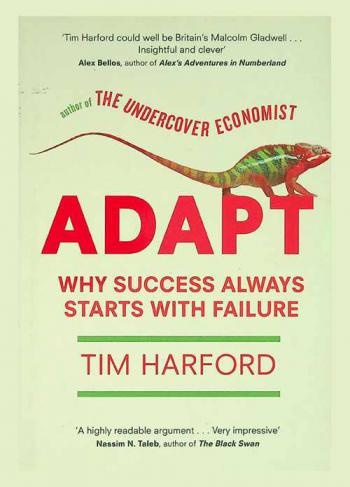
Adapt : why success always starts with failure
Outlines a counterintuitive approach to changing the world by assessing its failures, drawing on myriad disciplines to argue that complex challenges must be met through adaptive trial-and-error practices that do not depend on expert opinions or ready-made solutions.

Effects of mindfulness training programmes delivered by a self-directed mobile app and by telephone compared with an education programme for survivors of critical illness: a pilot randomised clinical trial
BackgroundPatients who are sick enough to be admitted to an intensive care unit (ICU) commonly experience symptoms of psychological distress after discharge, yet few effective therapies have been applied to meet their needs.MethodsPilot randomised clinical trial with 3-month follow-up conducted at two academic medical centres. Adult (≥18 years) ICU patients treated for cardiorespiratory failure were randomised after discharge home to 1 of 3 month-long interventions: a self-directed mobile app-based mindfulness programme; a therapist-led telephone-based mindfulness programme; or a web-based critical illness education programme.ResultsAmong 80 patients allocated to mobile mindfulness (n=31), telephone mindfulness (n=31) or education (n=18), 66 (83%) completed the study. For the primary outcomes, target benchmarks were exceeded by observed rates for all participants for feasibility (consent 74%, randomisation 91%, retention 83%), acceptability (mean Client Satisfaction Questionnaire 27.6 (SD 3.8)) and usability (mean Systems Usability Score 89.1 (SD 11.5)). For secondary outcomes, mean values (and 95% CIs) reflected clinically significant group-based changes on the Patient Health Questionnaire depression scale (mobile (−4.8 (−6.6, −2.9)), telephone (−3.9 (−5.6, −2.2)), education (−3.0 (−5.3, 0.8)); the Generalized Anxiety Disorder scale (mobile −2.1 (−3.7, −0.5), telephone −1.6 (−3.0, −0.1), education −0.6 (−2.5, 1.3)); the Post-Traumatic Stress Scale (mobile −2.6 (−6.3, 1.2), telephone −2.2 (−5.6, 1.2), education −3.5 (−8.0, 1.0)); and the Patient Health Questionnaire physical symptom scale (mobile −5.3 (−7.0, −3.7), telephone −3.7 (−5.2, 2.2), education −4.8 (−6.8, 2.7)).ConclusionsAmong ICU patients, a mobile mindfulness app initiated after hospital discharge demonstrated evidence of feasibility, acceptability and usability and had a similar impact on psychological distress and physical symptoms as a therapist-led programme. A larger trial is warranted to formally test the efficacy of this approach.Trial registration numberResults, NCT02701361.
Journal Article