
Catalogue Search | MBRL


Are you sure you want to remove the book from the shelf?

{{itemTitle}}
49,982
result(s) for
"Fairy tale"
Sort by:

Rapunzel and the Prince of Pop
\"In this classic fairy tale, retold with a twist, the Prince of Pop is driving through the forest when he hears a stunning voice singing. It's Rapunzel! The only problem is she is locked in a tower by a witch. Can he free her and make Rapunzel into his next big pop star?
Book
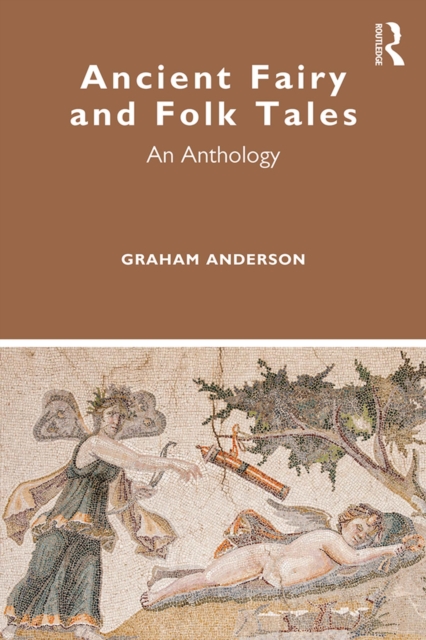
Ancient Fairy and Folk Tales
This anthology explores the multitude of evidence for recognisable fairy tales drawn from sources in the much older cultures of the ancient world, appearing much earlier than the 17th century where awareness of most fairy tales tends to begin.
It presents versions of Cinderella, The Emperor's New Clothes, Snow White, The Frog Prince and a host of others where the similarities to familiar 'modern' versions far outweigh the differences. Here we find Cinderella as a courtesan, Snow White coming to a tragic end, or an innocent heroine murdering her sisters. We find an emperor's new clothes where the flatterers compare him to Alexander the Great, or a pair of adulterers caught in a magic trap. Tantalising fragments suggest that there is more to be discovered: we can point to a Sleeping Beauty where the girl takes on the green colouring of the surrounding wood, or we encounter a Rumpelstiltskin connected to a mystery cult. The overall picture suggests a much richer texture of popular tale as a fascinating new legacy of antiquity.
This volume breaks down the traditional barriers between Classical Mythology and the fairy tale, and will be an invaluable resource for anyone working on the history of fairy tales and folklore.
eBook

The sound of magic : Cinderella
Follow the story of the unfortunate, rag-clothed girl who dreams of going to the ball, brought to life with magical sounds and the colorful, quirky illustrations of Sanna Mander. Tap your wand, when prompted, to turn the pumpkin into a coach, to give Cinderella a beautiful dress, to make Cinderella and the Prince fall in love, and more.
Book

Contemporary Fairy-Tale Magic
Contemporary Fairy-Tale Magic studies the impact of fairy tales on contemporary cultures from an interdisciplinary perspective, with special emphasis on how literature and film are retelling classic fairy tales for modern audiences.
eBook
Opposites attract
Tangled: The Series on Disney Channel is set between the events of the original film and the start of Tangled Ever After. Two favorite episodes of Disney Channel s hit show Tangled: The Series are retold in each collectible chapter book with black-and-white illustrations throughout.
Book

International
Other than the most widely-recognised Beauty and the Beast tales of de Beaumont and Disney, a number of writers from all over the world have recreated the tale. These writers originate from a number of social contexts, and each has recreated the tale according to the expectations of these societies. Alexander Afanasyev’s Russian tale The Enchanted Tsarévich, Consiglieri Pedroso’s Portuguese tale The Maiden and the Beast, Evald Tang Kristensen’s Danish tale Beauty and the Horse, the Italian tale Zelinda and the Monster and Chinese folk tale The Fairy Serpent are analysed in this article. These international remakes will be analysed using the New Historicist and Feminist frameworks. The article aims to understand the extent to which these less-recognised tales share patriarchal ideas. Moreover, the analysis draws connections between the ideas presented in the tales and their historical backdrop, emphasising that a literary work cannot be separated from its social context. The tales tell the story of gender inequality. They perpetuate patriarchal behaviours and expectations through the behaviours of and relationships between the beauties, Beasts, fathers and sisters depicted. The male characters are empowered decision-makers, who for the most part have control over their lives; however, the female characters are submissive and passive, given little to no control. Moreover, the tales relate closely to their social contexts, and this article analyses each tale in parallel with a discussion of its social context. The patriarchal nature of each tale suggests that the 19th century encouraged gendered inequality and differences as well.
Journal Article

Cinderella
A mistreated kitchen maid, with the help of her fairy godmother, attends the palace ball on the condition that she leave before midnight.
Book
International Beauties and Beasts: A feminist and new historicist analysis of Beauties and the Beasts from around the world
Other than the most widely-recognised Beauty and the Beast tales of de Beaumont and Disney, a number of writers from all over the world have recreated the tale. These writers originate from a number of social contexts, and each has recreated the tale according to the expectations of these societies. Alexander Afanasyev’s Russian tale The Enchanted Tsarévich, Consiglieri Pedroso’s Portuguese tale The Maiden and the Beast, Evald Tang Kristensen’s Danish tale Beauty and the Horse, the Italian tale Zelinda and the Monster and Chinese folk tale The Fairy Serpent are analysed in this article. These international remakes will be analysed using the New Historicist and Feminist frameworks. The article aims to understand the extent to which these less-recognised tales share patriarchal ideas. Moreover, the analysis draws connections between the ideas presented in the tales and their historical backdrop, emphasising that a literary work cannot be separated from its social context. The tales tell the story of gender inequality. They perpetuate patriarchal behaviours and expectations through the behaviours of and relationships between the beauties, Beasts, fathers and sisters depicted. The male characters are empowered decision-makers, who for the most part have control over their lives; however, the female characters are submissive and passive, given little to no control. Moreover, the tales relate closely to their social contexts, and this article analyses each tale in parallel with a discussion of its social context. The patriarchal nature of each tale suggests that the 19th century encouraged gendered inequality and differences as well.
Journal Article

Rapunzel : from a fairy tale by the Brothers Grimm /
A beautifully illustrated retelling of the classic tale of Rapunzel.
Book

Literary tendencies in texts with anti-fairy-tale elements on public internet pages
The aim of the study is to analyze different forms and types of texts that employ anti-fairy-tale procedures, appear on publicly accessible Slovak-language internet pages, and contain distinctive elements of narrativity or literariness, thereby producing a particular aesthetic experience. The interpretation begins from current theoretical premises concerning the meaning and formal aspects of the anti-fairy tale as a distinctive textual realization. The analytical section focuses on individual types of anti-fairy-tale texts with narrative fragments that contain artistic or poetic elements. The source corpus consists of texts collected from public websites, blogs, and especially social networks. Although the poetic attributes of the selected examples are understood as secondary, since the primary aim of these texts is the satirical evaluation of current phenomena in social life, they are nevertheless essential to the textual realization of anti-fairy tales, because they help produce, and in some cases intensify, a satirical, evaluative-critical communicative effect. The study concludes with a summary of the characteristic features of such anti-fairy-tale texts with narrative elements, formulated on the basis of the selected material.
Journal Article